Dorcha Lee: Even with Trump's flaky ceasefire, Lebanon needs UN troops again
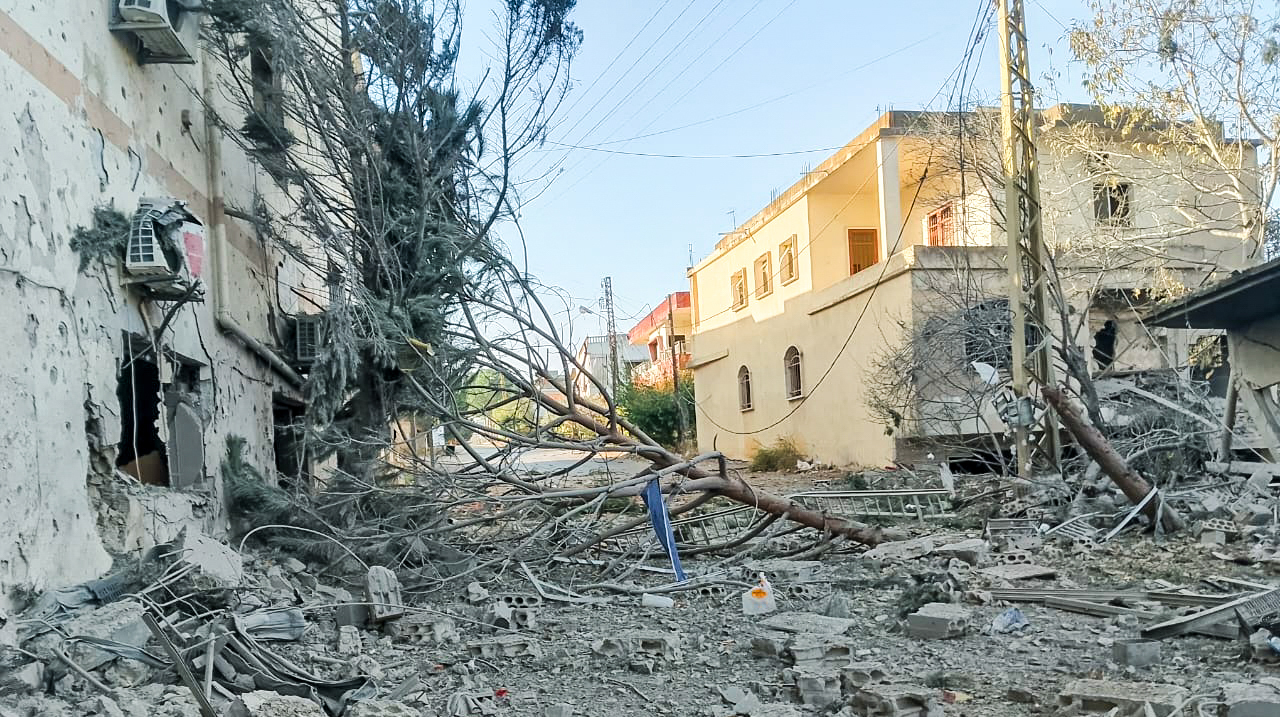
The bomb-damaged Tibnin orphanage in southern Lebanon two years ago. An Israeli attack drone hit the area again this week.
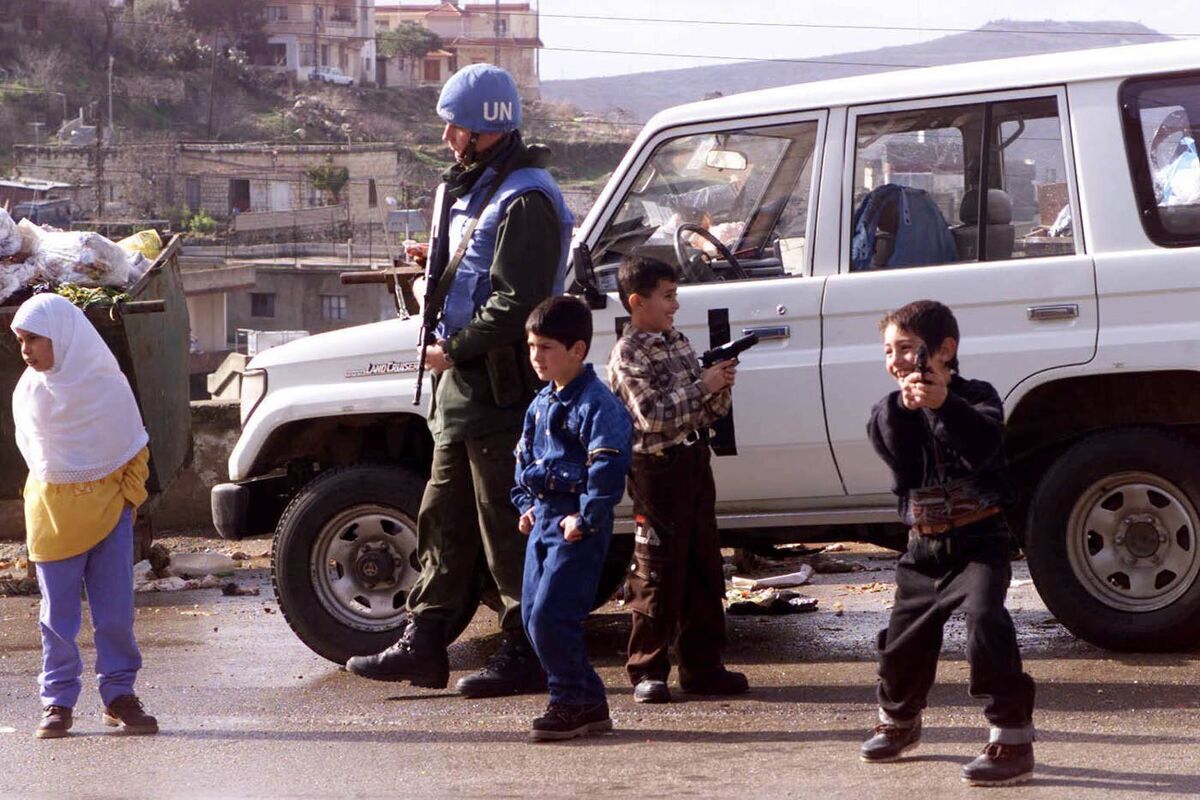
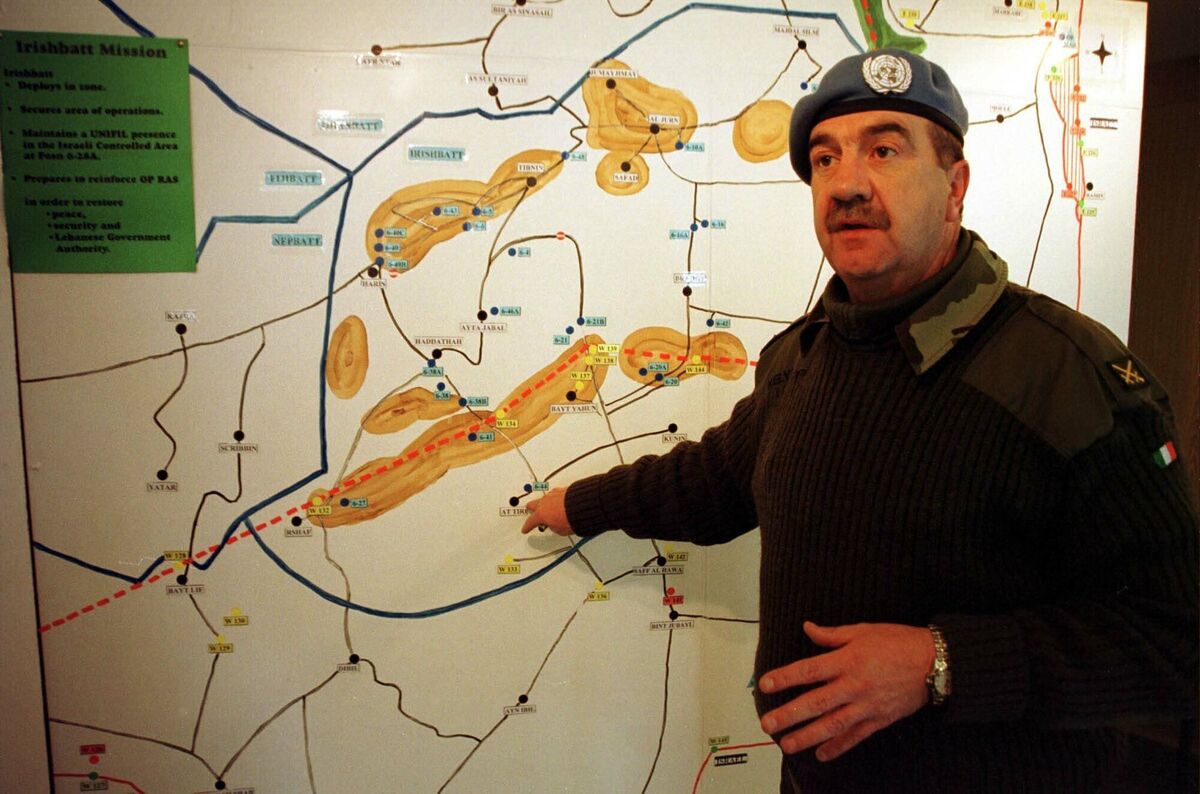
Mention Tibnin to any Irish UNIFIL (UN interim Force in Lebanon) veteran and you will evoke a flood of memories. It is more than just nostalgia.
For thousands of Irish soldiers, serving with UNIFIL was an essential rite of passage. It rounded off their training, coming under fire for the first time and sharing experiences with comrades, never to be forgotten.
Veterans’ tours, reliving the UNIFIL experience, still turn up at the Tibnin Memorial to the 48 Irish soldiers who lost their lives in the Land of the Cedars. Once again, the Grim Reaper stalks the same land. On Wednesday morning, an Israeli attack drone hit a vehicle in Tibnin. One person was killed.
To paraphrase Yeats’s epitaph, ”Cast a cold eye on Life and Death, Soldier pass by”. The peacekeeper too, like Yeats, has to learn to face mortality and the human experience, with a stoic detachment, rather than fear, grief or excessive sentimentality.
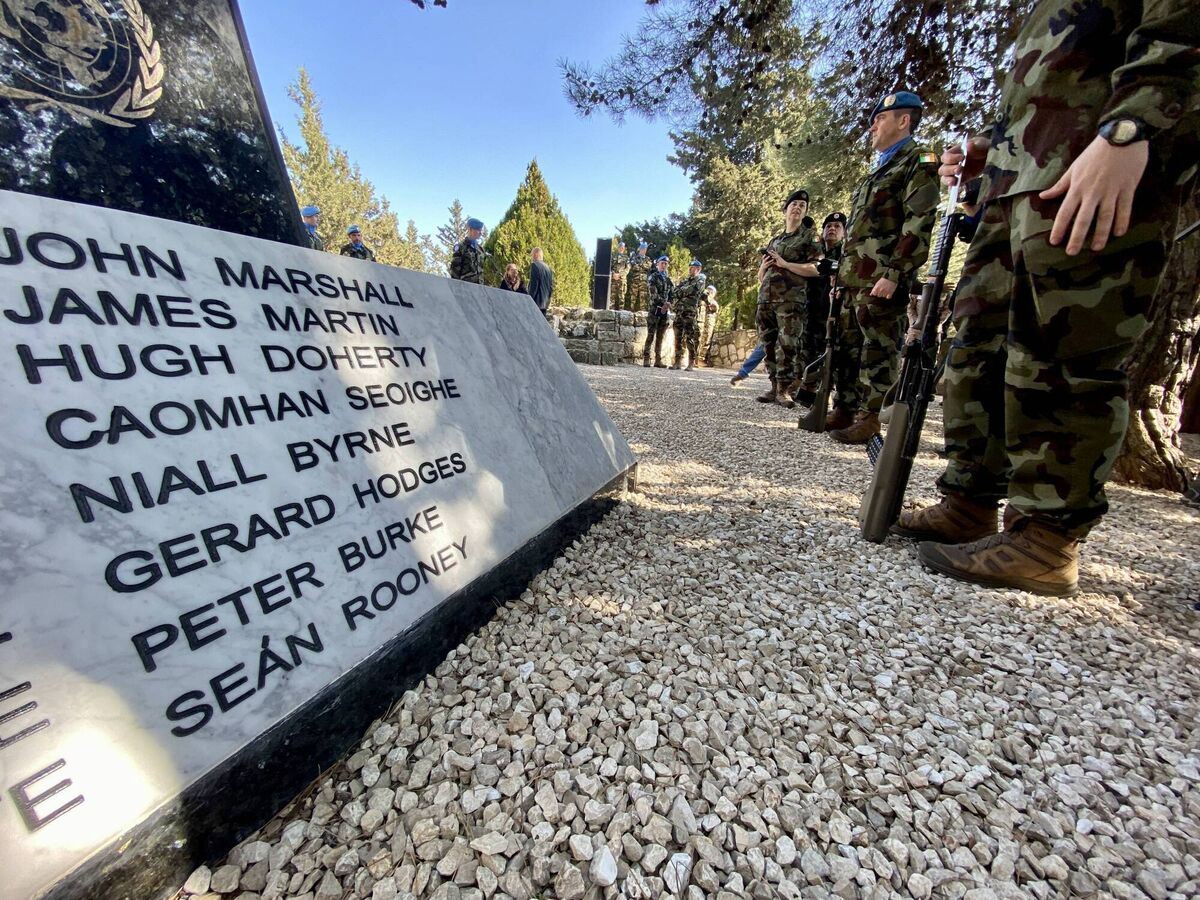
Forty-eight dead Irish soldiers, and forty-eight years later, since UNIFIL deployed in 1978 to supervise the withdrawal of Israeli soldiers, and here we are, back to square one, or perhaps square minus one. More than ever there is a need for a UNIFIL 2.
US president Donald Trump’s initiative, in attempting to arrange a ceasefire between Israel and Lebanon, was a fudge to facilitate acceptance of the proposed framework for an agreement with the Iranians. The flaky ceasefire seemed not to include Iran’s proxy army, Hezbollah, which is recognised by many young Lebanese as their resistance movement against Israeli occupation.
According to Israel, the deal would not have stopped IDF operations against Hezbollah. In a way, Trump’s move almost created a four-sided, (US-Iran-Israel-Hezbollah), Mexican stand-off to pause the conflict in both Iran and Lebanon. However, Hezbollah rejected the agreement reached between Israel and the Lebanese government and is demanding a complete Israeli withdrawal.
Four weeks ago, president Trump ‘paused’ the US Navy operation to escort commercial cargo ships out of the Strait area, at the request of the Pakistani negotiators. If a peaceful solution can be found, the current Pakistan negotiations offer the best prospects, being an acceptable neutral third party to both sides.
In the recent Gaza War, the US itself tried to "run with the hare and hunt with the hounds", acting as a moderator/negotiator while still being a supporter of Israel. It led to prolonged fighting, ineffective ceasefires and over 75,000 Gazans dead.
The current negotiations between Iran and the US are down to two major issues, reopening the Strait of Hormuz and how to guarantee that Iran will not develop nuclear weapons. Should the talks break down, the US is ready to escalate its attacks on Iran.
Three weeks ago, Chinese intelligence reportedly informed the IRGC (Iranian Revolutionary Guard Corps) that the US would carry out an amphibious attack against Iran. Kharg Island has long been mentioned as a possible target for such an attack.
However, to launch an operation of this kind the US would need to ensure control of the Strait. Iran controls the entire Northern side. The terrain is mountainous and difficult for the US to dominate by air power alone.
To control the Strait, the US may yet have to seize the northern side of the waterway at its narrowest point, to block Iranian forces from access to the Strait.
The EU high representative for Foreign Affairs and Security Policy, Kaja Kallas, has stated that the US could end up settling for less than what was achieved with the 2015 Joint Comprehensive Plan of Action (JCPOA). President Trump pulled the US out of the JCPOA in 2018 because it did not go far enough to address all the issues.
Ms Kallas has proposed that nuclear experts must attend the Pakistan-brokered talks, and that the agenda should include Iran’s missile programmes, its support for proxies and Iranian hybrid and cyber-attacks in Europe. President Trump would lose face ‘bigly’ if he ended up with a worse deal than president Obama in 2015.
By now Iran has in place the second or, in some cases, the third tier of its leadership, after the US and Israeli air strikes. Up to the April 8 ceasefire, approximately 1,900 Iranian military and 1,700 civilians had been killed in the airstrikes.
For sure, Iranian military capabilities, communications and infrastructure have been heavily degraded. The latest satellite imagery reportedly shows that they have managed to clear away 50 of the 69 entrances to their stockpiles of ballistic missiles, blocked up in the recent US air strikes.
Iran has threatened to launch ballistic missile attacks against Israel if the IDF attacks on Hezbollah do not cease.
On the US side, the US Central Command is ready for the next round of war with Iran. Before the war began, it had 50,000 personnel in 19 bases, including the 5th Fleet.
The Central Command is reinforced in the Arabian Sea by two aircraft carrier groups, the USS George H. W. Bush Aircraft Carrier Group (6,500-7,500 persons) and the USS Abraham Lincoln Aircraft Carrier Group (7,500-8000 pers), and by the USS Tripoli Amphibious Ready Group with the 31st MEU (Marine Expeditionary Unit) (3,500pers).
The USS Boxer Amphibious Group with 5,000 marines and sailors is expected to arrive in the Gulf area about now. Finally, at least 2,000 troops from the 82nd Airborne Division are confirmed to be in the Central Command area.
It can be assumed that the rest of the 82nd Airborne Division, 8,000-9000, are in continental US, held in strategic reserve, ready to move at 16 hours’ notice. This reinforcement to Central Command is approximately 25,000 personnel, soldiers, sailors and marines. Overall total, upwards of 75,000.
Also, in addition to the 160+ combat aircraft on the two aircraft carriers, there are a considerable number of US combat aircraft, including strategic bombers, deployed to air bases in the region.
If the situation escalates, Iran may yet call on their Yemeni allies, the Houthis, to block the Red Sea at the southern end. The chokepoint at Bab-el Mandeb is only 14-20 miles wide. An estimated 10% to 12% of global trade uses this route.
While the list of US military assets is impressive, it is not remotely near enough to conduct a full-scale invasion of Iran, with the Iranian Army and the IRGC totalling 1.2 million armed and trained personnel. In 1991, during Gulf War One, the Coalition Forces deployed a quarter of a million men to liberate Iraqi occupied Kuwait.

Options for the possible deployment of US ground forces are a matter of speculation, but invading and holding ground for a sustained period would be very problematic.
Breaking the will of the Iranian regime is no longer a foregone conclusion, and time is not on the US side. Iran can "sweat it out" for another couple of months, and besides, it has a lot of missiles and drones left.
For Lebanon, the best hope is that a new Israeli Government in the autumn will commit to withdrawing the IDF, under UN supervision. Any enhanced UNIFIL mission would need to have a strong mandate and greater powers than UNIFIL 1.
- Dorcha Lee is a retired army colonel and defence analyst, who served in three UN missions in the region, UNIFIL, UNTSO and UNIIMOG

CONNECT WITH US TODAY



Be the first to know the latest news and updates