Colin Sheridan: Reform a better route than removal of triple lock 

Ireland should focus on strengthening international diplomacy at a time of global uncertainty
Colin Sheridan: Reform a better route than removal of triple lock 

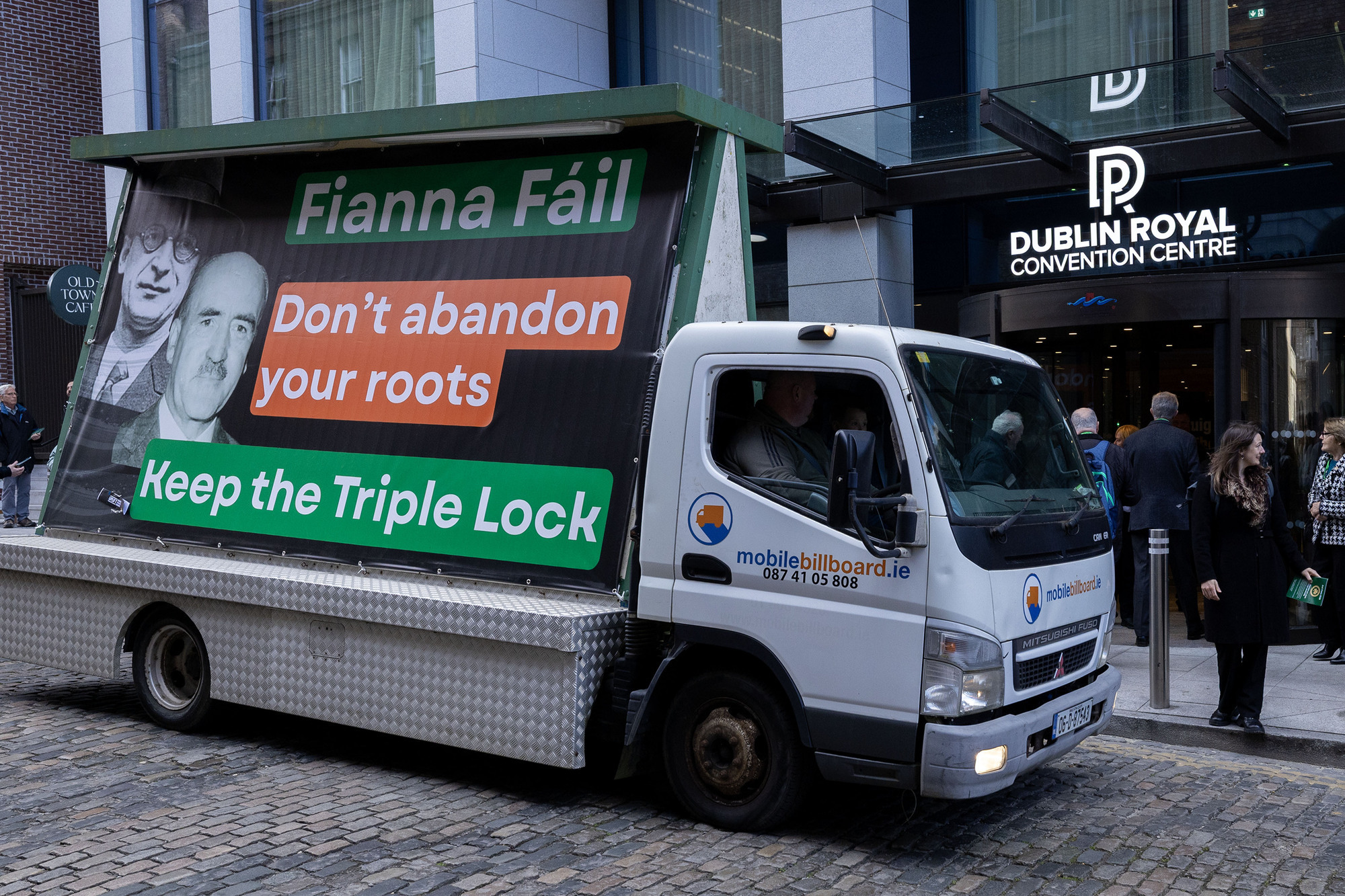
A billboard truck with a poster calling on Fianna Fáil to keep the triple lock passes the Dublin Royal Convention Centre during the party’s ard fheis on May 15 last. Picture: Conor Ó Mearáin

The debate around Ireland’s triple lock has generated more heat than light.

On one side, critics portray it as an archaic relic that allows Russia and China to dictate Irish foreign policy through their veto powers on the UN Security Council. On the other, opponents of reform sometimes speak as though the Government is preparing to march Irish troops into a European army at the first available opportunity.

Neither argument stands up particularly well to scrutiny.

Yet amid the noise, the Government’s determination to remove the triple lock raises an important question: why, at a moment of unprecedented geopolitical uncertainty, would Ireland choose to weaken one of the few safeguards that exists around the deployment of its military personnel overseas?

Before answering that question, it is worth defining what the triple lock actually is.

In simple terms, the triple lock requires three separate approvals before more than 12 members of the Defence Forces can be deployed overseas on military operations. Those approvals are a United Nations mandate, Government approval, and the approval of Dáil Éireann.

Contrary to much of the rhetoric around it, the triple lock is not a constitutional guarantee of neutrality. Nor does it prevent Ireland participating in military cooperation with other states.

Indeed, anyone familiar with the history of Irish foreign policy knows neutrality has always been more nuanced than either its critics or defenders often admit.

The reality is that Ireland’s relationship with Western military structures has long been more intimate than either supporters or critics of neutrality sometimes care to acknowledge.

In Afghanistan, Irish officers served in headquarters appointments under direct American and British command. They contributed to planning processes, intelligence assessments, and operational coordination at the heart of a Nato-led mission.

On occasion, Irish personnel were trusted with operational information ordinarily reserved for members of the so-called “Five Eyes” intelligence partnership — the United States, Britain, Canada, Australia and New Zealand. Our reputation for professionalism, military education, and English-language proficiency made Irish officers highly sought-after in what was an extraordinarily complex multinational environment.

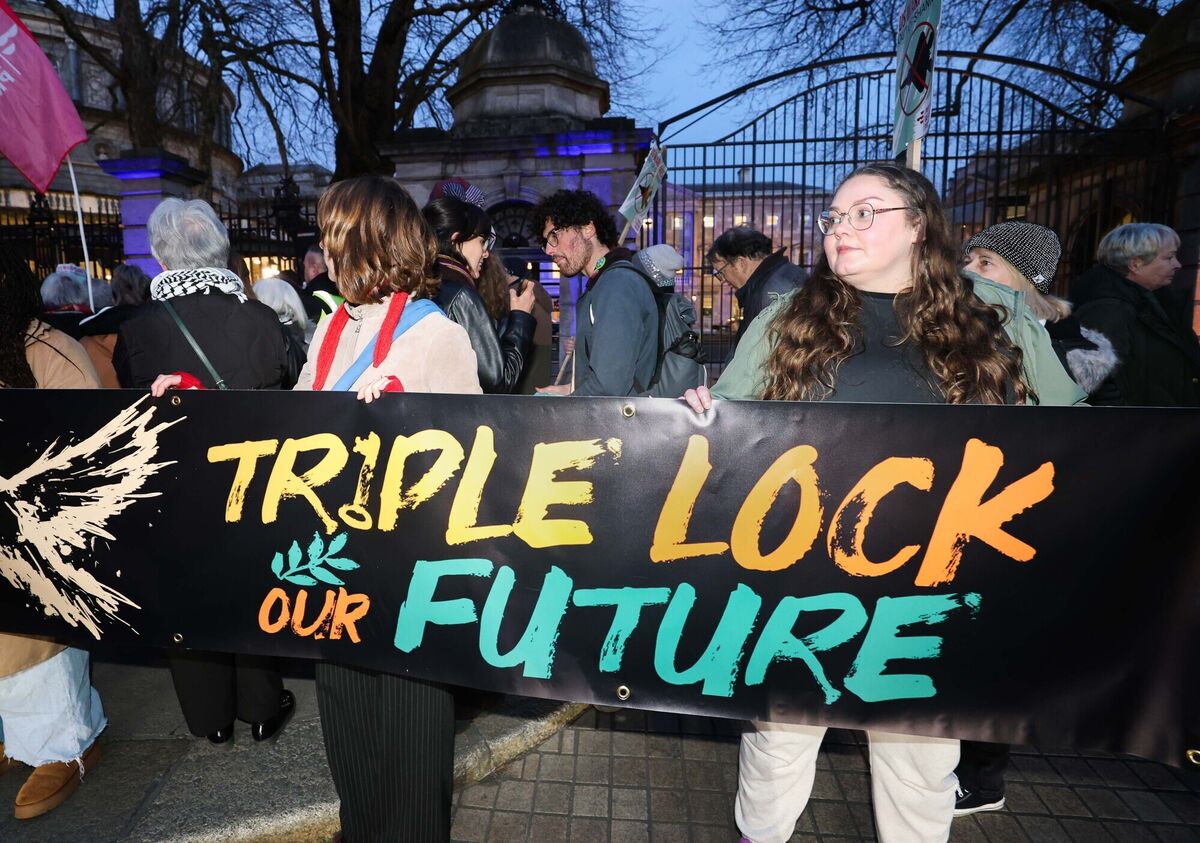
The Irish Neutrality League protesting outside Leinster House in Dublin in March this year. Picture: Leah Farrell/RollingNews.ie

This was not the behaviour of a state isolated from Western security structures; it was the behaviour of a state carefully navigating them while maintaining political non-alignment.

For 14 years, Ireland contributed personnel to the Nato-led mission in Afghanistan. Ireland participates in Nato’s Partnership for Peace programme. Shannon Airport has facilitated the movement of US military personnel for decades.

We engage extensively with European security structures and cooperate with partners on intelligence, maritime surveillance, and cyber security.

None of this is controversial because it is hidden. It is controversial because it complicates the simplistic notion that Ireland exists in splendid isolation from the security concerns of the wider world.

The truth is that Irish neutrality has never meant disengagement. It has meant retaining the sovereign right to decide when, where and how we become involved.

Challenging myths

That distinction matters. It also means some of the more dramatic claims surrounding the triple lock deserve to be challenged.

The first myth is that removing the triple lock would automatically drag Ireland into Nato.

It would not. Joining Nato would remain a political decision requiring public consent and would represent a far more profound shift in Irish foreign policy than changes to the Defence Acts.

The second myth is that the triple lock somehow prevents Ireland defending itself. It does not. The mechanism relates to overseas deployments, not the defence of the State.

The third myth, often repeated by Government ministers, is that the triple lock leaves Ireland uniquely vulnerable to obstruction by Russia and China.

There is certainly some truth to that criticism. The Security Council has become increasingly dysfunctional. Russia’s invasion of Ukraine has exposed the limitations of a system where permanent members possess veto powers. The inability of the UN to respond effectively to major international crises has damaged its credibility.

Yet the conclusion that follows does not necessarily support removing the triple lock. In fact, it may support the opposite.

The question Ireland should ask itself is not whether the UN is flawed. It clearly is.

The question is whether the answer to a weakened international order is fewer international restraints or stronger ones.

As a small state, Ireland has historically benefited from rules-based international institutions. We do not possess the military power to impose our will on others. We rely instead on diplomacy, international law, and multilateral cooperation.

If those institutions are failing, surely our first instinct should be to strengthen and reform them rather than quietly abandon them.

Ireland has a unique credibility on this issue. Few countries can claim our record in peacekeeping. Irish soldiers have served with distinction under the blue helmet for generations. We have consistently punched above our weight in diplomacy and conflict resolution.

We should be leading conversations about reforming the United Nations, particularly the Security Council veto, rather than treating the organisation as an inconvenience to be bypassed.

That would be a far more ambitious vision of Irish foreign policy than simply aligning ourselves ever more closely with the strategic priorities of larger powers.

What are the benefits?

Whenever discussion turns to removing the triple lock and reinterpreting neutrality, another question is worth asking: who benefits?

The answer is certainly not straightforward. There is no grand conspiracy. But institutions, like individuals, respond to incentives. European states are rapidly increasing military expenditure. Defence industries are expanding. Strategic integration is accelerating. Political and military careers are increasingly tied to European security structures.

In that environment, scepticism is not radical. It is healthy.

The burden should not be on citizens to explain why longstanding safeguards ought to remain. The burden should be on governments to explain why they should be removed.

There is another reason to approach the Government’s proposals with caution. Trust.

If ministers wish to persuade the public that fewer safeguards are required around overseas deployments, they must explain why the State has struggled for decades to address the much more immediate problems within the Defence Forces themselves.

The reality is that while defence spending is increasing and recruitment figures have improved, many of the structural issues identified repeatedly through commissions, reviews, audits and reports remain unresolved.

Retention remains a serious challenge. Experienced personnel continue to leave, and when they leave they are invariably bewildered as to why little or no attempt was made to ascertain why they were leaving, never mind attempt to persuade them to stay.

Units remain undermanned. The legacy of bullying, poor human resource practices and institutional dysfunction has not disappeared because a report said it should.

Successive governments have been remarkably enthusiastic about discussing new capabilities, new partnerships and new strategic responsibilities. They have been considerably less successful in fixing the organisational culture and workforce problems that have plagued the Defence Forces for years.

That should concern anyone interested in national security.

Military capability is not simply a question of equipment procurement. It is not measured solely by radar systems, naval vessels or armoured vehicles. Capability is people.

A Defence Force that struggles to retain experienced personnel cannot solve that problem through the purchase of expensive hardware.

Investment in culture, education, training and retention may ultimately prove a far wiser use of public money than weapons systems that, with luck, Ireland will never be required to use in anger.

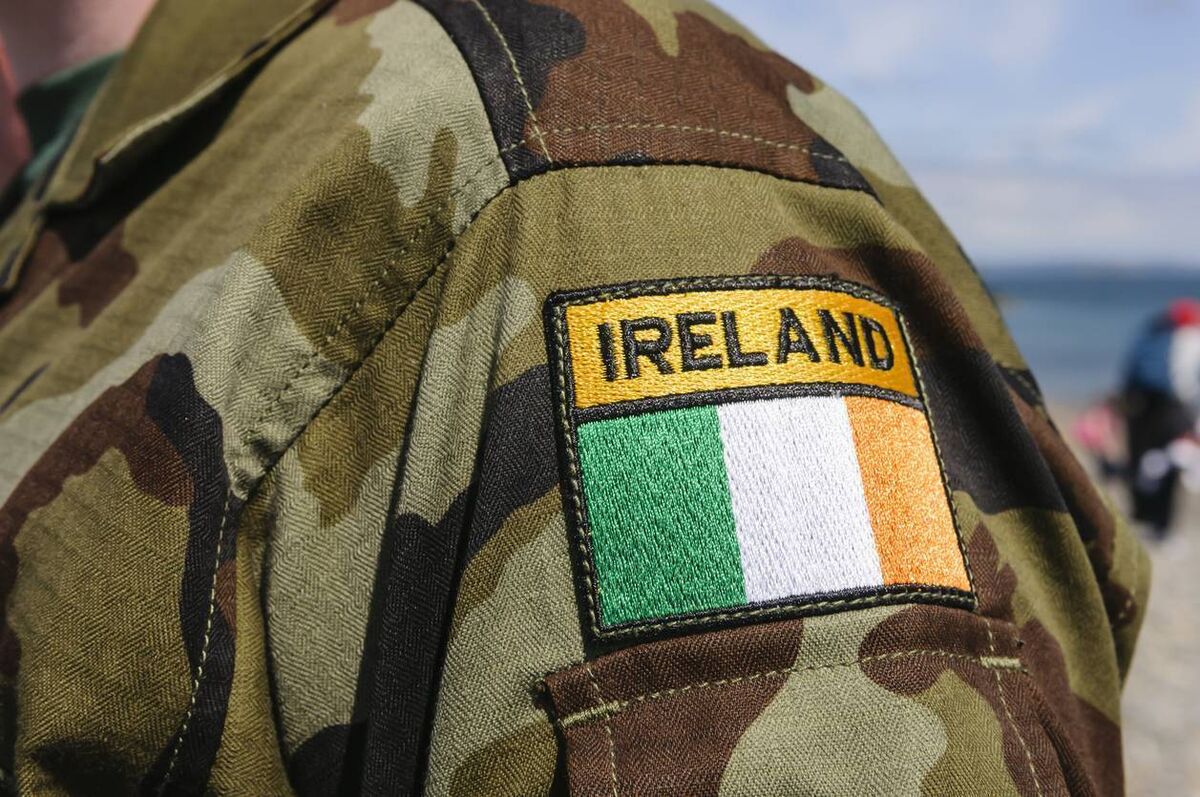
'Few countries can claim our record in peacekeeping. Irish soldiers have served with distinction under the blue helmet for generations.' File picture

Nor should we ignore the broader political context.

The tone of parts of this debate has been disappointing. Too often, those raising concerns about the removal of the triple lock are dismissed as naïve idealists or prisoners of outdated thinking. Equally, some opponents of reform have responded with exaggerated claims that bear little resemblance to reality.

Neither approach serves the public. Reasonable people can disagree about neutrality and defence spending and about Ireland’s future relationship with European security structures.

But those discussions should happen openly and honestly, not through caricature and political point-scoring.

At a moment when wars rage in Europe and the Middle East, when the international system appears increasingly unstable, and when old certainties are collapsing faster than new ones can emerge, caution is not weakness. It is prudence.

The triple lock is not perfect, nor is the United Nations, nor the neutrality we should cradle as delicately as a baby swan's neck. Yet imperfect safeguards often become most valuable precisely when the world becomes less stable.

Ireland should invest in stronger diplomacy, stronger international institutions, stronger civic education and stronger Defence Forces.

We should become a leading voice for reform of the United Nations rather than another state quietly losing faith in it.

Most of all, we should resist the temptation to surrender checks and balances simply because they have become inconvenient. In an age defined by geopolitical uncertainty and strategic anxiety, retaining the triple lock is not an act of nostalgia.

It is an act of caution. And caution, at times like these, remains a virtue.

x

More in this section

Revoiced

Newsletter

Had a busy week? Sign up for some of the best reads from the week gone by. Selected just for you.

Cookie Policy Privacy Policy Brand Safety FAQ Help Contact Us Terms and Conditions

© Examiner Echo Group Limited