The real challenge of uniting unionism still lies ahead

Democratic Unionist Party leader Jeffrey Donaldson addresses the media following a meeting with 120 executive members of the DUP on a possible deal to restore the devolved government on Tuesday. Picture: Charles McQuillan/Getty Images
At the 11th hour, or in this case the very early hours of the morning, the North was given its first glimmer of hope that after two years of inertia the political institutions set up under the Belfast/Good Friday Agreement could be restored.
Leader of the Democratic Unionist Party (DUP) Jeffrey Donaldson is prepared to lead his party back to Stormont, but while he emerged victorious from a meeting that almost tipped into a complete farce after being highjacked by a loyalist blogger, the real challenge of uniting unionism still lies ahead.
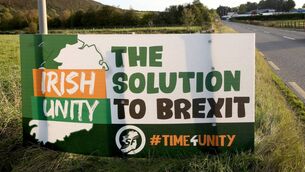
Political unionism has been the dominant political power in the North since the formation of the State in 1921. That power continues to steadily diminish as society evolves and demographics change, but the ultimate disruptor to unionism has been Brexit.
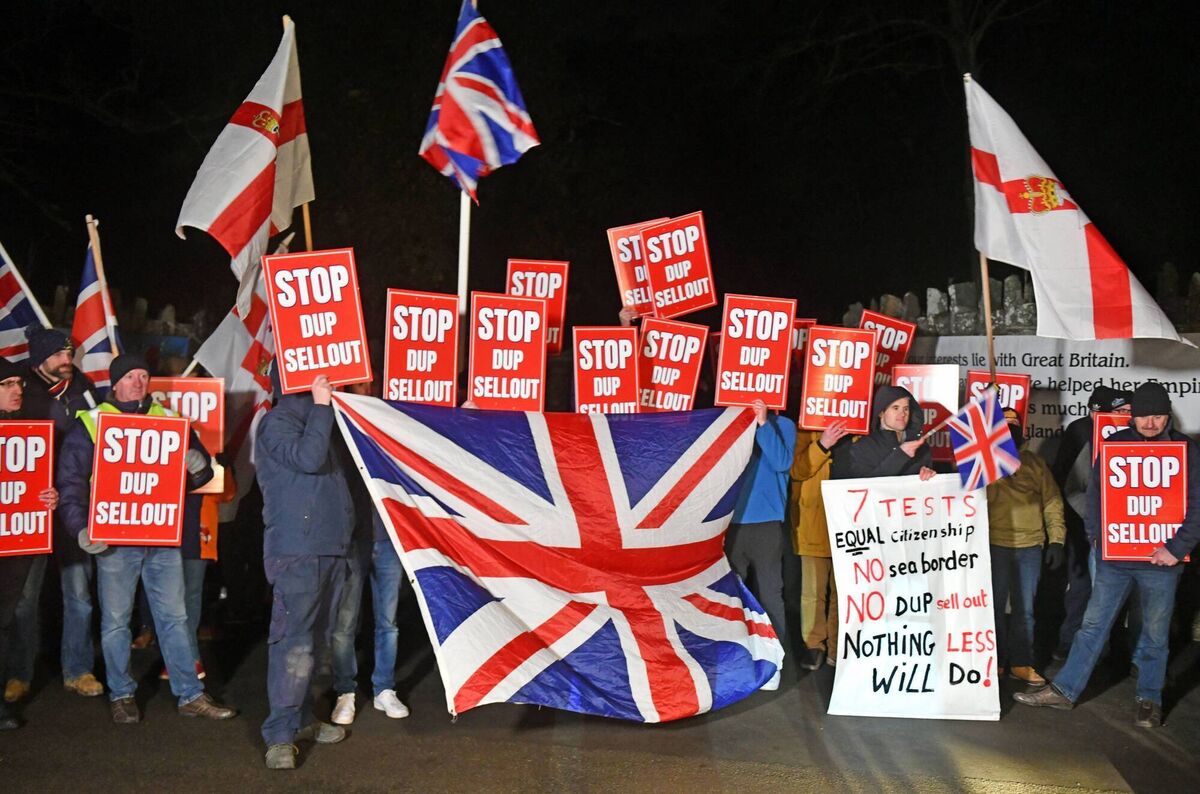
Following the 2016 Brexit vote, political unionism first lost its majority at Stormont, followed by Westminster, then local government, and in the most recent Assembly election, the office of First Minister. The DUP was the only major party to campaign for Brexit, and subsequently courted hard Brexiteer factions within the Conservative party.
Brexit created a riptide within political unionism, splitting the ideology into two dominant cohorts: the Brexit purists who vehemently oppose any derogation from the rest of the UK, and those who accept some degree of divergence is necessary. As is often the case, the loudest voices are the vocal minority.
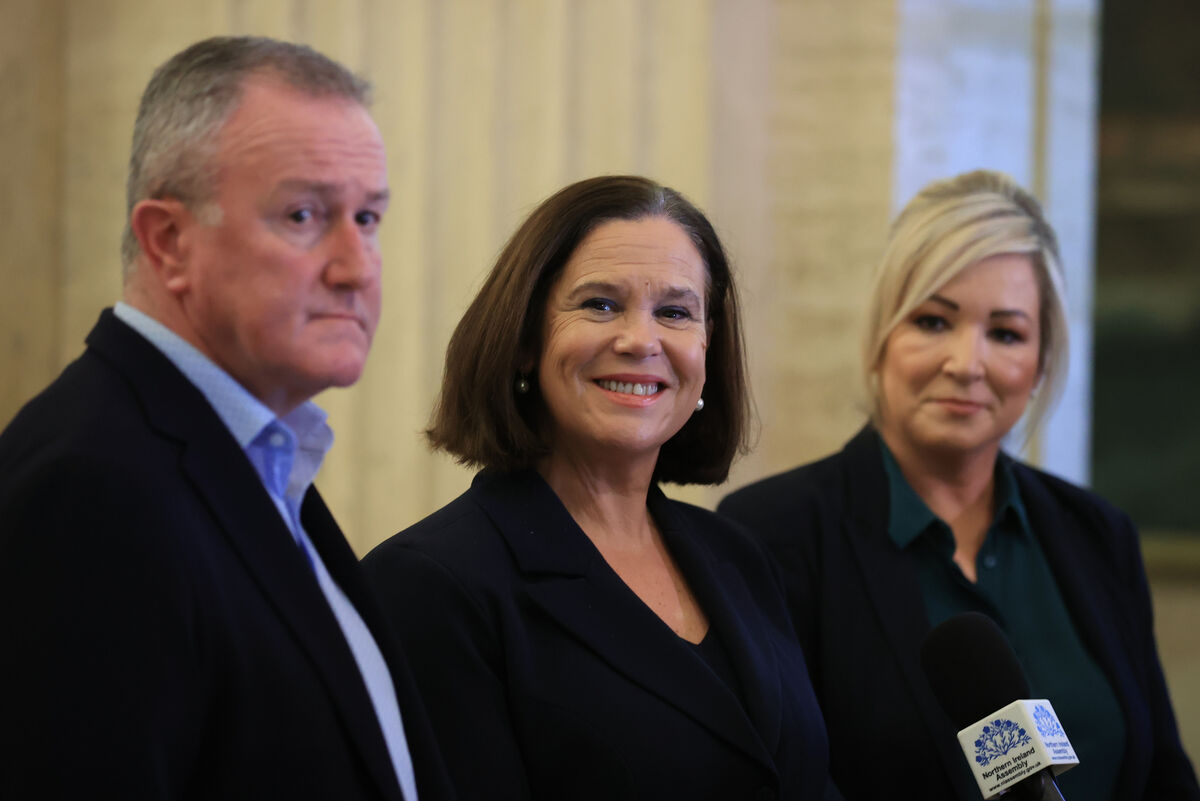
There are larger undercurrents at play. Should Stormont return, the DUP will be serving alongside a nationalist First Minister as well as a nationalist opposition leader in the form of the Social Democratic and Labour Party’s (SDLP) Matthew O’Toole.
This political reality is a physical manifestation of one of unionism’s greatest looming existential threats; a United Ireland.
In the days and weeks ahead, details of the deal brokered between the British government and the DUP will emerge. On the table is new legislation that reaffirms the North’s place in the UK internal market, and assurances of its constitutional place in the UK.
Further details of the deal include a decrease in checks on goods traveling via the so-called Green Lane set up under the Windsor Agreement, and an East-West council.
This should be a sellable deal to the wider unionist community, but the issue for Jeffrey Donaldson is that he has, rather effectively, convinced a large proportion of grassroots unionism that the party’s boycott could result in the complete removal of the Northern Ireland Protocol — a test he has manifestly failed to achieve.
.
Hopes nevertheless are high power-sharing will be restored within the next two weeks, but there exists a myriad of ways it could all go wrong.
The British government is selling the deal to the DUP as a change to the Windsor Framework, to the EU as no change at all, and to hardline Brexiteers within the Conservative party as a fig leaf that will not stop the rest of the UK from diverging from EU law — all three of these possibilities cannot coexist.
Legislation and further details are set to be announced in the coming days. The negotiations were exclusively between the DUP and British government — that creates a vulnerability and assumes other key stakeholders including the EU and the rest of Northern Ireland’s political parties, will agree.
And then there’s grassroots loyalism, the Brysonites and Jim Allisters — they will cannibalise unionism from the inside out.
In short, it isn’t over until all sides agree, an outcome that may just remain elusive. As for political unionism, a deal may restore power-sharing, but it is unlikely to heal the divide that is splintering this declining political power.
CONNECT WITH US TODAY



Be the first to know the latest news and updates