John Gibbons: Have you heard the one about the poor defenceless Irish cows?
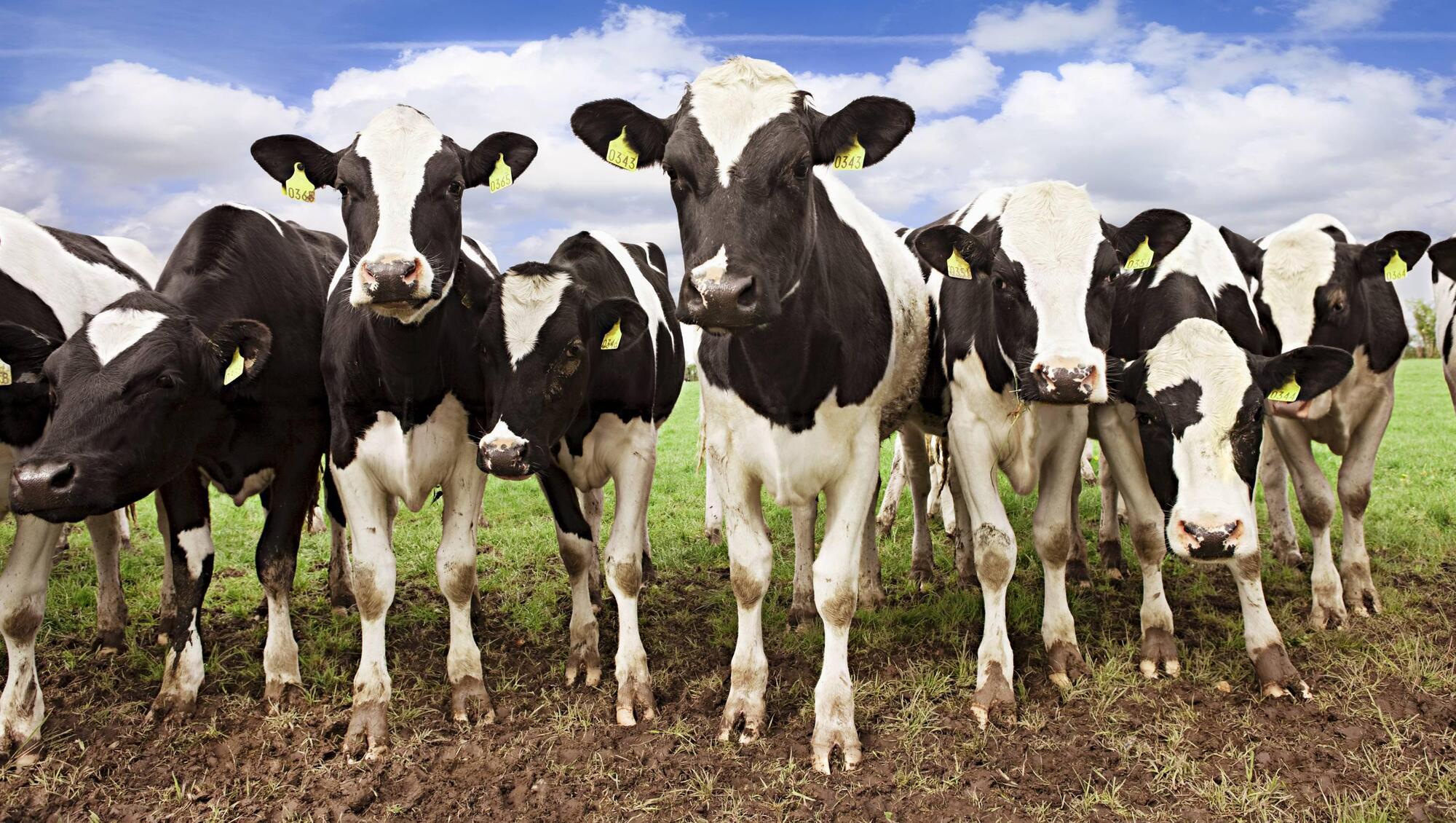
A deranged narrative conflating abortion with 'killing cows' has gained traction. File Picture.
Have you heard the one about the poor defenceless Irish cows that callous, bloodthirsty environmentalists want to kill?
“You will not believe the insanity now happening in Ireland”, Fox News host Dagen McDowell told her US audience last week.
“Farmers there are revolting against a proposal by the Government to kill 200,000 cows, all to meet the EU’s climate goals … this is the kind of insanity going on in the name of fighting climate change."
She then quoted a tweet from billionaire Elon Musk, which read: “This really needs to stop. Killing some cows doesn’t matter for climate change."
Musk’s comments were in response to a tweet from conservative author Ashley St Clair which stated: “The push to end life, of both animals and humans, in the name of ‘climate activism’ is fundamentally evil".
This deranged narrative which, among other things, conflates abortion with “killing cows”, has gained traction globally.
There is a certain Orwellian genius at pitching a sector, whose business model involves commercially exploiting livestock from the moment of birth until they are slaughtered, into the defenders of these same animals (for the record, all dairy cows also end their lives in an abattoir).
But in a post-truth world, such deception, enthusiastically abetted by right-wing media, is as unremarkable as it is rife.
This gusher of disinformation is all part of a concerted drive to derail the EU’s proposed Nature Restoration Law, with the centre-right European People’s Party (EPP), of which Fine Gael is a member, leading the charge.
The EPP has produced a torrent of dubious data and dodgy claims to support its efforts. Among the more egregious was that villages would have to be demolished to make way for nature restoration. When asked to name one village anywhere in Europe actually facing demolition, the EPP admitted the claim was baseless.
Despite the dishonesty, its efforts appeared to have been successful, having persuaded the European Parliament's Committee on Agriculture to vote for an outright rejection of the entire nature restoration law.
However popular these attempts to sabotage nature restoration are with the agri-industrial PLCs and the farm groups who support them, the EPP’s plans may now be unravelling.
It turns out, in the words of the European Central Bank (ECB), that “humanity needs nature to survive, and so do the economy and banks — destroy nature, and you destroy the economy”.
The ongoing war on nature being waged by unsustainable intensive farming “presents a growing financial risk that cannot be ignored”, according to Frank Elderson, vice-chairman of the ECB’s supervisory board.
These threats, Elderson expanded, are measurable. The ECB assessed that the decline of so-called ecosystem services (things provided by nature for free) threatens up to 75% of all bank loans in the Euro area, as many of the millions of companies operating in the EU area “depend on ecosystem services to continue producing their goods or providing their services”.
In short, it turns out that thrashing nature for a quick profit is not quite the bargain that many, especially in the EPP and Fine Gael, appear to think.
Responding to criticism of his comments, Elderson added: "This is not some kind of flower power, tree-hugging exercise — this is core economics”.
Another powerful economic argument was advanced in an explanatory paper issued by the European Commission. It noted that nature restoration offers a spectacular return on investment of €8 for every €1 spent. In wetlands, the ratio is even higher.
There was more bad news in store in recent days for the agri-industrial lobby and its political supporters. Among the various arguments mounted in opposition to nature restoration have included Taoiseach Leo Varadkar’s claim that this would impede renewable energy projects.
This was thoroughly debunked by the lobby group Wind Europe, which noted that biodiversity protection and the expansion of renewable energy “go hand in hand, the two are completely compatible”.
Varadkar’s claims regarding nature protection being a threat to food security have also been roundly refuted. A clear example of this is the collapse in insect populations across Europe. Some 84% of crop species cultivated in Europe depend on insect pollinators, providing “free” services valued at over €150bn a year.
It beggars belief that ecologically illiterate politicians, and indeed farm lobbies, would be vying to allow the very basis of our food systems to be destroyed, principally, it appears, at the behest of the giant agri-chemical industry, whose profits depend on the sales of millions of tonnes of the very pesticides that are devastating the insect kingdom.
Efforts at EU level on nature and climate protection usually degenerate into a David-and-Goliath tussle, as NGOs with shoestring budgets are outgunned, out-schmoozed, and outspent by industry players. This time, however, there are some genuine heavyweights in their corner.
A coalition of more than 60 corporations, including Patagonia, Unilever, Nestlé, Ikea, Decathlon, and even Coca Cola, have lobbied EU legislators, urging them to hold their nerve and implement strong nature restoration laws. Their argument can be boiled down to the simple fact that it’s hard to run a thriving business in a dying biosphere.
In a moment of unintended levity, the EPP accused the European Commission of urging firms to lobby in favour of nature restoration. As Politico reported this week, the response of César Luena, the Socialists & Democrats MEP to their complaint was to dismiss it as “only theatre”.
Luena added mockingly: “Oh poor people of the EPP, now they are afraid of the lobbies, do you believe this?”
Having initially opposed the nature restoration law, Sinn Féin now says it will support it, stating that it received additional assurances. Fianna Fáil remains split, with Billy Kelleher opposed.
However, his party colleague, Agriculture Minister Charlie McConalogue, spoke at the weekend at the “fearmongering” surrounding this issue and called on the EPP to rejoin negotiations, adding that “nature restoration is absolutely essential”.
As today’s crucial vote in the European Parliament’s environment committee takes place, ahead of a Council of Ministers meeting on June 22, the mixed messaging in Ireland will likely leave the public bewildered.
It should be a source of great concern that only 15% of Irish natural habitats are rated as being in good condition. Yesterday, the Environmental Protection Agency reported on the continuing decline in Irish water quality, mainly as a result of the over-use of nitrogen and phosphorus in agriculture.
Meanwhile, another State agency, Bord Bia, describes Irish dairy as “more sustainable, more natural…farmers working in harmony with nature” while simply greenwashing away the growing tide of negative consequences. This, bear in mind, is in a country with the second-lowest amount of land farmed organically in the entire EU27.
It’s hard to begin an honest conversation about striking a balance between the needs of nature and our agricultural systems when so many still remain mired in denial about even the most rudimentary facts.

CLIMATE & SUSTAINABILITY HUB
CONNECT WITH US TODAY



Be the first to know the latest news and updates