Homes for sale ‘stuck’ at alarmingly low levels as Irish house prices rise again
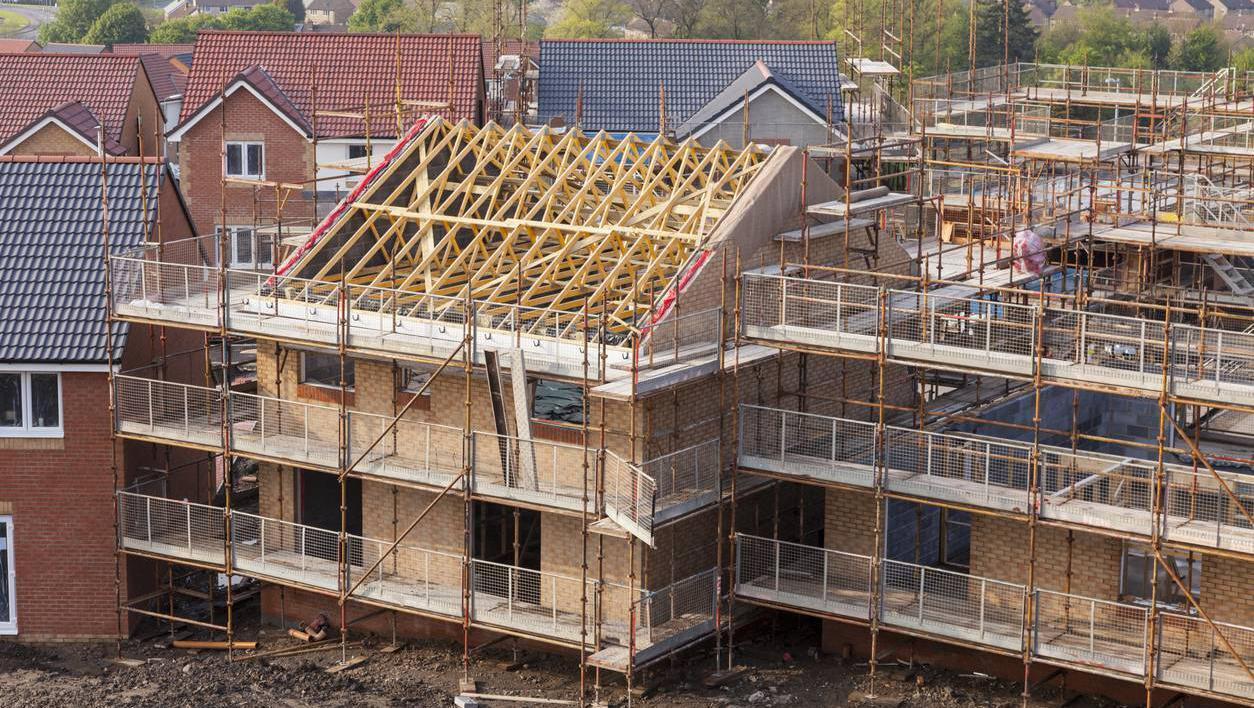
Ireland needs 60,000 new homes a year every year for decades to address the housing deficit, according to Daft.ie.
The number of homes hitting the market to buy is “stuck” at an alarmingly low level, and supply needs to be doubled to meet demand, a new analysis has found.
The average list price for homes in Ireland rose by 5.5% on average in 2025, with the cost of a typical three-bed semi standing at €423,000 at the end of the year.
The gap between listed prices and what homes actually sell for is also at a near-record high, with transaction prices 6.6% above the initial listed price.
The latest figures, from property website Daft.ie, will increase pressure on the Government to deliver more homes in the year ahead, as the housing crisis shows no sign of easing in 2026.
“Across both list and transaction prices, it is clear that demand continues to significantly outpace supply in the sales market,” said the report's author Ronan Lyons, professor in economics at Trinity College Dublin.
“An optimist will point to the slight slowdown in inflation, with the 5.5% increase in list prices below the 6.8% seen in 2024.
“However, this marks the 12th year in a row of increasing prices.”
On December 1, 2025, there were just 11,551 second-hand homes for sale countrywide.
The average for the period covering 2015-2019 was 26,000 homes for sale.
The shortage of homes for sale is much more acute in areas outside of Dublin.
Supply is tightest in Munster, outside its cities, where the number of homes available is 70% below pre-covid levels.
In terms of prices, this lack of supply consistently translates into inflation across all regions, with listed prices now 41% higher compared to the period before the pandemic.
The lowest inflation in the last year was seen in Dublin, with prices up 3.1% in the space of 12 months.
The highest inflation, meanwhile, was seen in Connacht/Ulster, where prices rose 11.6% through 2025.
The most expensive place to buy by far was Dublin, with an average price of €611,000 for a three-bedroom semi-detached house in late 2025.
Across the cities of Cork, Limerick, Waterford and Galway, prices rose 4.5% on average, to €390,000 for a typical three-bed semi.
Excluding the cities, prices across the rest of Munster are up 5.7% to €300,000.
Mr Lyons said the price dynamics in the report reflected “as ever”, the interaction between demand and supply in the Irish housing market.
“Much commentary — including much of mine — focuses on the supply of newly-built homes. And this is, of course, important,” he said.
While the final number of homes built in 2025 will be revealed later this year, estimates from the likes of the Central Bank have put the figure in and around the mid-30,000s.
This is despite a Government target of 41,000 new homes in 2025.
Prior to the 2024 general election, Government ministers touted that close to 40,000 homes would be built that year, but this also proved unreachable.
The Government's latest housing plan, launched late in 2025 — promising the delivery of 300,000 new homes by the end of 2030 — removed the publishing of yearly targets, in a move that was highly criticised by opposition leaders.
Mr Lyons said given new supply is nowhere near where it needs to be, the market is still reliant on second-hand homes.
“During 2023, the interest shock kicked in, drying up supply in the second-hand market,” he said.
“Since 2024, that has started to unwind — but again the size of the shock and the recovery during 2025 is very different.
"While in Dublin, second-hand supply is almost back to 2019 levels, in Munster, it is still one third below. Without supply, healthier conditions — and more stable prices — will still be out of reach.”

CONNECT WITH US TODAY



Be the first to know the latest news and updates