EU rewetting scheme in doubt after MEP group walks away from negotiations
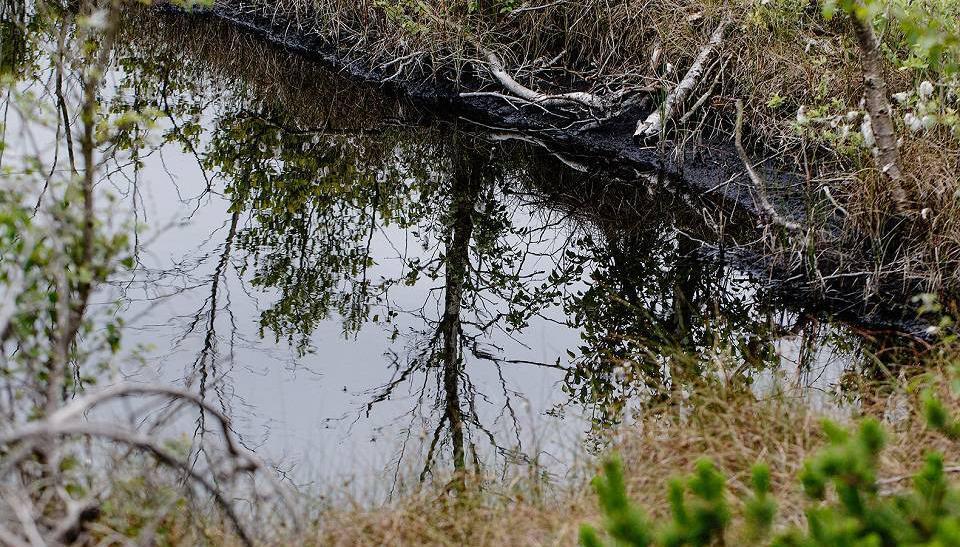
Concerns around so-called ''rewetting', which means saturating peatland to help reduce greenhouse gas emissions, have led to the three Government parties taking different stances on the commission’s proposals.
EU politicians have been accused of failing future generations after walking away from negotiations on the most comprehensive nature protection measures in three decades.
The European People’s Party (EPP), which represents around 177 of 705 MEPs, including Fine Gael, left negotiations on the Nature Restoration Law which aims to restore at least 20% of the EU’s damaged land and sea areas by 2030, and all ecosystems by 2050.
Irish environmental campaigners have described Europe's nature restoration law as crucial in the midst of the biodiversity crisis, which is even more serious than previously thought, with half the creatures on the planet heading towards extinction, researchers from Queen’s University Belfast found last week.
The Nature Restoration Law, proposed by the European Commission, has led to a split in the Government at home, with Taoiseach Leo Varadkar’s claim that it “goes too far” being rebuffed by Environment Minister Eamon Ryan, who said he "absolutely, fundamentally disagrees" with those claiming the law would harm family farming.
The EPP broke off negotiations, claiming it is "an attack on European agriculture, forestry, and fisheries". Green MEP Jutta Paulus said the decision to walk out is "endangering our future generations' livelihoods". Insiders said the decision to leave negotiations makes it difficult to now pass the committee stage, which would leave the proposal on life support.
At the UN's Cop15 global biodiversity summit, 196 countries and blocs agreed to restore at least 30% of degraded ecosystems by 2030.
More than 80% of protected habitats across the EU are in a bad state, according to the European Environment Agency, with a combined area around half the size of Spain in need of restoration. Only 15% are considered good.
Concerns around so-called “rewetting”, which means saturating peatland to help reduce greenhouse gas emissions, have led to the three Irish Government parties taking different stances on the Commission’s proposals.
Agriculture Minister Charlie McConalogue and Heritage Minister Malcolm Noonan both moved to assuage concerns around the proposal in the Dáil on Wednesday, saying “scaremongering” and “misinformation” had unjustly dominated the public debate in recent weeks.
A number of MEPs from Fine Gael, Fianna Fáil, and Sinn Fein have all signalled their opposition in Europe.
Opposition parties jumped on the various positions of the three coalition parties, with Social Democrats leader Holly Cairns calling on the Government to explain its stance once and for all.
"Minister Noonan has said that is it happening. The Taoiseach has said that it is going too far. A Fine Gael MEP voted against the law and Fianna Fáil MEPs are not supporting it. So what is the Government's actual position on it?" she said.
A rally outside Leinster House from environmental campaigners blasted the political response to the Nature Restoration Law.
The rally held by Environmental Pillar, Stop Climate Chaos, the Sustainable Water Network (SWAN), and Extinction Rebellion said MEPs are "caving into misinformation and hysteria which has been spread to derail the law".
The Dáil declared a biodiversity crisis in Ireland in 2019, while a Citizens Assembly this year called for comprehensive action to reverse the decline.
It comes as a team of more than 40 international scientists found humans have exceeded seven of the eight so-called Earth System Boundaries (ESBs) that make the planet a safe environment.
In the journal Nature, the scientists analysed climate, biodiversity, freshwater, and different kinds of pollution to air, soil, and water, finding that only in aerosol pollutants has the boundary not been breached to keep the planet safe for life.
CLIMATE & SUSTAINABILITY HUB