Mick Clifford: Rock-steady Kevin Bakhurst faces a whole set of challenges as RTÉ's new boss
Remembered for the way he handled multiple crises at RTÉ, newly-appointed director general Kevin Bakhurst will need all those skills in today's utterly changed media landscape
Mick Clifford: Rock-steady Kevin Bakhurst faces a whole set of challenges as RTÉ's new boss

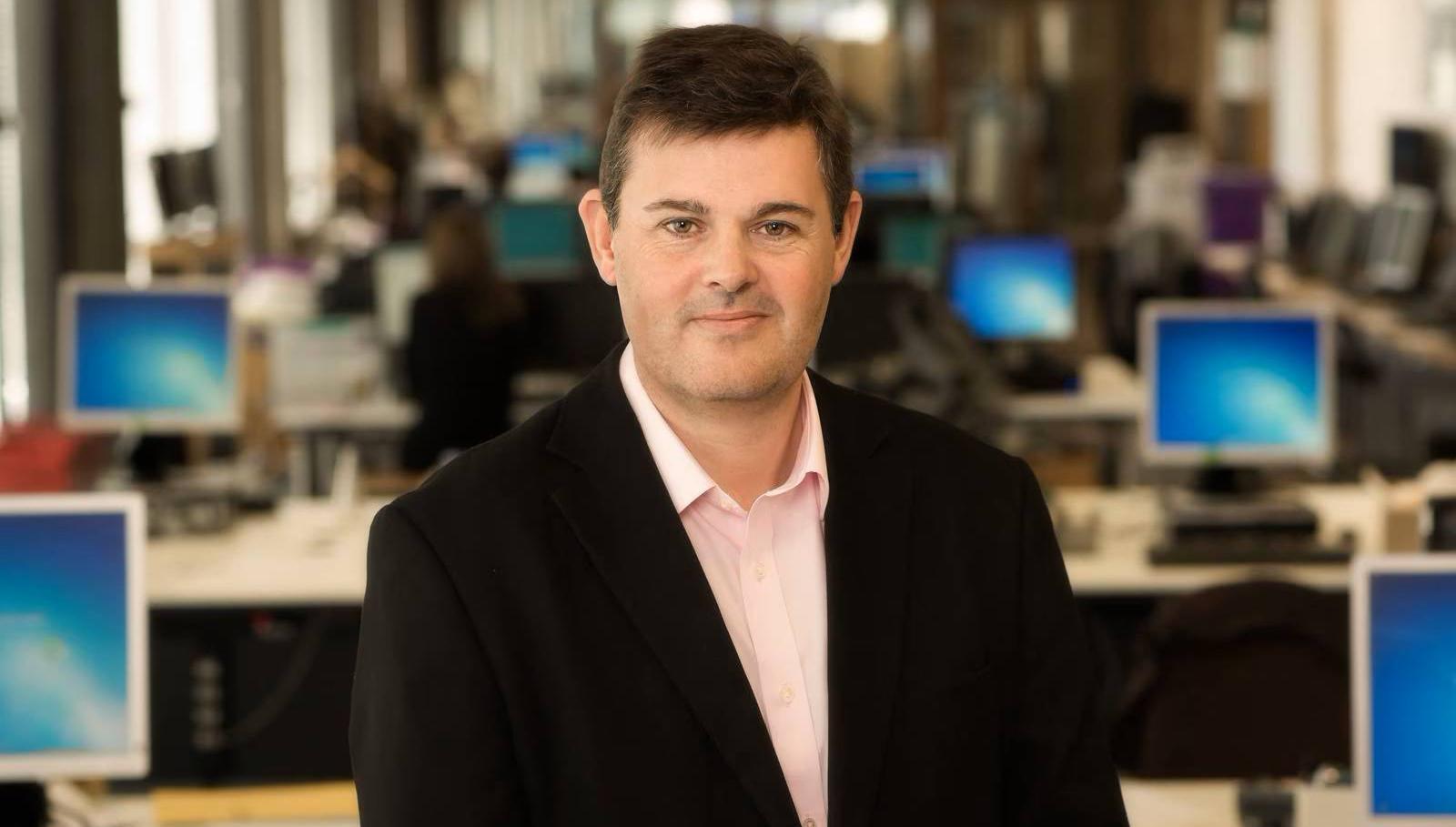
Kevin Bakhurst was RTÉ's director of news and current affairs and deputy DG a decade ago. His approach back then is needed all the more now. Picture: Steve Langan

If Kevin Bakhurst was starting out again as director general of RTÉ he wouldn’t start from here. 

Last Tuesday, the 57-year-old Englishman was confirmed as the successor to outgoing DG, Dee Forbes. With his shoes barely under his new desk, the appointment has already been coated in controversy. 

The process to select the preferred candidate spilled out into the public domain last month in reports of resistance from the board to rubberstamp his selection.

He had been the choice of a sub-committee of the board, consisting of chairwoman Siún Ní Raghallaigh and two other members. When they brought their decision back to the full board, some members wanted to know why another candidate, An Post chief executive David McRedmond, had apparently only been given cursory consideration.

The brief candidacy of An Post CEO David McRedmond for the position of RTÉ director general may seem an inauspicious start for Kevin Bakhurst’s appointment. File picture: Maxwell's

McRedmond had been interviewed but was told the following day that he was out of the race. He didn’t even get a second interview despite, by his own account, having been advised by a range of people to apply.

The reasons for the difference of opinion at board level were not expressly voiced, but there was much more to it than just which of the two candidates might be considered to possess the right stuff. In reality, the differences were about whether the job at this point in RTÉ’s development should go to somebody with a proven editorial track record or a proven commercial track record.

Bakhurst spent a previous stint at RTÉ as director of news and current affairs and deputy director general. He took up the role in 2012 after a career largely spent rising through the editorial ranks in the BBC.

Many thought he was giving Ireland a shot as a stepping stone to the top layer of management back in the Beeb. However, he found himself increasingly at home on this side of the Irish Sea, fitting in nicely to the culture and mores, and developing an interest in Gaelic games and the native language through a friendship with Marty Morrissey.

Some of RTÉ’s directors were puzzled when chairwoman Siún Ní Raghallaigh and the other two members of the sub-committee that selected Kevin Bakhurst as DG apparently only gave cursory consideration to David McRedmond. Picture: Bryan Brophy/1IMAGE

When the DG job came up in 2016, he threw his hat in the ring but the board went for the experienced Dee Forbes.

Bakhurst then returned to London to take up a role in the UK broadcasting regulator, Ofcom.

Now he’s back and the board obviously believes he must have something more to offer this time than he did seven years ago. At least some of them do.

Others thought that McRedmond would be a better fit right now. He was involved in the startup of TV3, which was bought by Virgin Media when he had the operation purring smoothly. Then he moved to An Post where he has steadied a ship that was listing dangerously.

Right now, many believe RTÉ to be in a precarious position, grappling both financially and in terms of content with a world in flux. Some saw McRedmond as possessing the magic touch. But it was not to be.

As the controversy dragged on, McRedmond issued a statement last Sunday, declaring he no longer had any interest in the job. There were fears that Bakhurst might get the hump and ask Marty to cancel the party and give him a lift to the airport. Instead, he held tough and now has a job that will, in all likelihood, result in a drop in pay but one that he quite obviously cherishes.

Rock-steady Backhurst

Sources within the organisation tend to be divided on the board’s decision.

“Bakhurst is a safe pair of hands, no question about it,” according to one source who was in RTÉ during his previous stint.

 Sean Gallagher (right) with broadcaster Pat Kenny and Mr Gallagher's fellow presidential candidates prior to the Frontline debate that gave rise to 'tweetgate' in October 2011 — Dana Rosemary Scallon, Gay Mitchell, Michael D Higgins, Mary Davis, David Norris, and Martin McGuinness. Picture: Sasko Lazarov/Photocall
Sean Gallagher (right) with broadcaster Pat Kenny and Mr Gallagher's fellow presidential candidates prior to the Frontline debate that gave rise to 'tweetgate' in October 2011 — Dana Rosemary Scallon, Gay Mitchell, Michael D Higgins, Mary Davis, David Norris, and Martin McGuinness. Picture: Sasko Lazarov/Photocall

"The problem is the last thing RTÉ needs right now is a safe pair of hands. 

"Lots of people will be disappointed he got the job but he may well prove us all wrong. 

His rock-steady fingers were exactly what was required when he first arrived in Donnybrook. 

Editorially, confidence was on the floor amid the fallout from a major libel action by a priest, Fr Kevin Reynolds, and ‘tweetgate’ during the 2011 presidential election when a live tweet from a dubious source was read out during the final TV debate.

Bakhurst got the show back on the road, injected confidence, put people at ease, and demonstrated an adroit facility at politics, both internally and with the boys and girls in the Oireachtas.

As well as the damage to the priest, RTÉ's defamation of Fr Kevin Reynolds, for which it was fined €200,000, was another major blow to the broadcaster's confidence, which Kevin Bakhurst had to address when he was its news chief. Picture: Collins Courts

Yet Forbes was preferred to him for the top job, having accumulated experience in running a TV station as MD of the Discovery Channel. Now, if anything, the commercial imperative has grown more acute. Despite that, Bakhurst, ostensibly an editorial guy, is seen as the answer, despite the obvious misgivings of some.

Other voices in RTÉ believe that the decision is correct, that righting the ship of RTÉ requires more than just a record in cutting costs and improving efficiencies.

“It’s just not like your typical company at all, the room for manoeuvre is far less,” one veteran source points out.

“There are a whole range of stakeholders, including the BAI [the Broadcasting Authority of Ireland, recently replaced by Coimisiún na Meán], the department, sporting bodies and above all the politicians.

“All the politicians talk about change being required but whenever any change is likely to impact on them politically, all bets are off.”

As news and current affairs chief, Kevin Bakhurst steered RTÉ through trying times, and developed a great interest in Irish culture, in part inspired by his friendship with Marty Morrissey. File picture: Colin Keegan/Collins

One example of that kind of pushback was a plan announced in 2019 to move the operation of Lyric FM from Limerick to Dublin to create economies of scale. 

It was as if somebody had suggested Thomond Park should be transported lock, stock, and barrel to the RDS. Local pols took to the airwaves and waxed lyrical about the cultural boost Lyric gave the city, not to mention the 30 jobs. 

In the end, the Government “requested” that the move be deferred and it was. That was the end of that.

Another source concurs that Bakhurst might the be pilot of change that is required.

“OK, so on the face of it he’s not this dynamic CEO moving fast and breaking things. 

But he knows what the job needs. He knows also how to handle the politicians. Change is a slow process in this organisation, but he might have what’s required to keep it going at fast as possible... 

"Which isn’t very fast.”

Two outstanding issues will dominate his inbox, just as they did that of his predecessor. What to do about funding in the long term and what to do about fleeing audiences and listeners.

Funding RTÉ 

On Wednesday, Ní Raghallaigh, who is barely a wet week in the job herself, told the Oireachtas committee on culture that, in a changing world, there is a rapid growth of ‘no TV’ homes, which in turn questions the suitability of a TV licence system.

“As we all know, and have formally acknowledged, the current liability for TV licence fee does not reflect how media is consumed and a government decision and plan on its reform must be enacted swiftly to ensure public service media is to survive and thrive,” she said.

RTÉ had a surplus of €2.4m in 2021, according to the annual report but Forbes pointed out in the report that much of the last decade had been “dominated by the challenges of financial instability”.

“I very much hope that 2022 marks a turning point in national investment in public service media. It has never mattered more.” So far, her hopes have not been fulfilled.

This one is likely to run longer than The Simpsons. 

Last July, the Future of Media Commission reported that things in the mainstream media were dark, to put it brightly. Among the observations in the report was one about the “increasing unsustainability of TV licence fees as a source of public funding”.

Fifty recommendations emerged from the report, including a change to the licence fee system.

Kevin Bakhurst had previously thrown his hat in the ring for the post of RTÉ's DG in 2016 but lost out to Dee Forbes — from whom he is now taking over. File picture: Maxwell's  

The Government accepted 49 of the recommendations. The body politic does not want to be funding the public broadcaster, not in any form, and so a review of the system was ordered and will report next year.

There are major issues around direct funding.

If RTÉ is to rely on the government of the day for its funding, how can the broadcaster hold the same government to account through its news and current affairs division?

Roddy Flynn of DCU’s School of Communications says RTÉ is “a 20th century industrial-scale organisation working in a 21st century market” and it badly needs to adapt, including in how it is funded. He says: 

The licence fee system as it stands is absurd.

“These days you have people deregistering from it because they take away their flat screen TV and used a flat screen computer screen from which they can access everything. It just doesn’t make sense to have a licence fee.”

He says the problems associated with direct funding can be surmounted with a little imagination.

“You could index-link funding and you could take it out of the hands of the Oireachtas. The actual level of funding could be guaranteed by review conducted by a body like the Media Commission. 

"There was a proposal also for a household broadcasting charge but that was shelved. Personally, I don’t mind which model is used from those two but just not the system we have now.”

RTÉ chairwoman Siún Ní Raghallaigh warned an Oireachtas committee that the broadcaster's funding model no longer reflects how people consume media. File picture: Colin Keegan/Collins

In the realm of stakeholders, any plan to do away with the licence fee would also impact to a considerable extent on the post office network, which receives in the region of €15m annually to collect the licence fee. Vested interests, as pointed out above, abound when it comes to the national broadcaster.

An existential question, the urgency for which an answer is increasing all the time, is what exactly is the national broadcaster for in the digital age?

What is the point of 2FM?

Practically nobody under 40 watches real-time TV. 

Radio does better but RTÉ no longer provides the sole forum for any national conversation. What, for instance, is the point of 2FM?

When it was launched in 1978 it was designed to fill a gap in music programming. What precisely is its purpose on a wavelength where commercial stations proliferate and are struggling against the attractions of streaming?

Jane Suiter, professor of political communication in DCU, says RTÉ needs to reassess and demonstrate what exactly public media is in a digital subscription based world.

“News matters hugely but it’s bigger than just news,” she says. “It’s about arts and culture, history and science, and children’s content. It’s telling stories for everybody on the island so that we can make sense of the world.”

One advantage Kevin Bakhurst has is his experience of corporate change in British media. He at least has a roadmap. File picture: RTÉ

Devising how exactly to go about that will be a core consideration for Kevin Bakhurst. One advantage he does bring with him is his experience over the previous seven years closely plugged into change in the UK. The BBC and other British stations are still some way ahead of RTÉ in terms of development so he at least has a roadmap.

On the digital front, practical problems that require immediate attention are the TV and radio players. Delayed viewing and listening are now highly popular, as are podcasting but RTÉ is lagging on all these fronts.

For instance, Netflix has over 7,000 software engineers working on streaming. RTÉ has less than half a dozen although there is also access to an external contractor. Becoming fully digitally literate is going to be a major challenge if advertising in particular can be diverted from the likes of Google and Facebook.

Tom Felle, head of journalism and communications at University of Galway, agrees that a huge focus will have to be improving the digital platforms.  

“I do have some sympathy for them," he says. 

“Comparisons with the BBC are unfair and in some ways unhelpful and, as a public service news organisation, RTÉ does a very good job most of the time. But it’s trying to be too many things. 

I would say it needs to be pared back to what is specifically a public service broadcaster.

"They also need to cater for an audience they have — you can’t stop broadcasting on TV, as older people still enjoy it — while building a new audience through digital platforms.

“It’s a difficult balancing act.”

That is what’s ahead for the new director general. Bakhurst has certainly proved his ability in the posts he has occupied thus far in his career. His job of work here is going to be major and the media landscape at the end of his seven-year tenure can’t even be imagined yet.

Time will tell whether he can get the national broadcaster ahead of the curve.

More in this section

Revoiced

Newsletter

Sign up to the best reads of the week from irishexaminer.com selected just for you.

Cookie Policy Privacy Policy Brand Safety FAQ Help Contact Us Terms and Conditions

© Examiner Echo Group Limited