Daniel McConnell: Future of media report does little for the future of most media
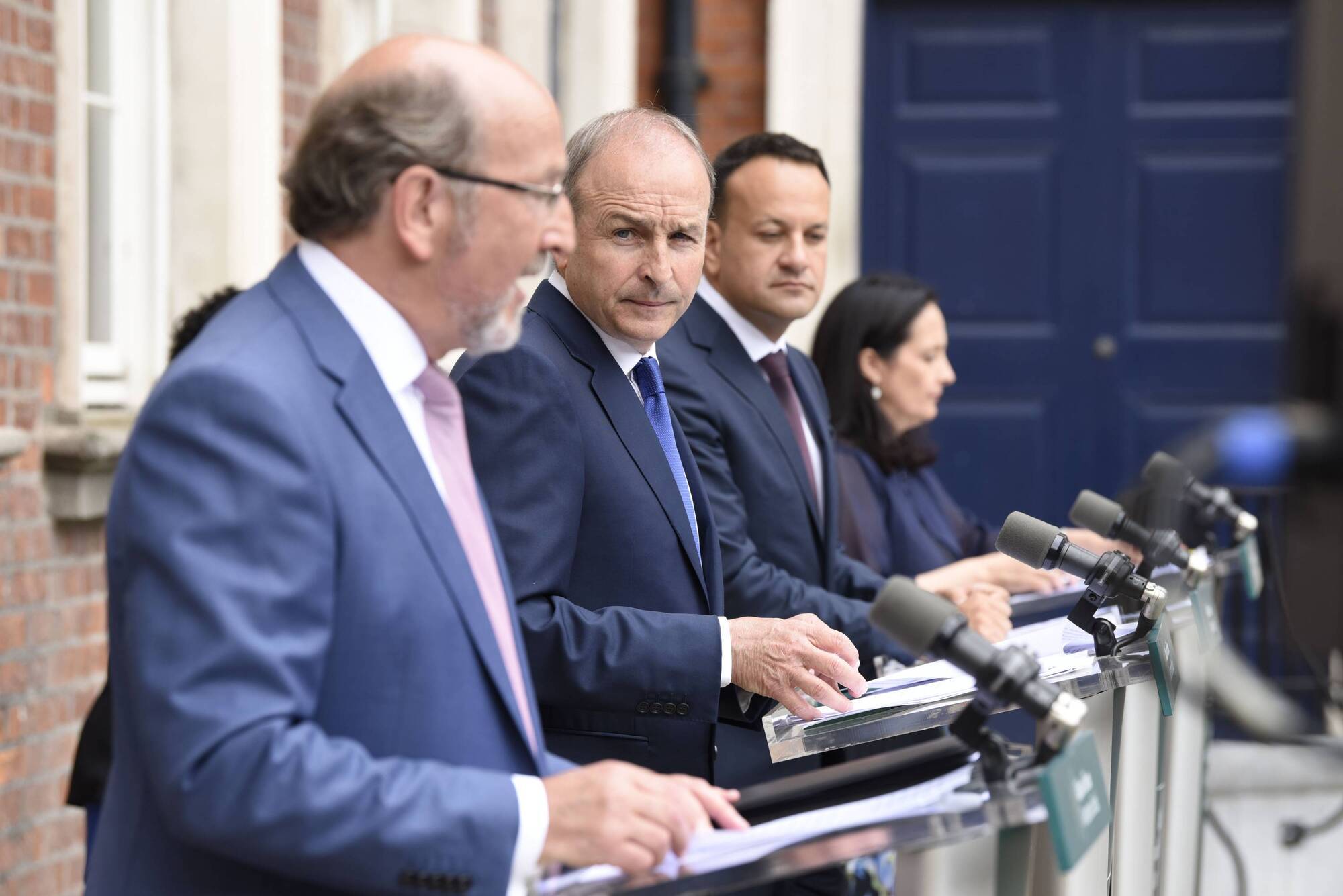
(Left to right) Professor Brian MacCraith, Taoiseach Micheal Martin, Tánaiste Leo Varadkar and Minister Catherine Martin at the launch of the Report of the Future of Media Commission in Dublin Castle on Tuesday. The Taoiseach blasted Prof. MacCraith's proposal to scrap the TV licence as representing “a danger to democracy” and “not realistic”.
In terms of slap downs, it was as direct and forceful as they come.
Standing beside the man he charged to produce a report into how the media in Ireland should be funded, Taoiseach Micheál Martin rejected one of the most important proposals put forward by Professor Brian MacCraith, the chair of the Commission, in a visceral fashion.
This was at the Dublin Castle press conference announcing the publication for the roadmap held just after the Cabinet approved the plan. Prof. MacCraith, a former DCU President, and his Commission on the Future of Media, had argued for the TV licence to be scrapped and replaced with Exchequer funding.
MacCraith made clear from his view the proposal was “a well-argued case” but Martin disagreed. And disagreed sharply. He blasted the proposal as representing “a danger to democracy” and “not realistic”.
He asked the question as to whether governments should have direct input into the funding of the media. And he said there has to be clear demarcation between funding and indeed funding and the independence of media.
“I think there are genuine legitimate concerns about having the entirety of the budget, determined by a government right into the future from year to year,” he said.
He went on to say we've seen it already in some EU member states or governments are now directly influencing to an unhealthy degree media outlets have significantly have an overbearing influence on some media outlets and platforms, which does impact on democracy and choice.
Aside from the concerns of freedom of speech and plurality, Mr Martin also made clear he did not agree with scrapping a €150m revenue stream for RTÉ and placing the full burden on the taxpayer which he said could top €300m a year.
Arts Minister Catherine Martin piped in and said she shared the concerns raised by the Taoiseach. It was a bit awkward to see Prof. MacCraith have to stand there and take such a dismissal.
MacCraith was left with nothing to do but try and reclaim his credibility and that of his Commission by saying he was “very pleased” that 49 of the 50 recommendations were accepted.
Alarmingly, a key demand of newspapers that they be made VAT exempt was not forthcoming and Mr Martin sounded a warning that it may not be possible, even though the sector is in distress commercially.
He would only commit to “examining” the issue but warned there are limitations in terms of EU directives. He did accept that the print industry is facing huge challenges in the current and future climate.
While concerns about governments controlling media in democracies are legitimate, this report will leave many in the media in Ireland, aside from the RTÉ, unhappy that its dominance is unchallenged.


CONNECT WITH US TODAY



Be the first to know the latest news and updates