Mick Clifford: Does the governance of the Garda medical insurance scheme need a check-up?

St Paul's Garda Medical Aid Society differs from other health insurers as the make-up of its management committee is far in excess of the typical number of ten to twelve members.

The annual report for 2021 of the St Paul's Garda Medical Aid Society made no reference to any concerns about governance at the organisation.
There was nothing about a change of chairperson during the year.
“I would like to take this opportunity to thank the society’s chairman Paul Crowley and the management committee for their assistance and co-operation during the past year,” society secretary Owen Connell wrote.
The man who had been chair of the committee (referred to here as the board) at the start of 2021, Stephen Sheerin, didn’t get any mention. There was no report about Garda Sheerin’s decision to resign as chair during the year because he felt proper controls were not in place. Neither was there anything about concerns expressed at board level over the awarding of a €500 expense to each member (and three trustees), with a potential cost of €23,000 if fully taken up.
The annual report didn’t relate to its members that pressure for major change in the organisation was being exercised both from within and from the garda commissioner, Drew Harris.
The report did point to some of the positives at a time when society in general was struggling with the pandemic.
“The numbers insured by the society continue to grow and currently stands at the highest it has ever been at 55,099 persons, including serving and retired members, spouses, partners and children. It is important to note also that the dependent children can stay on cover with the society until they reach 29 years of age.”
There are few if any insurance schemes which will cover a dependent child until the age of 29. The measure is one of a number which illustrate the breadth of cover in the garda’s health insurance scheme. Premiums are not cheap, coming in at around €30 per week per person, which adds up to a considerable sum, for instance, for a family of four or five.
Cover, however, is far greater than for other health insurers with GP visits, physiotherapy and talking therapies, and a whole range of other treatments and costs covered. Much of this cover is attributable to the status of St Paul’s as a friendly society. It is not burdened by the pursuit of profit and therefore can afford the generous level of cover.
Another way in which it differs completely from any other health insurer is the make-up of its management committee or board. The board consists of twenty members along with three trustees, far in excess of the typical number of ten to twelve members in the vast majority of organisations.
All of the members are serving or retired gardaí. Again, this is a major departure from organisations that handle tens or hundreds of million of euro. For the year ending 2021, the subscription income for St Paul’s was €80.45m while claims amounted to €70.9m. “Committee and officer expenses” amounted to €99,890, up from €44,349 in 2020, the latter year being one when covid severely restricted in-person meetings.
St Paul’s also engages in investments, as is prudent, which were valued at around €45m in 2021. An annual subvention from the Department of Justice to the tune of €125,000 was also awarded to the society.
In corporate bodies, like health insurance companies, board members might include a solicitor, accountant, industry rep, trade unionist and so on, in order that a balanced approach to decision-making is taken. Similarly, in organisations like a credit union, board or committee members would typically be drawn from across society, including people from business, voluntary bodies and the broader community. In St Paul’s the only breadth of experience is in law enforcement, which has many facets, but in the overall scheme is as limited as any other line of work.
One source in the industry put it like this. “There’s not one person on that board who ever set foot in a hospital other than as a patient or in the course of their garda duty.” Gender balance is another issue. Of the 23 committee members and trustees listed in the 2021 report, just three were females.
The 20 members of the committee/board are either elected regionally by members of St Paul’s or appointed by garda representative bodies. The three trustees are charged with policing the board and are usually former members of the board.
Ten board members are elected directly by the members from the various divisions in An Garda Siochána and through retired gardaí. Ten others are nominated by garda representative bodies, six from the GRA, two from the sergeants and inspectors body AGSI and one from the association representing superintendents and chief superintendents. These board or committee members serve terms of five years, although there have been moves in recent years to increase this to six.
The general secretary, a full-time job, is seconded by the gardaí. He or she receives their garda salary which is topped up by St Paul’s. An assistant secretary is also appointed. Thus all the management and oversight functions in St Paul’s are carried out by serving or retired gardaí.
The good ship St Paul’s was rocked in 2014 when one of the committee members, Mick Keane, made complaints that he said amounted to the possibility of criminal activity. He contacted the Oireachtas Public Accounts Committee about his concerns. A garda investigation was authorised by then commissioner Noirin O’Sullivan but it concluded that nothing of a criminal nature had occurred.
In February 2015, the commissioner’s private secretary wrote to the PAC on the matter.
“While some investigative matters still need to be finalised there is no evidence of any criminality arising from the complaints made,” he wrote.
The management in St Paul’s were dismayed that the letter had been published by the PAC, which is standard procedure.
Owen Connell, the general secretary said the letter “had done considerable damage to the reputation of the society”.
“I am concerned as secretary about the damage done to the reputation of the committee and trustees of the society. These are ordinary members of the course from around the country who assist in the running of the society,” he said at the time.
Mick Keane subsequently stood for re-election to the committee but he was not re-elected.
In 2019, another matter arose. In correspondence seen by the , the trustees wrote to the board/committee about ongoing concerns. “The duties and responsibilities of the committee and trustees and very onerous and perhaps not fully understood sometimes but would come into play if something went amiss with any aspect of the society’s affairs,” the letter read.
“If the society was to appear in the courts or other public forum on some financial issue or was to be reviewed by a government regulator, how would they view the GMA being managed by a garda with no financial/medical insurance qualification or expertise?”
The matter was subsequently discussed by the 20-member board but ultimately a decision was taken to maintain the status quo.
In 2021, Stephen Sheerin was elected chair of the board of St Paul’s. He had previous experience from being on the board of the garda credit union which had gotten into financial difficulties. According to different sources, Mr Sheerin was one of those credited with getting things back on track and in this respect had some experience with sound financial governance.
An issue arose in 2021 over a proposal to award all board and trustee members €500 each in the form of a voucher to cover online and IT costs. The pandemic completely restricted meetings of the board and various subcommittees during the year. These meetings are typically held around the country, which allows the large Dublin-based contingent to get out of the city. It also ensures that mileage expenses are not confined to those from far-flung corners of the country.
The proposal to award the €500 voucher also extended to the previous year. This would have led to a cost of €23,000 in expenses. The gardaí who were representing their associations were already in receipt of expenses to cover their “office” costs.
They also referenced a directive that had been introduced by garda commissioner Harris about the acceptance of “gifts”. The section states that garda and civilian staff “may not accept any gifts, gratuities, favours, discounts, subscriptions, hospitality or sponsorship which might be seen or perceived to compromise their duties now or in the future".
The inference was that the “expense” as it was classified was, in the opinion of the trustees, a “gift”.
Eventually, the trustees and four of the board members declined the offer of the voucher. The remainder of the board accepted it as an expense, which came to a total of €8,000. The decision to backdate the payment to include 2020 was dropped. When contacted by the Irish Examiner, St Paul’s secretary Mr Connell said that no gratuity was awarded to any committee members.
“Legitimate expenses are paid to committee members and are applied in accordance with Revenue guidelines,” he said in a statement. “The payment of legitimate expenses in accordance with Revenue guidelines to committee members is the business of the society and not of relevance to the garda authorities.”
In the Summer of 2021, various issues of governance were not sitting easy with the chair of the committee, Stephen Sheerin and he decided to resign. In his resignation letter, he stated that “the current structure in place is not optimal for an organisation such as the Medical Aid society from a governance perspective”.
He pointed out that he had raised his concerns at each monthly meeting in March, April, May and June. He referenced members’ subscriptions and the subvention of public money received annually.
“The importance of the controls and management of these funds must be subject to the most rigorous oversight, and I am concerned that there are shortcomings in this regard now,” he wrote.
“I feel that I have made my position clear a few times over the last number of months, but, as it stands, I do not feel able to bring about changes that I see as necessary to the management structure of the society.”
He went on to state that it was with regret that he had decided to step down as chairman and as a member of the board.
When contacted Mr Sheerin told the that his concerns had since been addressed and he was now back on the board.
“Part of my concerns were that I was coming from the credit union (in terms of governance) but the board has now addressed those concerns,” he said.
When asked about the controversy about a €500 expense payment to board members earlier in 2021 he replied: “I don’t recall that, not off the top of my head anyway."
Following the various pressures, St Paul’s did move to split the role of general secretary by appointing a new general manager to run the organisation and its staff of eight. A recruitment firm was employed earlier this year and it advertised the post. A shortlist of candidates was interviewed by a panel which included a representative from the recruitment firm and two members of the board of St Paul’s.
The successful candidate was Michael Dodd, an accountant who was a long term civilian employee of An Garda Siochána, based in Phoenix Park. He officially took up his role last month.
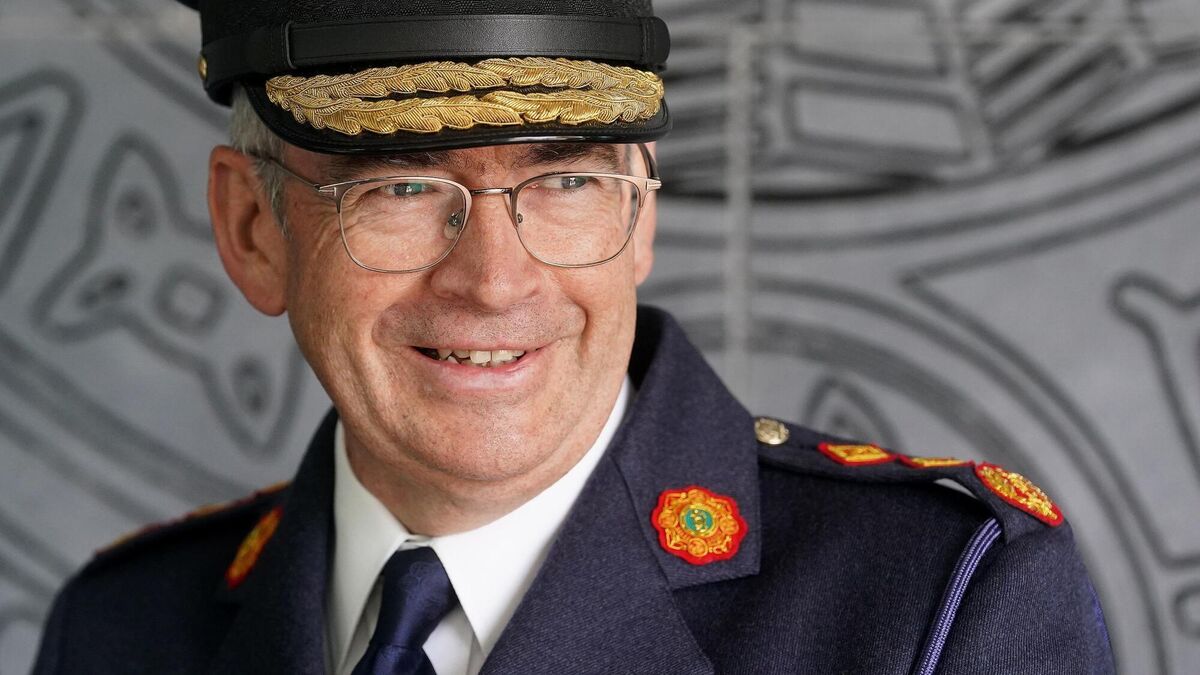
Owen Connell told the Irish Examiner that the interview process for the new position was “managed from start to finish by a professional independent recruitment agency". Garda commissioner Drew Harris has also had issues with St Paul’s around the secondment of a member of the force to the role of secretary. Negotiations between the commissioner, St Paul’s and garda representative bodies are ongoing in that respect.
Owen Connell told the that he rejected any assertion that “governance issues have arisen at St Paul’s”.
“The society is held in high regard by all our members, stakeholders and suppliers of medical services and any assertion to the contrary has potential to do serious reputational damage which would be unjust and plain wrong.”

CONNECT WITH US TODAY



Be the first to know the latest news and updates