Daniel McConnell: Is Sinn Féin ready to go from a party of booing to one of doing?
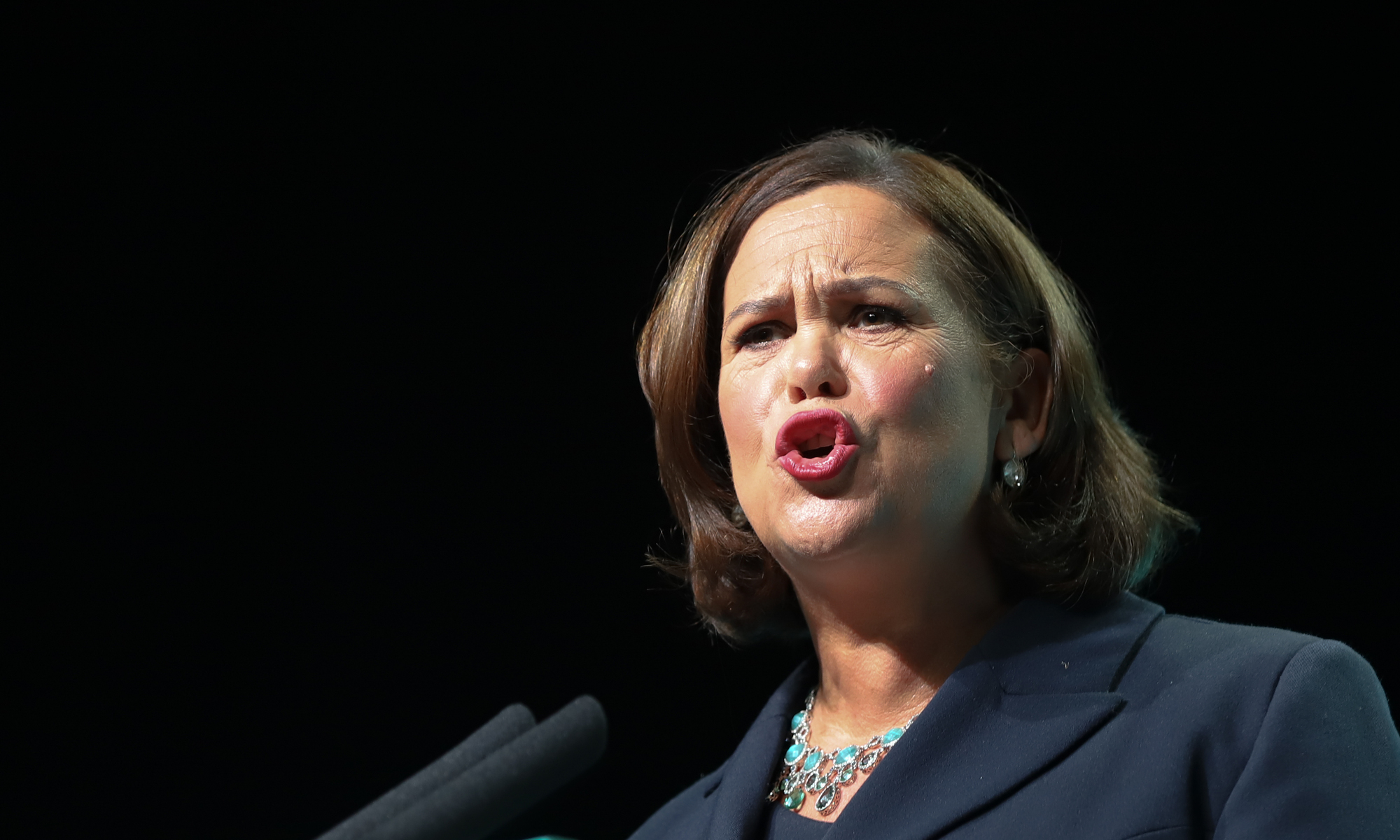
For all of her party’s inconsistencies and policy limitations, Mary Lou McDonald is now seen as potentially Ireland’s first-ever female Taoiseach
Anyone who knows politics understands that being in government is a world away from what life is like as an opposition party.
In opposition you speak, in government you act. Going from a party of booing to one of doing is rarely an easy transition. But the prize is substantial if it can be achieved.
To paraphrase former tánaiste Mary Harney’s famous line, your worst day in government is still better than your best day in opposition.
A succession of opinion polls in recent months have placed Sinn Féin as the most popular party in Ireland. Should that be replicated on polling day at the next General Election, Sinn Féin can expect to not only be in the next government but be the lead party.
Such a realisation, based on that succession of opinion polls, is already having a tangible impact on the political establishment in Ireland. Interest groups are already circling the party and are now far more reticent to criticise the party’s more extreme policies.

“We’ll have to work with these people in a couple of years,” is the mantra most often repeated these days from lobby groups and agencies who have silenced their previously vocal criticisms.
Even in the Dáil, in a sign of changing times, Social Democrats TD Jennifer Whitmore called on Sinn Féin to set out their position on a matter this week on the basis they are "likely to be in government".
Correctly, a greater deal of scrutiny is already coming on the party which in the past has been shamelessly populist, economically illiterate, and woefully inconsistent in its policy creation. Today’s examination by the into Sinn Féin’s main policies has elucidated some interesting answers as to its main priorities.
Some of their answers are far from radical and sit neatly alongside those of Fianna Fáil, Labour and the Social Democrats. Some are dubious in terms of the amount of money they would cost to fund not only in year one, but long term.
Take one example. David Cullinane, the party’s health spokesman called this week for free antigen tests for everyone, a €500m decision as Taoiseach Micheál Martin pointed out.
Such a policy was not isolated. Many of the spending measures proposed by Sinn Féin to us are hugely expensive and what is missing in the totality is a credible and coherent plan to deliver it.
There is no magic money tree in government. You are spending real money that either has to be raised in taxes or borrowed.
Their recent alternative budget drew criticisms from Fine Gael that its planned spending package failed to account for almost €3.25bn and that it can’t be trusted with the public finances, a sign there is political mileage to be gained by attacking their numbers.
This reflects a lingering perception that Sinn Féin can’t do numbers. This is notwithstanding Pearse Doherty’s superb work on tackling the price gouging by the insurance industry.

Yes, the party’s primary economic policies come from a socialist perspective and catered for that niche audience in Ireland. It was populist but it was never mainstream.
Under Mary Lou McDonald, the party has already made significant inroads into more affluent and higher-educated voting categories. The adage in Irish politics continues to apply – win the middle classes and you win the election.
They have softened their stance on many policies, including on some of their taxation policies for higher-income earners and they have made significant efforts in recent years to try and reassure the business community that a Sinn Féin government would not be entirely hostile to them.
While all the indications are positive for the party and its backers, the path to power is far from straightforward. The party certainly left a number of seats behind them at the last election and are set to dramatically increase on their current Dáil seats number of 37.
Spooked by the woeful 2019 local and European elections, they were over-zealous in de-selecting candidates just weeks before their 2020 surge materialised. Now, what is clear is that many of their current crop of TDs were elected on the crest of the Sinn Féin wave, as opposed to the personal vote they attracted.
Also, of those who did get elected, there are some doubts over the abilities of their new TDs. It appears the party knows that too - by housing a number of its TDs in offices in the basement of Leinster House away from the party’s leading lights.
Next time around, the party will be seeking to expand on its 37 seats and could realistically scoop more than 50. Now, winning 50-plus seats would certainly put them in the driving seat to form the next government, but would still leave them well short of a Dáil majority.
Thus, finding coalition partners is a must and it is an open question as to who would actually be prepared to share power with them. It is highly doubtful that a jaded and bruised Fine Gael, having been in power since 2011, could fathom continuing on in government for a fourth term.
It would be bad for the country and bad for the party. The same cannot be said of Fianna Fáil, whose future is questionable.
Again, based on a succession of polls, the party is consistently now only the third most popular party in the country, but the inevitable change of leader from Micheál Martin could help revive its fortunes.
Even if the party was to return with fewer seats than Sinn Féin, it could well fancy its chances of entering power knowing it has far more experience in governing. Another important aspect to remember is that Sinn Féin have at best a limited knowledge of how the actual machinery of government works.
Party sources have conceded that they don’t have any interaction with or knowledge of who the key officials are, nor do they have any experience of progressing legislation as ministers through the Oireachtas and affecting change.
As for the other parties, could Sinn Féin find itself in talks with the Greens? It is possible but the Greens, having been the third wheel in this government, may suffer badly at the polls next time.
It is also unlikely Labour or the Social Democrats would favour entering power with Sinn Féin, but obviously their calculation would greatly depend on how many seats they each return with. The same could be said for the other left-wing parties who have never shown any real appetite for being in government.

Shouting from the side lines in opposition is far safer. With an election at least some three years away, we are still only beginning to talk of the possibility of a Sinn Féin government here.
However, for the first time since they re-entered the Dáil in 1997 with just one TD, it is now a genuine possibility and something the public seems relatively at ease with.
For all of her party’s inconsistencies and policy limitations, McDonald is now seen as potentially Ireland’s first-ever female Taoiseach and that prospect itself now seems more plausible than ever.