When the pager goes, Christmas dinner stops — meet the West Cork RNLI family on call this festive season
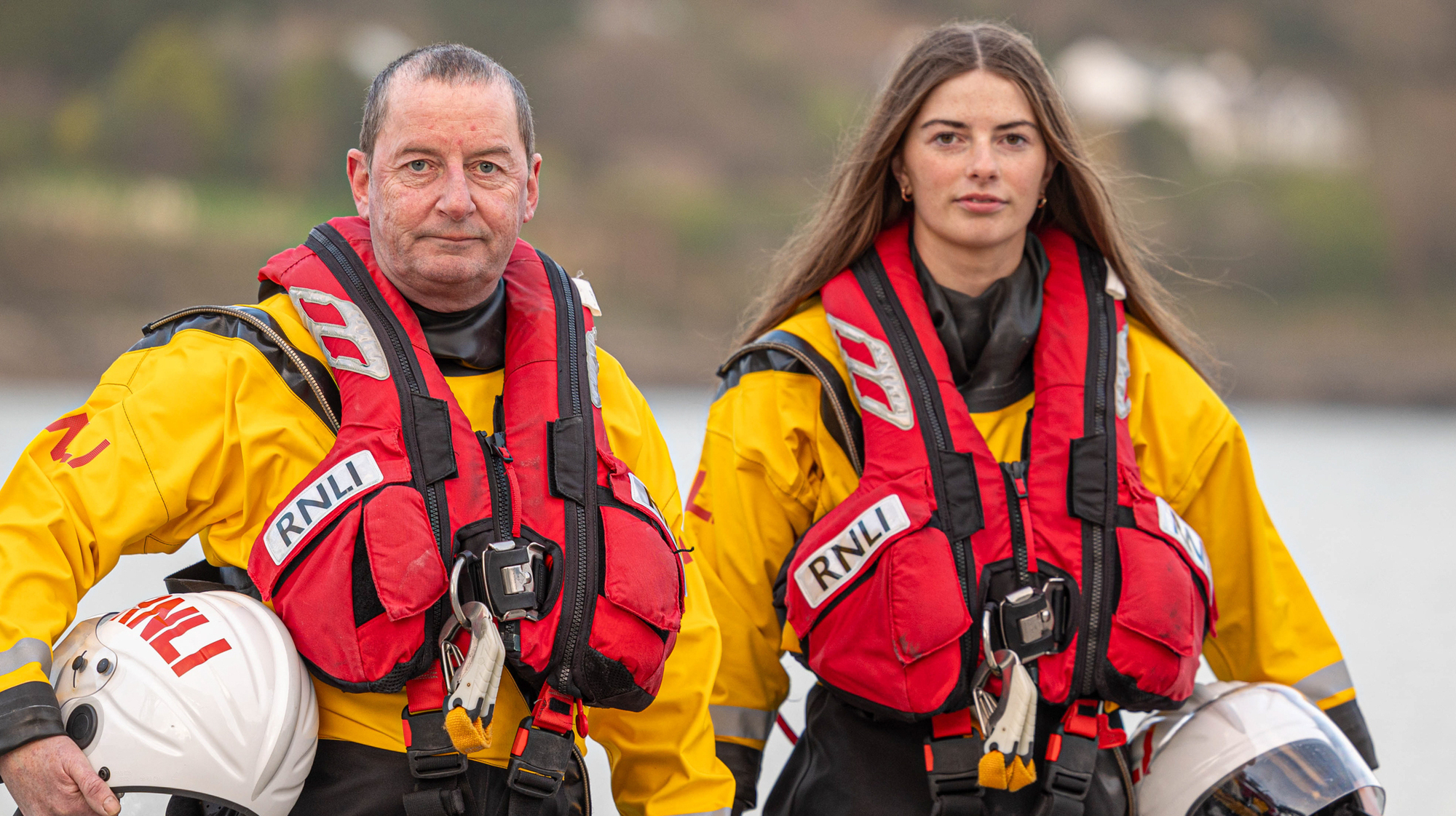
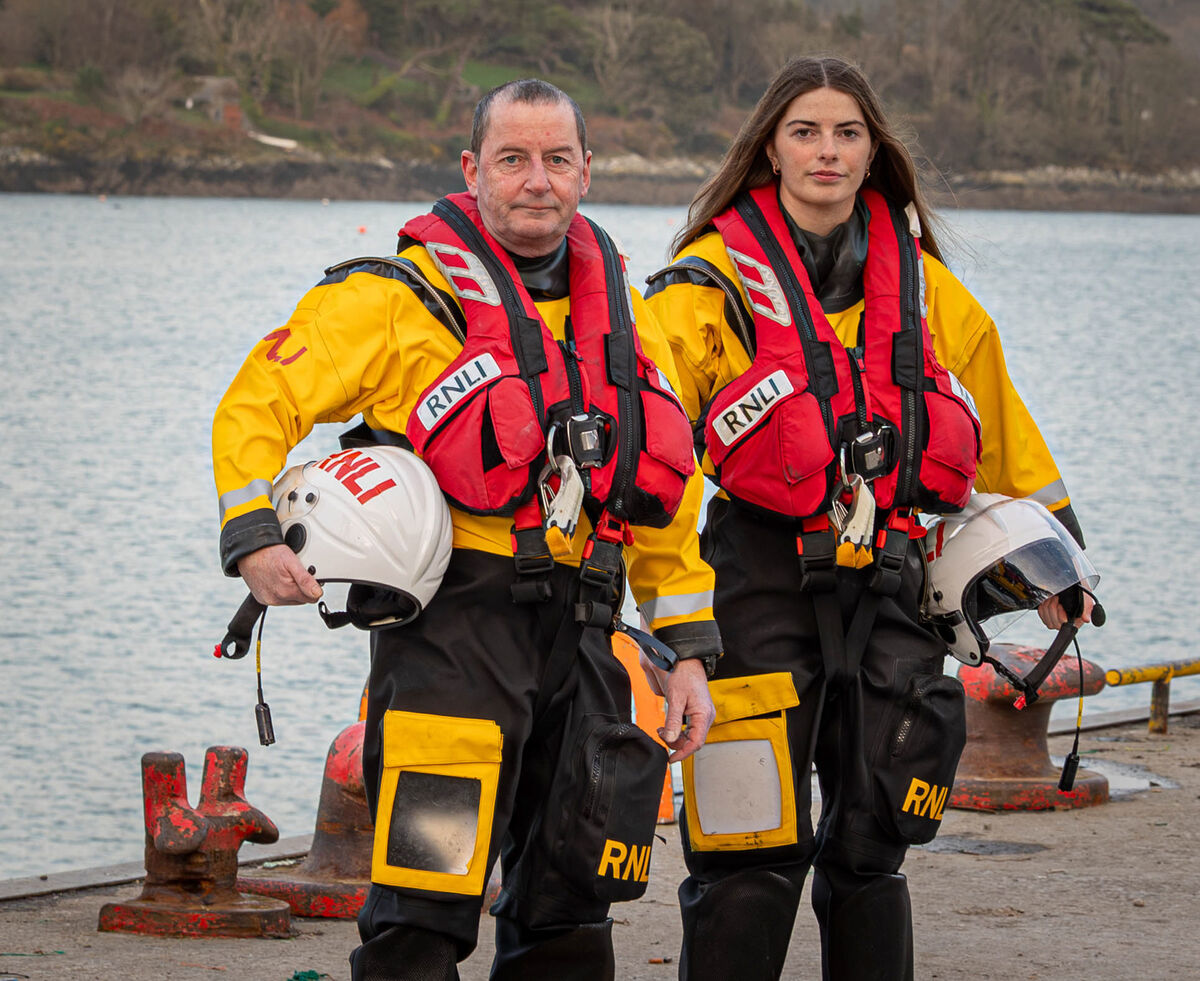
Aodh O'Donnell (left), Union Hall RNLI helm and Lifeboat Trainer Assessor (LTA), with his daughter and fellow volunteer lifeboat crew member, Muireann. Picture: Neil Michael
Like most teenagers, Muireann O’Donnell has a gadget that is never far from her side and Christmas Day will be no different.
But unlike her peers, she won’t be worrying about friend updates or viral videos trending on TikTok. She will instead be keeping a close eye on a gadget few of her Gen Z friends even know exists — the pager the RNLI has supplied her and the other 20 or so volunteers with Union Hall’s RNLI lifeboat station.
Muireann has been a lifeboat volunteer since January, and after nearly a year of training and drills, she will be joining the volunteer crews on duty over Christmas. This means being on call seven days a week, 24 hours a day over the festive period.
Any message she gets on that pager could mean the difference between life and death for someone in trouble. On Christmas Day, joining the 19-year-old for lunch will be her older sister Gráinne, 20, younger sister Aoife, 18, her mother Eileen and father, Aodh.
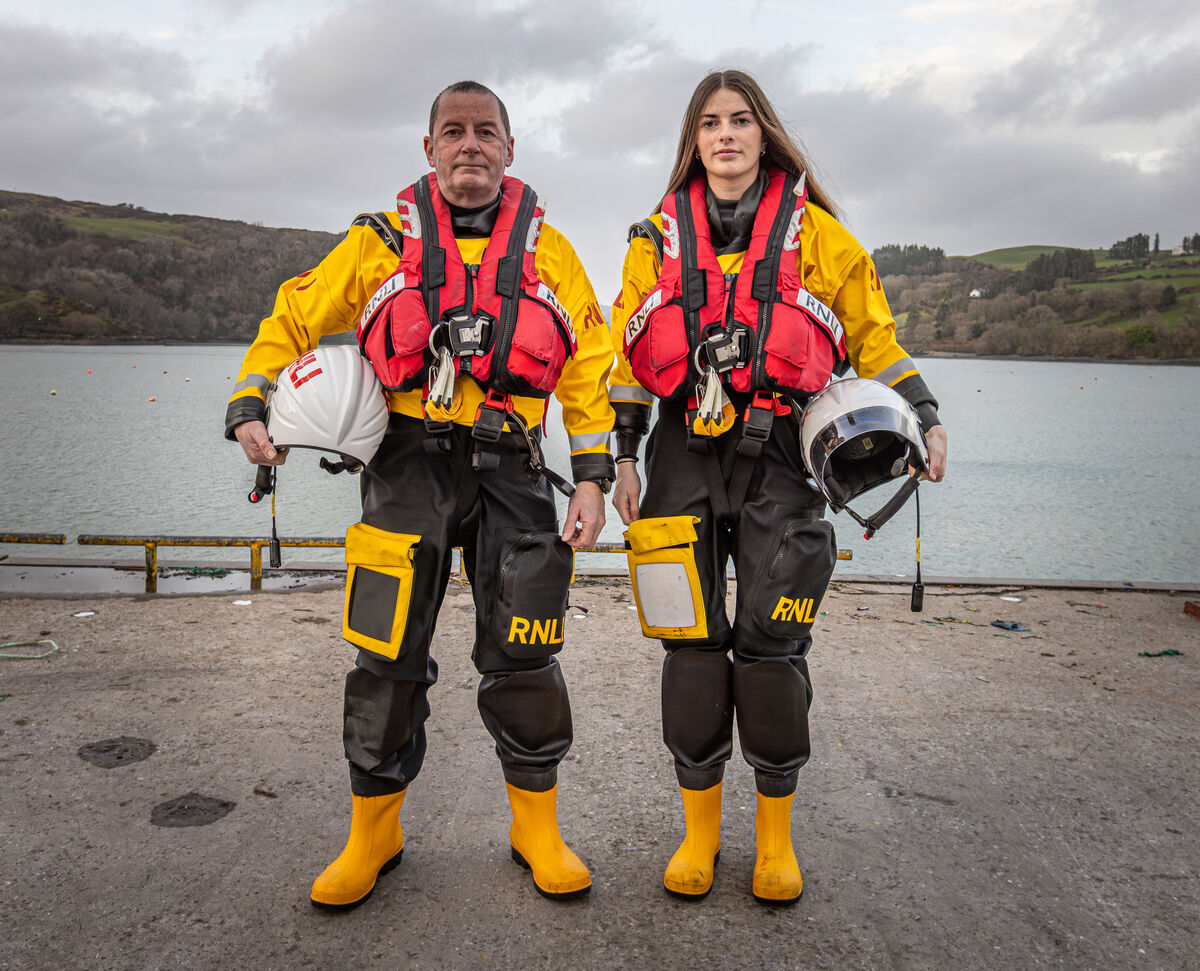
Aodh will also be keeping a close eye on his pager, as he is helm and Lifeboat Trainer Assessor (LTA) at Union Hall’s RNLI life boat station. He has been a crew member since the station opened in 2014 in temporary offices in the middle of Keelbeg Pier, in Union Hall Harbour.
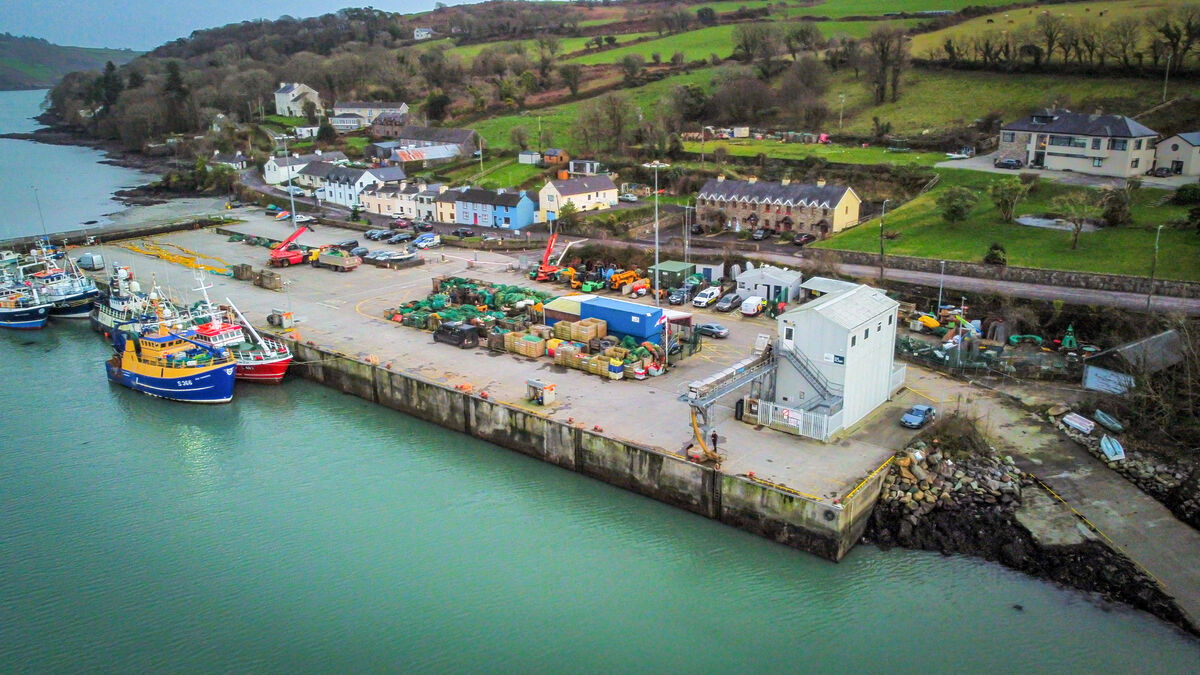
Based around two blue shipping containers, stacked on top of each other, and a metal cage to store the boat and tractor used to help launch it, the station is as rudimentary as it gets.
As well as volunteering with the RNLI, Muireann and Aodh also work in the film industry together. Together with his father Jim and his sister Édain, Aodh helped found the West Cork Film Studios in Skibbereen.
He works as a marine co-ordinator and consultant at the studios, and Muireann works alongside him. Aodh’s daughter Aoife also works in the film industry from time to time, and having recently turned 18, also wants to volunteer for the RNLI.
Muireann and Aodh live about five minutes away from the life boat station in the scenic village of Glandore. If both pagers go off over Christmas, they will have to drop everything and dash out the door.
Aodh, who has a number of rescues under his belt, said: “The cutlery will drop from our hands, chairs will be pushed back and we’ll just turn round, and head straight for the door.
“There won’t be any time for pleasantries, it’ll just be a case of legging it."
And father and daughter won't be the only ones. “While there will be a crew of four needed, there will be others doing other roles to make sure the RIB (rigid inflatable boat) and its crew get safely into the water.
“My earliest childhood memory is having fun on my dad’s rib,” Muireann said. “As I grew up, I always knew I wanted to be a part of search and rescue. I was always seeing dad go out at the drop of a hat day or night, to help people in trouble and I really wanted to be a part of that.”
Aodh has been involved in underwater search and rescue for many years. “When Union Hall lifeboat station opened in 2014, I jumped at the chance to join this amazing charity.”
The pair train for their respective roles constantly, with supplementary training in the The RNLI College in Poole, Dorset. This is the central training hub for UK and Ireland lifeboat crews and lifeguards, which delivers more than 40 different specialist courses each year.
Their training, kit, rescue equipment, lifeboats and lifeboat stations are all paid for by donations from the public. For every €1 donated, 78c is used to fund lifesaving activities, while the remainder is spent on fundraising. Last year alone, it cost €224.3m to run the RNLI lifesaving service across the UK and Ireland.
If Muireann is one of the first crew members to arrive, she will be one of the ones going on “the shout”. On arriving at the station, the Christmas jumper will hit the floor and she will don her dry suit and lifejacket before grabbing her helmet.
She and the other crew will clamber aboard the lifeboat to be edged down the slip way and into the water.
Aodh said: “On getting to the casualty, be it a vessel or a person, we assess what needs to be done and decide the course of action, which is then communicated with the crew on board and the coastguard so that we are all working as a team.
“We then do what is required, whether to take people onboard or vessel in tow or do whatever is necessary and return to a safe harbor."
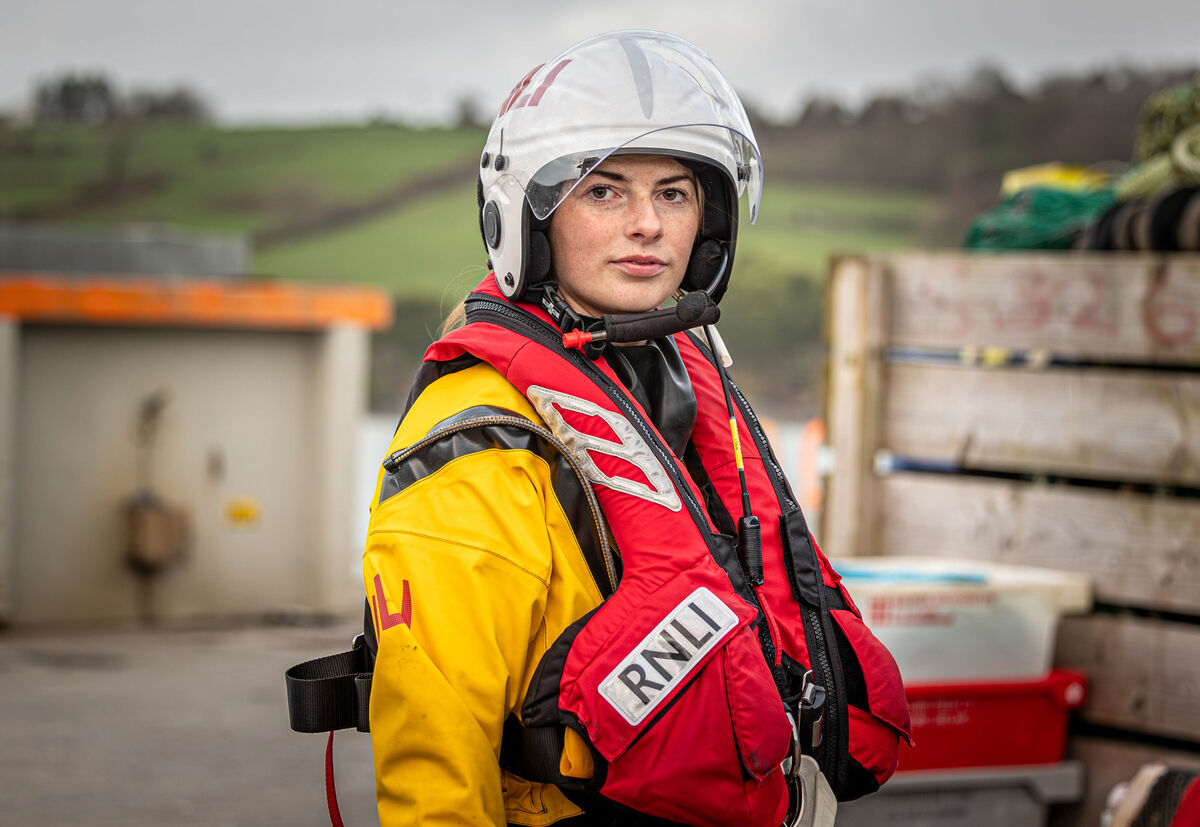
Muireann said: “Being a part of something bigger than you know, it’s something indescribable. We do it for the people, the families and friends. The lifeboats all around the coast go out to rescue anyone in trouble.
“It is such an important job. We always say someone has to do it and I’m happy I am now one of those people. There is such an amazing feeling to be able to help and save people in need.”
Aodh has advice for anybody hell bent on heading out into the water this winter.
On his sea safety To Do list, he says everyone should have a Personal Locator Beacon (PLB) which costs around €350 each.
People should make sure they tell others where they are going, what time they plan to be back and bring someone with them.
If out kayaking or sailing, people should never venture out alone, and bring not just a life jacket but also some form of communication, ideally a PLB, but at the very least a fully charged mobile phone.
“Hypothermia starts affecting an average person within a very short space of time,” he said. “At this time of year, for an average person of average weight, within just 20 minutes in the water, you are hypothermic.
“Once you start shaking, hyperthermia has already started. You will start losing sensation in your fingers and toes first and unfortunately, you won’t be able to keep yourself afloat or know what you are doing.
“You won't even be able to flap your arms or wave for help. I would urge anyone to think twice before getting into the water this Christmas.”
You can donate to the RNLI here.


CONNECT WITH US TODAY



Be the first to know the latest news and updates