Let Covid-19 be a catalyst to finally support our students and help them reach their potential
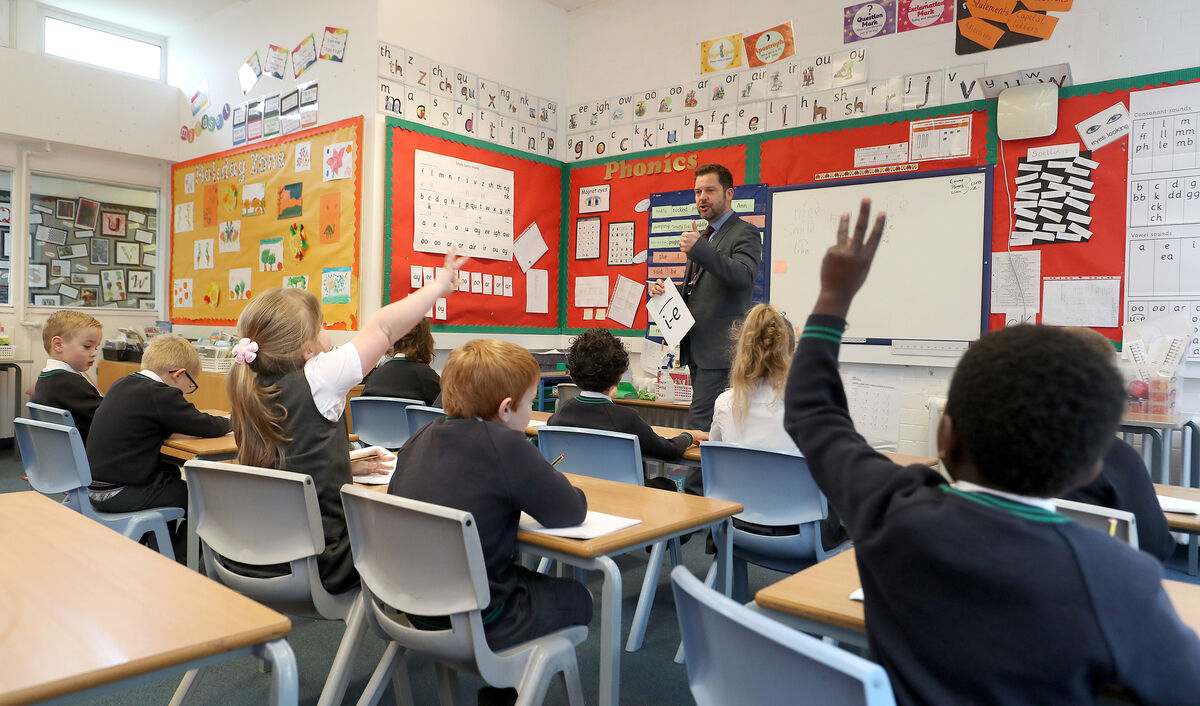
International evidence shows school closures exacerbated educational inequalities, even in countries where education systems were better funded to start with. File picture
According to a recent report by the Organisation for Economic Co-operation and Development (OECD), Ireland ranks in last place out of 36 developed nations when it comes to investment in education as a percentage of national wealth.
This depressing finding does not come as a surprise to those who work in education or research educational inequalities.
However, despite a plethora of sobering figures, such as that the current annual grant of €183 per primary school pupil amounts to €1 per day in the primary school year – 9% less than in 2010 at the height of the Great Recession – the Government still appears to think that spending more on education is a luxury rather than a necessity.
After a decade of under-investment, our education system was already under strain, with primary class sizes of 23-24 above the OECD average of 21, and one in every seven students taught in classes of more than 30 students.
However, no one could have prepared for the challenges posed by the Covid-19 pandemic, which likely made matters even worse. International evidence shows school closures exacerbated educational inequalities, even in countries where education systems were better funded to start with.
The Netherlands, often highlighted as a "best case scenario" for limiting Covid-19 disruption in education, is a case in point. Despite having a well-funded education system, one of the shortest school closures, a proactive delivery of home learning devices, the highest rates of broadband penetration in the OECD and a limited digital divide, students are still estimated to have lost the equivalent of a fifth of a school year’s worth of learning.

Findings from England where, like Ireland, school closures were longer than the OECD average, estimate primary school children fell three months behind, rising to up to seven months for children from more disadvantaged households. Similar lags have been observed in other rich European countries.
If this is the extent to which Covid-19 damaged education outcomes in countries that already invest a greater proportion of national wealth in education, one can only hope the repercussions for Ireland are not worse.
However, this might be wishful thinking given that Ireland had longer school closures than the OECD average and that our education system was already under pressure prior to the pandemic.
Indeed, while standardised testing did not go ahead in 2020 in Ireland, making it difficult to assess the extent of the learning loss due to the pandemic, the 2020 Growing Up in Ireland online survey of parents of 12 year-olds showed only half of students had a quiet place to study, and less than a fifth always had access to online classes.
Reassuringly, countries around the world are acknowledging the need to invest further resources in education to help students regain lost learning.
The Netherlands is spending €8.5bn, or about €2,300 per student, on catch-up initiatives in schools over the next three years.
In the United States, $130bn has been earmarked for expenditure on education catch-up initiatives for kindergarten and primary school children, representing about €2,000 in additional spending per child.
While these vast sums might seem eye-watering, they are grounded in the findings of a plethora of life course research that show investment in early age interventions pays for itself many times over in succeeding years.
In contrast, in a pattern referred to as the Heckman curve, trying to address these inequalities in later years is less effective and more costly, both financially and socially.
In acknowledgement of this, the Irish government’s CLASS programme will disperse €52m to schools to provide additional teaching hours, targeting children "most at risk of learning loss". It is a start, but it is simply not enough.
As researchers, two things are clear. Firstly, educational inequalities exist everywhere and Covid-19 has exacerbated them. However, they can be mitigated with the right measures, preventing them from accumulating into larger learning losses with time.
Secondly, if learning gaps are addressed in a timely and targeted manner, measures are more effective and less costly. Not only does this allow children to reach their full potential, but it also saves society money down the line.
Therefore, we urge the Government to make a concerted effort and properly invest in our future generations, leaving no students behind.
Let the Covid-19 disruption of normality serve as a catalyst to finally supporting our students and helping them reach their potential. Increasing spending on education in Budget 2022 would be a good start.
CONNECT WITH US TODAY



Be the first to know the latest news and updates