Denton's claims on Dublin and Monaghan bombings are baseless
Even in the context of the many atrocities committed at that time, a barrier was crossed into the darkness when 34 souls were murdered that day, writes John O’Brien
Denton's claims on Dublin and Monaghan bombings are baseless

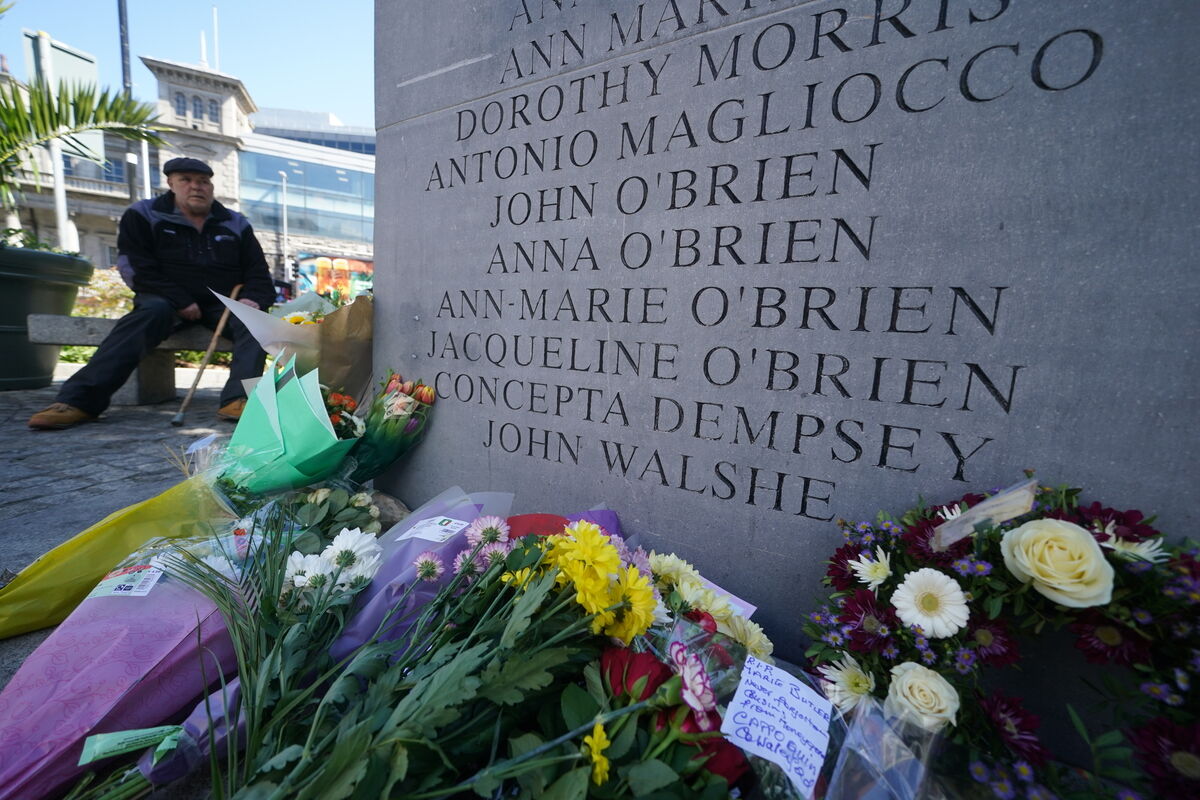
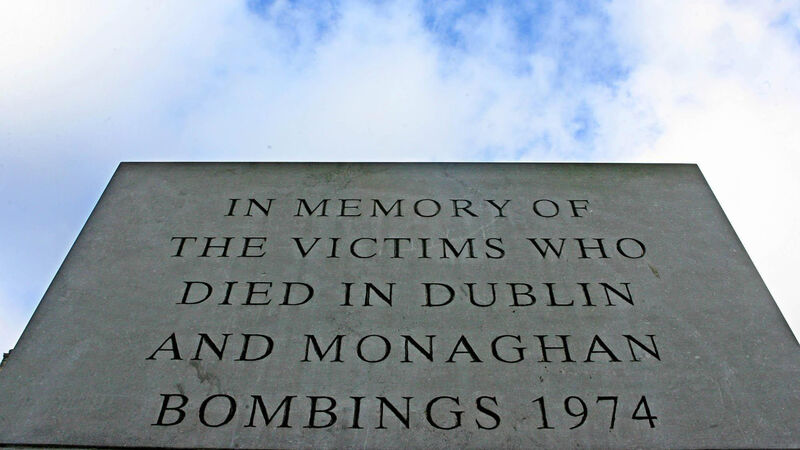
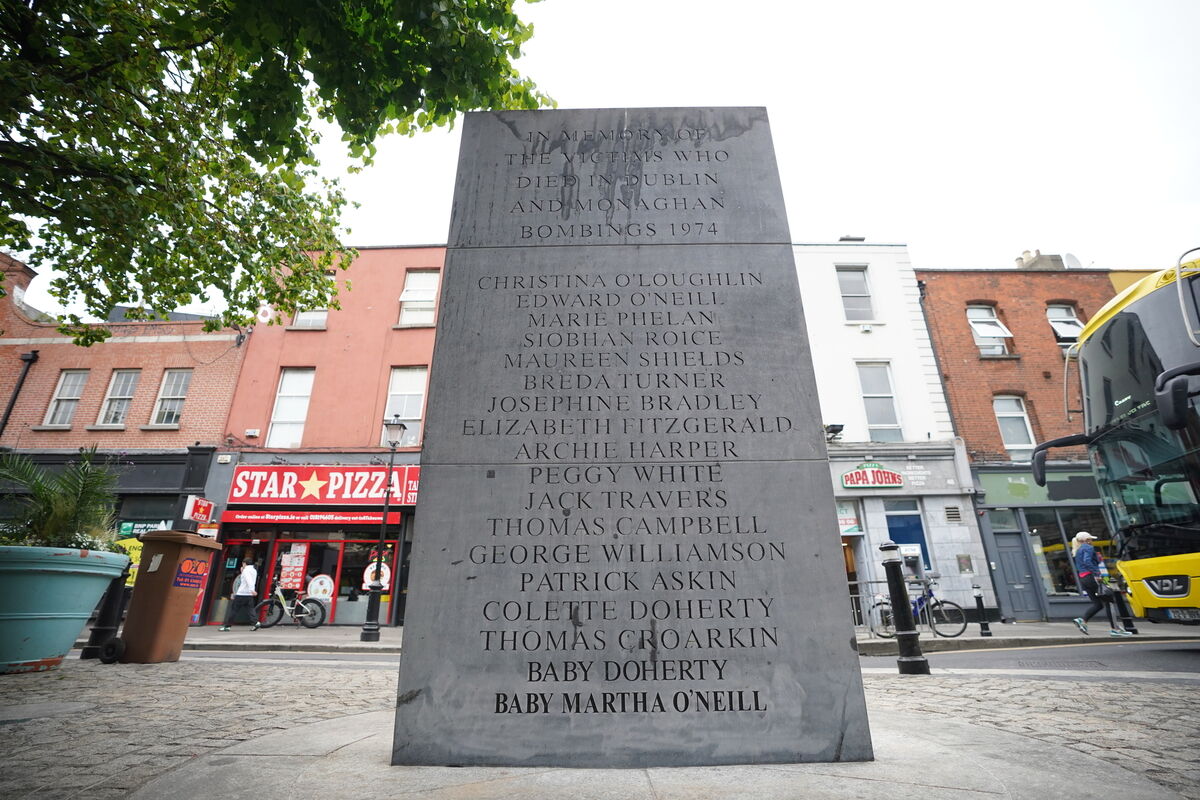
The Dublin and Monaghan Bombings Memorial. The cumulative weight of the evidence leads to a consistent conclusion that the UVF could not have executed these bombings unaided. File photo
THE Dublin and Monaghan car bombings of 1974 were unspeakable crimes of wanton savagery, executed with total disregard for human life and suffering.

Some 34 souls were murdered on that evening, 10 killed in Parnell St, 15 killed in Talbot St, and two in South Leinster St, all in Dublin. Seven were killed in Monaghan later that evening. The timings were: Parnell St, 17:28; Talbot St, 17:30; South Leinster St, 17:32; and Monaghan, 18:58.

Even in the context of the many atrocities committed at that time, a barrier was crossed into the darkness.

It is a matter of profound regret that nobody has been made accountable for these crimes. The memories of those dark days slip from the wider public consciousness, but never from the memories of their families and close friends.

Much has been said and written about the culprits, and much of the discourse has been coloured by competing political narratives. Many promises have been made and broken, and there is no way that justice can prevail in the truest sense of that word.

The Monaghan car bombing was a typical loyalist cross-border attack, short distance involved, hit and run using basic explosive techniques.

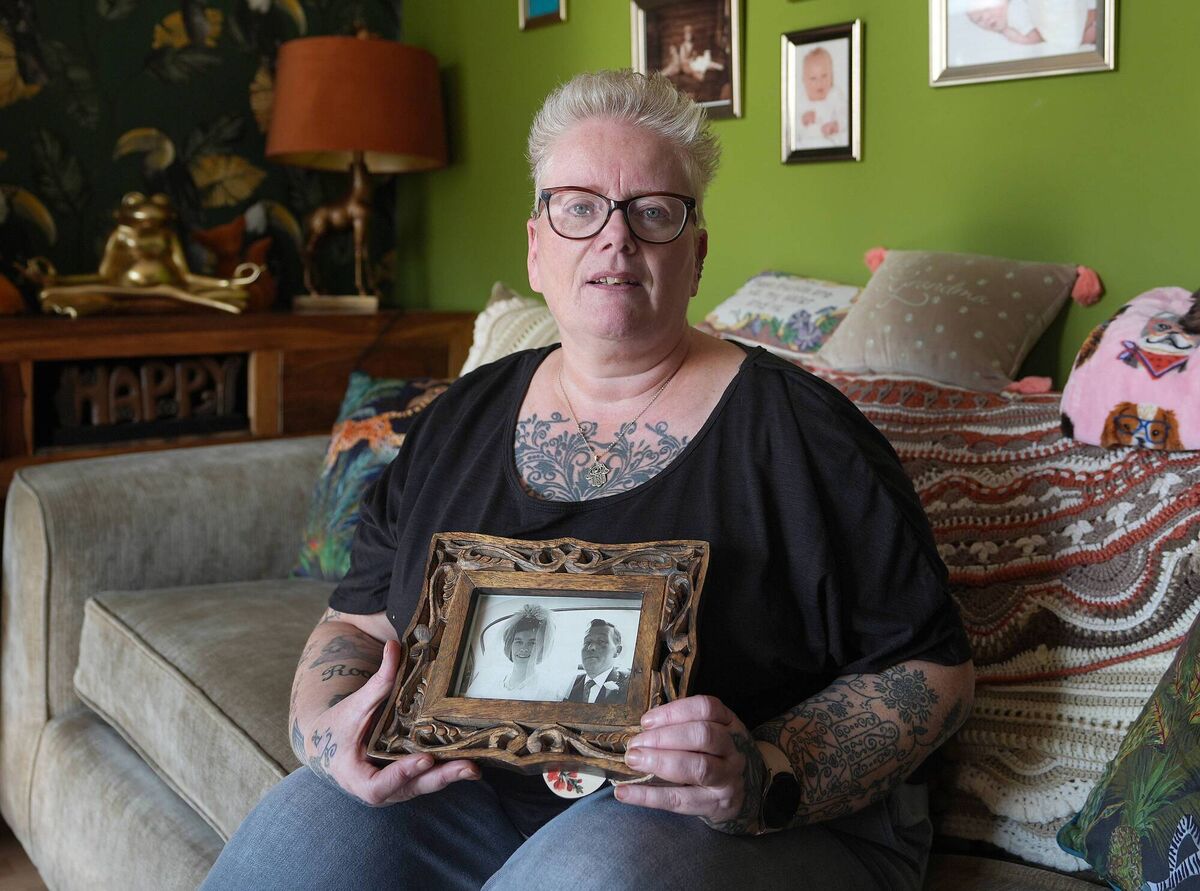
Sharon Askin holding a picture of her parents Patricia and Paddy on their wedding day at her home in Armagh city. Paddy was killed in the Monaghan bombing on May 17, 1974. File photo: Niall Carson/PA

Dublin was completely different. Three synchronised car bombings in the centre of Dublin on a busy Friday evening was a unique event, never achieved before and never achieved since — and certainly not by the Ulster Volunteer Force (UVF).

The bombing occurred during major loyalist unrest over Belfast’s new power-sharing executive, which collapsed within weeks.

I have studied this crime for many years using my experience as a member of An Garda Síochána of detective chief superintendent rank, and as a researcher and author of legacy issues. I am acutely aware of how counter-narratives can polarise discussions and obscure empirical facts. 

My specific approach to the Dublin synchronised car bombings was to focus on analysing the bomb signature in Dublin. This includes the logistics, the type of explosives used, firing mechanisms, and timers. Military expert witnesses offer a very clear analysis based on their military expertise and experience.

This analysis raises very serious technical and operational details which have been disregarded in the overall discourse. 

The name of baby Martha O'Neill added to the names of the 33 victims on the Dublin and Monaghan bombings memorial. File photo

The central conclusion emerging from my book, The Great Deception (2024), is that the UVF — acting alone — did not possess the technical, operational, or organisational capacity to execute the Dublin car bombings of May 17, 1974.

The argument is not based on speculation but on a layered accumulation of forensic findings, expert military testimony, comparisons with the UVF’s historical bombing record, and analysis of the sophisticated planning required for the Dublin operation.

The contrast begins with the UVF’s known modus operandi. Its typical cross-border attacks — such as Monaghan — relied on stolen cars taken from border areas, fitted with crude, low-grade explosive mixtures packed into beer kegs or milk churns. The Monaghan bomb bore all the hallmarks of this pattern: A metal container, low-explosive ANFO, and a clock cog fragment.

The UVF’s operational history across the early 1970s is littered with similar signatures, including several “own goals”, most infamously the Miami Showband atrocity where a bomb being planted by UVF men exploded prematurely.

Against this background, the Dublin attacks stand out as a completely different order of operation. Three car bombs detonated within a two-minute window — 17:28, 17:30, 17:32 — scattered across a busy European capital.

This degree of synchronisation required reliability and precision far beyond the capacity of the UVF’s customary equipment.

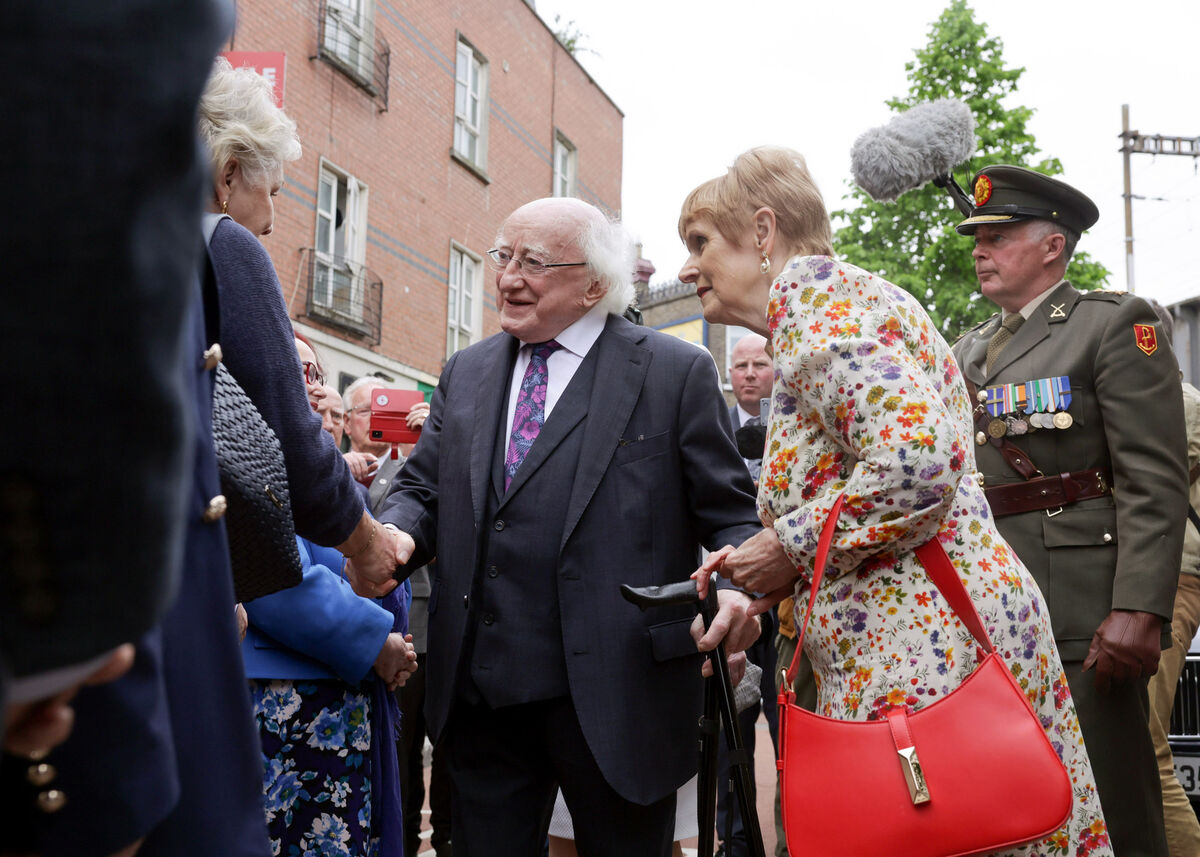
President Michael D Higgins with Margaret Irwin (right) and other committee members last year at the 50th anniversary of the Dublin and Monaghan bombings. File photo: Maxwells

Crucially, forensic interpretation identified re-crystallised ANFO, a high-explosive mixture developed by the Provisional IRA after the 1972 fertiliser regulations removed high-nitrate prills from the market. Military experts across both jurisdictions — Lieutenant Colonel George Styles GC, Lieutenant Colonel Nigel Wylde, and Commandant Patrick Trears — unanimously testified that loyalists had neither the knowledge, the explosive inventory, nor the technical skill to produce such devices.

The problem extended beyond chemistry. The Dublin bombs required reliable detonators, booster charges, and safety-arming mechanisms — capabilities far outside the loyalist repertoire of the period. Wylde estimated that the British army was recovering around 1,000lbs of re-crystallised ANFO per week in Belfast during that summer.

Without stock controls, no ledger, and no real oversight, it would have been entirely possible for some of this material to have been diverted into unofficial hands — but such diversion would necessarily imply military, rather than loyalist, origin.

Beyond the technical gulf lay the operational implausibility. No loyalist unit — certainly not the Portadown UVF — had ever demonstrated the ability to run a complex, multi-vehicle bombing mission 60 miles into hostile territory with near-simultaneous detonation. 

The synchronised nature of the attack reinforces this point. Experts testified that such devices might achieve a 10-minute window at best, not a two-minute interval across three separate sites. The Dublin bombs showed none of the UVF’s typical forensic fingerprints — no metal containers, no keg fragments, no low-yield signatures.

The cumulative weight of the evidence leads to a consistent conclusion that the UVF could not have executed these bombings unaided. Its willingness to commit such mass murder is not in doubt; its capacity is.

Flowers and tributes laid at the Dublin and Monaghan Bombings Memorial on Talbot Street in Dublin on May 17 after a service marking the 51st anniversary of the series of no-warning blasts which claimed more than 30 lives and injured hundreds. File photo

The operation required skills, tools, explosives, logistics, and co-ordination absent from their organisational profile in 1974.

On the balance of probability, the Dublin bombings were carried out by loyalists with technical assistance from elements of the British security or military apparatus. This conclusion does not absolve the UVF of responsibility; rather, it reframes the UVF as a participant in a more complex and asymmetrical covert operation.

The final Operation Kenova report, which was launched this week, devotes considerable time in analysing the connection between Freddie Scappaticci and his role as Stakeknife with the British administration. This exercise must be considered totally futile because the British government refuses to formally agree his connection as its agent within the IRA.

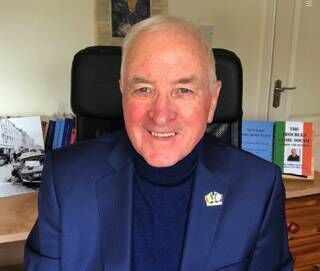
Retired Detective Chief Superintendent John O'Brien: 'It is a matter of profound regret that nobody has been made accountable for these crimes.'

The commentary on the Dublin and Monaghan bombings (Operation Denton) occupies 20 pages of that report and is just that — a commentary without a scintilla of supporting evidence adduced in support of the alleged conclusions. 

The main report is to be published sometime next year. It is not hard to recognise that this commentary is a gaslighting exercise designed to shape the narrative in advance of the publication of the report.

Denton made a claim without foundation that the UVF was independently capable of carrying out the attacks and possessed the necessary materials, knowledge and expertise without any support from the security forces. This is an extremely worrying development.

  • John O'Brien is a retired Detective Chief Superintendent and the author of four books, most recently The Great Deception, Dublin and Monaghan Bombings 1974. See jaobrien.ie

More in this section

Revoiced

Newsletter

Sign up to the best reads of the week from irishexaminer.com selected just for you.

Cookie Policy Privacy Policy Brand Safety FAQ Help Contact Us Terms and Conditions

© Examiner Echo Group Limited