Time to reverse recession cuts to family support services
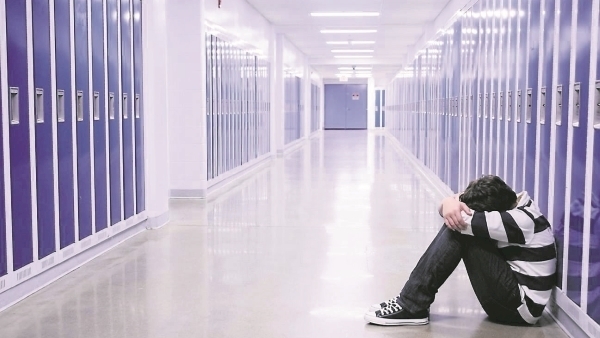
Cuts to spending on preventable social problems are a false economy, as the costs become much greater further down the line, writes Suzanne Connolly

Time to reverse recession cuts to family support services

Cuts to spending on preventable social problems are a false economy, as the costs become much greater further down the line, writes Suzanne Connolly

YOU’RE the man of the house now, Jack. That’s what 10-year-old Jack’s dad wrote in the note he left for his family after he died by suicide last year, unwittingly placing a heavy emotional and practical responsibility on a child.

Jack had to take on a caring role as his Mam was so sad and overwhelmed following the death of her partner that the care of her two children and her home fell by the wayside.

Jack makes sure that he and his little sister Milly are fed. He goes to the shop, washes the dishes and attempts to keep the house clean. There’s no one Jack feels he can ask for help. He hates opening his eyes in the morning and realising that another day of anxiety and sadness and feeling alone stretches out is ahead of him.

We know from The Growing up in Ireland study shows the vast majority of children experience happy, supportive childhoods. However, many children across Ireland are experiencing similar feelings of anxiety, sadness and loneliness like Jack.

For some this can be due to a family bereavement, for others it is the heavy burden of living with domestic abuse, neglect, parental mental health issues, poverty, or alcohol/drug abuse. Barnardos exists to support children who have Adverse Childhood Experiences (ACEs) such as these.

According to research, between one fifth and a quarter of all children have poor economic, social, and educational outcomes.

In a recent Barnardos survey in which over 1,100 people participated, one in four parents told us that they did not know where to get help if they were worried about their child. Almost one in five indicated that their child does not have the necessary support to reach their full potential in school.

Barnardos’ services advance the welfare of children, young people and their families whose lives have been affected by economic, social or other disadvantage or loss.

Much of the funding we receive to provide these services comes from Tusla, the Child and Family Agency. A decade ago Barnardos agreed to temporary cuts to this funding.

In response, Barnardos implemented a number of emergency measures to ameliorate soften the impact of the funding cut on children and families. This cut has never been reversed.

The cumulative impact has been that Barnardos is more reliant each year on the generosity of our supporters to fund the service that has been contracted for by Tusla under a Service Level Agreement. Less than 70% of the required funding for these services is provided by Tusla, compared to 80% in 2008.

Earlier this year Barnardos commissioned Just Economics, an independent research company, to investigate the effect that the funding cuts imposed over a decade ago are having on our ability to deliver services

to children and their families.

The report authors compared Ireland’s expenditure on preventable social problems with 10 European countries, and they found that Ireland performs second worst. The authors conclude that due to the underfunding of services, Ireland is spending €6.95bn more on addressing preventable social problems.

Cutting family support services is a false economy as opportunities for early interventions and support may be missed. Early intervention with access to locally-based support services can address problems earlier,

thus reducing the draw on more costly services later.

downstream.

The research highlights the importance of high-quality service providers in achieving better long-term benefits from family support. External interviews conducted as part of this process indicate that Barnardos’ services are held in high regard highly regarded in terms of quality, professionalism, and good governance, and are trusted by the community.

The funding gap for high-quality consistent service providers such as Barnardos is fast approaching crisis point and business-as-usual is no longer possible. The cuts, which were initially thought to be a “temporary” response to the recession, appear to have become permanent, with the post-crisis funding formula now being applied to new services. We now have over 550 families, just like Jack’s, waiting for a service around the country.

Every year since 2007, Barnardos has published a Children’s Budget with the aim of putting children’s interests at the centre of the budgetary decision-making process. For the first time ever, Barnardos is calling on the Government to address gaps in funding for family support services delivered by ourselves and others.

Budget 2020 can begin to do this by restoring part of the funding cuts imposed on Barnardos and other organisations, at a cost of just €3m. The Government must also make a commitment to review the current model of funding of Section 56-59 (Tusla) funded organisations.

In Barnardos’ recent survey, 94% of parents indicated that their child had at least one other adult who is a positive role model and who offers support. In Jack’s case, it was his teacher who noticed things were not quite right and got in touch with Barnardos. We’ve only worked with Jack and his family for a short time, but already the difference it has made has been huge and will hopefully remain for many years to come.

Investment in family support services makes a huge difference to children’s lives — it ensures they grow into healthy, positive adults who contribute to society.

Suzanne Connolly is chief executive of Barnardos

More in this section

Revoiced

Newsletter

Sign up to the best reads of the week from irishexaminer.com selected just for you.

Cookie Policy Privacy Policy Brand Safety FAQ Help Contact Us Terms and Conditions

© Examiner Echo Group Limited