Cuts have wounded health system and recovery will be slow
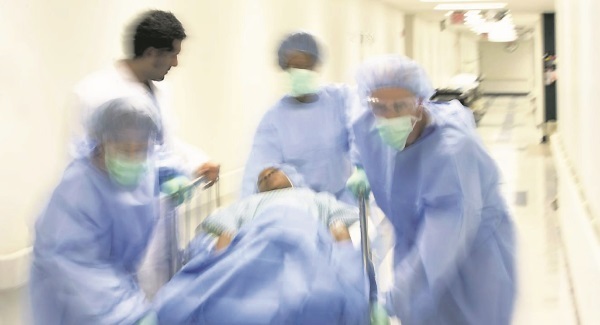
Austerity has scarred our health system. The scale of the cuts in funding was unprecedented, akin to botched, unsupervised surgery.
Two thousand beds were decommissioned, of which 1,600 were within the acute system. Five thousand nurses and midwives were forced out — to retire or to emigrate.
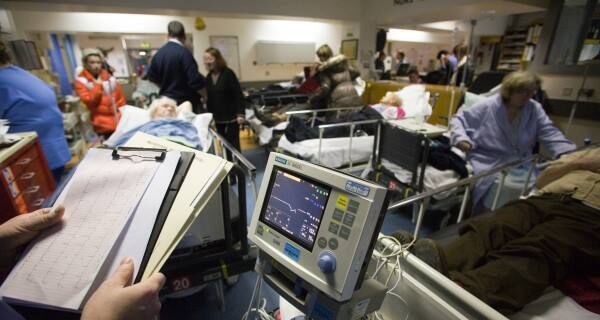
The impact on services provision was devastating. Our hospitals are now operating at 94% capacity, which is ‘red-flag’ territory.
Front-line nursing and medical staff were not respected for their qualifications and their responsibilities, and they still aren’t. Pay differentials make no sense, especially compared with non-skilled occupations. They have been left behind.
The Health Minister, Simon Harris, and his colleagues are grappling with the consequences of austerity. Tough job.
The Troika have been proved wrong about many things — foremost of them was the impact of austerity on healthcare.
The IMF knew better, but still oversaw the cuts. The short-termism of austerity — and the long-term damage it has imposed — must now be reversed.
The increases in health capital in the budget will be welcome. But it is not enough. It’s not nearly enough. It is better to acknowledge a continuation of health-rationing for the medium-term — imposed from Europe, via the ‘preventative’ arm of the ‘Stability Pact’ — than to pretend that short-term exigencies, like ‘task forces’ or ‘initiatives’ or ‘priority lists’, make the kind of difference that is necessary. These are essentially palliative.
Nor is it realistic to argue that ‘we had to make health cuts for the good of the country, and now we can move forward’. Not so.
Austerity will continue to cast a pall over the rebuilding of the Irish healthcare system. Lessons have to be learned. Health spending is often caricatured as a ‘bottomless pit’ — a demand-driven service that will absorb all of the resources that are thrown at it and come back for more.
Wrong. The Health Strategy 2001 put it this way: In every aspect of every individual’s life, health is pivotal. It is the key factor in a child’s development to adulthood. It is a prerequisite for the achievement of wholeness and fulfilment in adult life.
Health spending delivers benefits as well as accrues costs. Apart from the social value of well-being, better health also has direct economic benefits. For example, lower absenteeism rates increase productivity. Increased life expectancy and reduced premature mortality can lengthen a productive working life, for example, and enhance the ability to care for family and participate in community or voluntary activity.
Also, good-quality health infrastructure will increase the attractiveness of particular locations, in the context of spatial planning or industrial and commercial development.
The problem is that we in Ireland are confounded by myths, ideological hang-ups, and denial.
There is no health ‘overspend’ — there is a chronic underfunding. Fact. We don’t need a new ‘vision’ — we know what needs to be done. Fact. Changing the institutional structures — the ‘signage’ — when there are gaping holes in capacity completely misses the point. Fact.
Rebuilding a devastated public health system is vital, but getting hung up on ideology, while there is a single person on a single waiting list, is not serving the public interest.
What matters is using all the capacity that is available — which includes every facility in the ‘private’ sector — so that waiting lists can be eliminated, so that overcrowding becomes a (bad) memory, and so that a modern public system, serving all the children of the nation equally, can be built.
This is not new. Back at the start of the millennium, we were talking about a ‘strategic partnership with the private sector’ to deal with the need for more capacity.
Restarting the National Treatment Purchase Fund (NTPF) is one thing, giving it the resources to do the job is another is what is important. The capacity is there in the ‘private sector’ to scythe through parts of the waiting lists in procedures, including diagnostics and surgery.
But the kind of progress that is necessary, and entirely possible, is stymied by artificial and self-imposed limits.
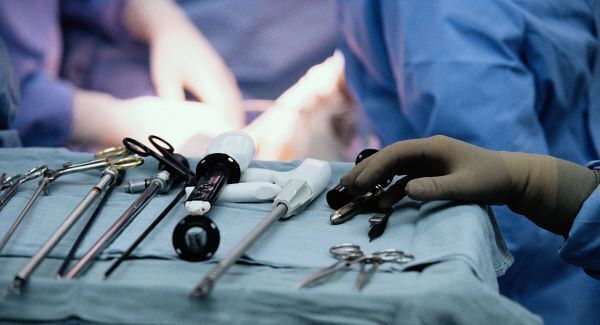
A more imaginative use of total capacity is one thing, getting the specialists into the theatres and into the clinics is another. But it could be done.
A major investment programme in health would also be an investment in the productive capabilities of the economy.
But that’s not going to happen. Ireland no longer has the freedom to invest in capacity-building in our health system; to do what is sensible so as to mitigate the damage caused by an austerity that was entirely foreseeable.
In the meantime, the minister and his colleague will do the best they can in maintaining existing services and patching-up the system, prioritising seemingly small, but enormously important service provisions in such areas as surgery for children with scoliosis, and rebuilding community-based services.
For the children, it’s life-changing. For the system, it’s one more example of patchwork; such surgery shouldn’t even be an issue.
Everyone knows 3% here, and €50m there, is not enough. They know that real investment in more capacity, m ore front-line staff, and more collective imagination in the use of all facilities, would be transformational, at every level.
Sometimes, it seems easier to live with ‘the way things are done’ than to ask ‘Well, why can’t we change them?’
CONNECT WITH US TODAY



Be the first to know the latest news and updates