Emotion of the refugee crisis catches Europe off guard
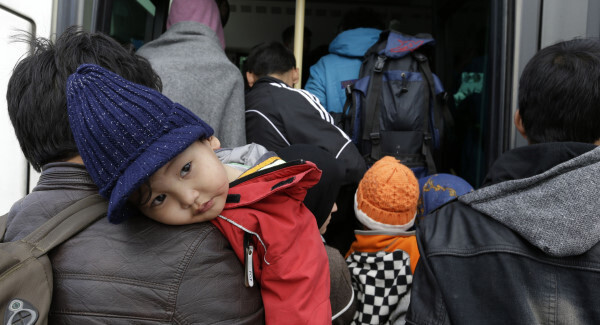
“They are refugees, not terrorists,” read one late summer Facebook status at the height of Europe’s “migrant crisis.” With evidence that Ahmad Almohammad, one of the eight Paris attackers, masqueraded as a refugee en route to Europe, and given BBC interviews with ‘migrants’ expressing concern about phony refugees, a light has been cast upon Europe’s pro-refugee activists.
The European psyche on migration has been caught off guard by the sheer pace of events — the European Union’s statistics agency, Eurostat, estimates that the 700,000 asylum applications in 2015 is just the tip of the iceberg.
The sudden media bombardment of border camps, sea-faring tragedies and protests has dichotomised the continent into gung-ho humanitarians or fearful conservatives — leaving Europe devoid of the crucial middle-ground needed for effective solutions.
Social-media messages post-Paris reverberated like deja-vu. “They are not terrorists — less than 0.00007 percent of Muslims are terrorists,” said one Facebook user to rapturous approval. The message appeared directed at the potential right-wing backlash.

Unfortunately, there is a cruel reality underlying that Facebook status. Despite the statistically miniscule number of radical Muslims, it takes just one, armed with an AK-47 and explosive belt, to kill and maim hundreds.
Why, then, have Europe’s humanitarians remained so staunchly pro-refugee?
In a Forbes guest post written by Steven Emerson, an executive director, and Pete Hoekstra, a senior fellow, at the Investigative Project on Terrorism, they lament the role of political correctness in obstructing frank discussion on radical Islam.
“Remember that they [politicians] blamed the Benghazi massacre on an internet video. Perhaps they will blame the ISIS [Paris] attacks on a TV show,” they said.
The reality of Paris is that a ‘refugee,’ with allegiance to a militant group that puts forward a toxic interpretation of Islam, killed 130 innocent people.
It seems that merely reflecting on the role Islam has to play, and the risks of mass refugee intake, may leave people open to accusations of xenophobia, Islamophobia and racism.
It was a fate British prime minister, David Cameron, risked last week when claiming that we can no longer deny any connection between Islam and extremism.
“Extremists are self-identifying as Muslims,” said Cameron.

Unrelenting political correctness is a double-edged sword; protecting people from offence, but failing to allow hard truths through.
In Europe, the clashing liberals and right-wingers fail to recognise that a clear understanding of the migrant issue requires elements of both viewpoints.
Helping the hundreds of thousands of needy people arriving on European shores is virtuous, and a central tenet of a continent that has thrived with the free flow of individuals from diverse backgrounds.
Preventing refugees from entering Europe risks the build-up of marginalised and impoverished individuals on its borders. That creates the risk of igniting the powder keg that is the Balkans; which Europe’s fence-builders are inviting.
But, likewise, letting too many refugees into the EU risks creating instability in Europe’s core, which is in the midst of a right-wing resurgence and slow economic recovery.

Unfortunately, with policymakers caught somewhere in between the activist and right-wing voices, policy, too, has become schizophrenic. While some EU states have agreed to house refugees, some union members, such as Germany, the UK and the Netherlands, have flirted with the idea of making their states less attractive to migrants by reducing the ‘pull’ factor of welfare support.
This is a potent mix. Accepting thousands of refugees requires long-term commitments to their financial and social needs. Otherwise, Europe will create a breeding ground for disillusioned young individuals susceptible to perversions of Islam, or any other extremist agenda.
When the evocative scenes of Europe’s migrant crisis subside, the fear is that the humanitarian forces to integrate Europe’s new populace will also fade. Europe may not be importing terrorism today — at least not on the scale some on the right-wing seem to think — but a failure in assimilation can create a tinderbox for future extremism.
This means being more balanced on refugee intake, and filtering the flow of migrants into the continent effectively. Thus far, that effort has been wholly inadequate.

When the BBC’s Ed Thomas and Gabriel Gatehouse travelled to the Greek island of Leros last week, to speak to Syrian migrants en route to Europe, one Syrian man said: “Check me properly, ask me the right questions… you must check, for my safety and your safety.”
The emotion of the migrant crisis has caught Europe unaware, and divided it between unrelenting fear and impractically open arms. The lack of rationality and perspective on the problem risks sinking the continent deeper into fear and danger.