The growing tide of misery in the Med
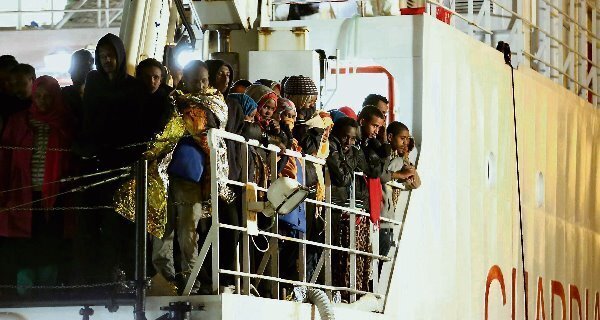
IN THE last 15 years, the Mediterranean Sea has transformed into a graveyard for more than 20,000 migrants and refugees searching for protection and a better life in Europe.
In response, Médecins Sans Frontières (MSF) has announced that it will launch search-and-rescue operations in the Mediterranean Sea.
The move has been deemed controversial by some media, since rescue at sea lies outside MSF’s usual business. The decision has been taken because the humanitarian crisis on the Mediterranean is worsening every year, but the European Union shows no willingness to change the very policies that have led to this crisis. Saving lives is our core business, whether it is on land or at sea.
At least 3,500 people drowned close to European shores in 2014, many of them from Syria, Eritrea or sub-Saharan Africa. Already this year, 500 people have lost their lives at sea, and that’s before the summer period when the majority of people attempt the dangerous crossing.
DISCOVER MORE CONTENT LIKE THIS
Boat migration is a complex phenomenon, influenced by geopolitical and socio-economic factors — conflicts, extreme poverty, mass human rights violations — and also by the failure of the refugee protection system, combined with people being stuck in substandard camps, indefinitely.
At least half of the people boarding these unseaworthy boats to Europe are fleeing conflict zones and will be granted asylum once in Europe.
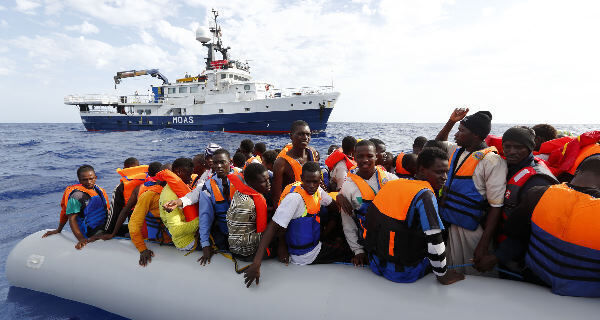
The number of recorded entries by sea reached 218,000 in 2014, up from 60,000 the previous year. With the Syrian war raging unabated and growing instability in Libya, the number of people who will take to the sea this year is expected to be yet again unprecedented. As safe channels to reach Europe continue to grow scarcer, there is little other option offered to refugees than taking to the sea.
The mass displacement of people from Syria will be remembered as the largest in recent history.
Europe, however, will be remembered for how little it did to assist the now 3.8m Syrian refugees. Some 95% of the refugees are registered in Syria’s neighbouring countries — in camps and urban centres in Jordan, Turkey, Lebanon, and Iraq — stretching local and international assistance capacities to the limit.
Rather than easing this burden, European states are encouraging these countries to absorb even more refugees, and building walls to keep people out of Europe. Just 4% of Syrian refugees have managed to be resettled in the EU. So far, European countries have set a measly quota of 36,300 Syrian refugees to resettle. Germany offers the vast majority of places — 30,000 — while the UK accepted just 143 Syrian refugees in 2014.
Last December, the UN Refugee Agency welcomed the announcement by Justice Minister Frances Fitzgerald that 111 people from Syria would be granted permission to enter Ireland to join family members. In addition, 90 Syrian refugees were resettled into Ireland last year, with a further 220 refugees arriving in 2015 and 2016, the majority of whom are expected to be Syrian.
However, the public outcry provoked by the October 2013 shipwrecks off the coast of Lampedusa, Italy, has long since faded. While refugee organisations and asylum experts discuss the best ways to prevent deaths at sea by opening safe and legal channels, EU member states are looking elsewhere. Obsessed with the fear of “pull factors”, these states are interested not in saving lives, but in keeping people out of sight.
At the beginning of March, the European Commission announced the start of the Joint Operational Team MARE. This is not a replica of the Italian navy’s Mare Nostrum operation, which was intended to rescue people in distress at sea. Instead, it is a maritime intelligence centre aimed at fighting people-smuggling at sea; this same people-smuggling that is flourishing because the EU has closed its land borders. Today, the energy and the resources are focused on “cutting the flow”.
However, cutting the flow — without offering other options for people to seek refuge — only results in further suffering and death.
The measures put in place to stop the boats ignore the most basic point of the so-called migration crisis: People needing protection have no choice but to flee. At least 10% of the patients seen by MSF medical staff in our project in Sicily were victims of violence in their country of origin, or, along their route.
If the dangerous sea route is now the main entry door to the EU for refugees, it is because all the land borders are closed. At the end of 2013, Bulgaria began building a €9.6m fence designed to keep Syrian refugees out. While the conflict in Syria escalated, the number of entries in Bulgaria fell from 3,626 in October 2013 to just a few hundred in January 2014 after the launch of this border operation. Even Europe’s border control agency FRONTEX admits this operation has simply diverted the flow of refugees to the sea.
Greece already sealed its own land border with Turkey in 2012, diverting most of the refugee flow to its maritime entry points. The number of arrivals by sea since January 2015 increased by 145% in the Greek islands compared to the same period last year. Reception conditions on these islands are deplorable and MSF teams working in the Dodecanese islands have repeatedly denounced the Greek government’s unwillingness to ensure even basic assistance to refugees.
Next month, the European Commission will present its new agenda on migration. Whether this agenda reflects the lessons learnt over the last years remains to be seen. Focusing on keeping people out and ignoring the human lives that make up these ‘flows’, has achieved only one thing: The suffering and death of thousands. Let’s be clear: This is a policy-made humanitarian disaster.
Concrete measures must be immediately taken to ensure refugees’ safe access to EU territories, non-refoulement and minimum standards in reception facilities. Adapted and ambitious search-and-rescue-at-sea mechanisms must be put in place by EU states to save the hundreds of thousands men, women and children who will risk their lives this year to reach safety and protection. The approach of trying to keep people locked out of Europe should be replaced by an approach offering safe and legal channels for those in need of a safe heaven.
Since 2002, our teams in Lampedusa and Sicily have cared for survivors, treating dehydration, hypothermia and trauma, but they have not been able to prevent deaths. This is untenable for a humanitarian organisation such as MSF. Even if rescue at sea is not the solution to boat migration, it is certainly urgently needed so that people do not die while they wait for more humane policies to be adopted.
Until these policies are in place, the way in which European leaders treat refugees will continue to demonstrate their double standard of not practising the human rights at home they so willingly preach abroad.
DZL
DISCOVER MORE CONTENT LIKE THIS
CONNECT WITH US TODAY



Be the first to know the latest news and updates