National archives 1984: Cabinet struggled over future of Whitegate refinery
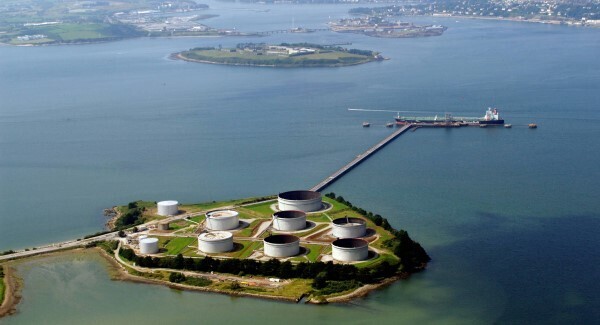
Thirty years later, the future of the oil refinery at Whitegate — just as it was back in 1984 — remains in serious doubt.
Three decades ago, the then finance minister Alan Dukes recommended that the refinery should be closed immediately, while the industry minister, John Bruton, suggested that the facility should be “mothballed”.
However, the energy minister, Dick Spring, sought government approval in January 1984 to keep Whitegate in operation pending clarification of the commercial potential of a recent oil find off the Waterford coast by Gulf Oil.
Spring received some support from the foreign affairs minister, Peter Barry, and the labour minister, Ruairí Quinn, for his proposal.
An expert group set up in 1983 to review Whitegate’s operation had unanimously concluded that the level of costs incurred since refining had recommenced a year earlier was unacceptable.
However, there was disagreement over the suggestion that there was a case of retaining a mothballed but operable refinery for the purpose of security of supply.
State papers also reveal an uneasy relationship between the government and leading oil company Shell, which was accused of being consistently obstructive to the mandatory regime requiring oil firms to maintain stocks in Whitegate since the State had acquired the refinery in 1982.
Shell’s managing director, Jim Beveridge, had written to the taoiseach in April 1984, observing that Whitegate did appear to be running efficiently under its new owners, despite its “inherent design limitations”.
However, he maintained that Whitegate oil was dearer than alternative suppliers — a claim described as an “unfair and invalid basis for comparison” by civil servants.
But it seems some officials shared Shell’s concerns. A memo for the taoiseach in January 1984 said there did not seem to be any particular reason why Whitegate’s operators should be given an artificial and concealed form of protection.
It also questioned the exact value of the argument for keeping Whitegate open on strategic grounds.
It observed: “The existence of a senile and rapidly declining refinery, supported by the State, is an argument, which will be grasped by an investor in this particular area, for not investing.”
It recommended that one solution was for Ireland to get into the refinery business and pump hundreds of millions of pounds of investment into Whitegate.
The note concluded that the area was for critical and objective analysis “divorced from the sort of emotional arguments which end up costing the country immeasurable millions”.
The increased Irish defence budget to buy Dauphin helicopters was regarded in the USSR, under Konstantin Chernenko, as a bid to bring Ireland within Nato’s ambit.
USSR deemed Irish neutrality to be under threat in 1980s
A major academic paper by a Soviet thinktank on Irish foreign policy signalled that the USSR believed Irish neutrality was under major threat in the early 1980s.
The Irish ambassador to Moscow claimed the view that there had been “disturbing tendencies” in Ireland’s growing links with Nato policy positions was likely to reflect and inform official thinking in the USSR under its leader Konstantin Chernenko.
The ambassador, Pádraig Murphy, acknowledged that the article in one of the USSR’s main foreign policy research bodies, the IMEMO or World Economy and International Relations, entitled “Ireland — Alarming Symptoms” demonstrated a close following of the internal debate within the Government on neutrality in recent years.
Mr Murphy claimed the research was largely “a product of observations on the spot”. However, the ambassador said it had “to be left open” as to whether such observations came from the Soviet embassy in Dublin or the Communist Party of Ireland.
The article claimed Irish neutrality began to undergo erosion from the late 1970s as it became the sole non-aligned country that voted along with Nato member states against a resolution calling for a declaration that the use of nuclear weapons was a violation of the UN charter.
It also noted “alarming symptoms” in its foreign policy by approving the US policy of rearmament in the face of a “Soviet threat”.
The increased defence budget of 1984 to purchase up-to-date Dauphin helicopters and the commissioning of an aircraft tracking station in the same year at Mount Gabriel in West Cork were regarded in the USSR as attempts to bring Ireland within the ambit of Nato.
The paper’s author, O Shakhnazarov, blamed the supposed shift in policy on military-political links between the EEC and Nato.
However, he attributed the main reason to the changing character of mutual relations between Ireland and the US from the 1970s, when American investments “literally flooded Ireland”.
In tandem, he recognised that the ruling circles in Ireland viewed the relationship as a means of using Washington to facilitate the resolution of the situation in Northern Ireland. He claimed such “disturbing tendencies” were heightened by the arrival of Fine Gael into power in 1982 and warned that there was a real threat of Ireland being drawn into the aggressive policy of Nato, especially in view of the increased number of visits of US politicians.
‘Superpower dealing with a smaller nation’
The Irish ambassador to Moscow claimed the USSR’s approach to Ireland in the early 1980s was that of a superpower dealing with a smaller, less powerful country.
The ambassador, Pádraig Murphy, described a meeting in May 1982 with USSR’s deputy foreign minister Ryzhov as “not very pleasant” because the Russian “did not appear to lay much store by the niceties which make diplomatic dealings more agreeable”.
A confidential note sent back to Dublin by Murphy stated Ryzhov represented the real tone of the Soviet approach to Ireland and other smaller countries. “It is the tone of a party, conscious of its super-power position, speaking to a lesser power. The lack of ceremony with which this is done is typical of the basic Soviet attitude in their dealings with others.”
He reported that Ryzhov had appeared annoyed that Soviet-Irish relations were not developing in a sufficiently intense manner which he implied was the fault of the Irish side.
Ryzhov maintained that Ireland could have been more active and solid about developing economic ties between the two countries.
Murphy also reported Ryzhov’s “offensive” comments implying Ireland’s foreign policy was unduly influenced by other states. He replied that such a view was unacceptable as the government valued Ireland’s sovereignty and independence.
The ambassador said Soviets were particularly anxious to be taken more into our confidence on the Northern Ireland situation.
Cabinet at odds over Ringaskiddy port plans
Members of the government had decidedly mixed views about the development of new deep water facilities at Ringaskiddy in the early 1980s.
The cabinet was at odds over the awarding of a contract in 1984 for the new wharf at the port, according to State papers.
The project had been opposed at the outset by finance minister Alan Dukes because of the strained state of the public finances at the time. He claimed it was “a highly speculative development” that could not be contained on any commercial basis.
Dukes further complained that Cork Harbour Commissioners (CHC) had used “unreliable and clearly exaggerated” assumptions to justify the project.
He claimed CHC was practically insolvent and it was “most objectionable” that the exchequer was being asked to finance another investment in Ringaskiddy which showed no prospect of viability.
John Bruton, the industry minister, was firmly in favour of the project, while the IDA had expressed concern that Toshiba had abandoned plans to set up a factory in Cork because of the absence of the deep water wharf.
Dukes argued that there had never been any evidence that an investment was lost to the area because of the absence of a deep water berth.
A memo to the taoiseach in November 1983 said the project was “of marginal value in the absence of a commitment by a new industry needing the facility”.
It noted that it should be able to draw down money from the EEC Regional Fund which could tilt the balance in any cost-benefit analysis of the project.
Records show communications minister Jim Mitchell — who as transport minister a year earlier did not believe the new facility was justified — sought government approval in April 1984 to authorise CHC to award the contract to Ascon for a tender price of £8.2m.
The CHC had begun the process of seeking bids for the project two years earlier. It had selected Ascon as the preferred winner of the contract in February 1983 but the decision was deferred as no funds were available. The government had committed to provide £2m to the project.
Mitchell said in the normal course, he would ask CHC to reissue the tender because of the lapse of time and the fact construction costs might have become lower in the 21 months since the original contract had been awarded. However, he was conscious that reissuing the tender would create further delay.
Mitchell stated he was conscious that any further delay would cause “considerable dismay and disappointment in the Cork area” as well as being a source of embarrassment for the IDA.
He believed such delay would be regarded locally as a lack of serious commitment by the government to the port at Ringaskiddy.
But Mitchell’s intention to proceed with awarding the contract to Ascon was opposed by Dukes, who argued CHC should reissue the tender as trends had shown prices for major capital projects had fallen as much as 25% over the previous two years. He rejected Mitchell’s estimate that retendering would take a minimum of seven months.
Dukes was supported by energy minister Dick Spring, who believed retendering would be prudent and help avoid any public perception of a cost overrun before the project had even started.
State papers showed the government decided that before the contract was finalised, Mitchell should ask CHC to seek assurance from Ascon that the £8.2m cost was a firm price for the completion of the work. Staff at Irish Dunlop resisting the Cork plant’s closure in 1983. Picture: Denis Minihane
FitzGerald’s fury at ‘persistent misrepresentation’
Garret FitzGerald, the taoiseach and Fine Gael leader, wrote a personal letter to the editor of the Cork Examiner in May 1983 to complain about coverage of the planned closure of the Dunlop tyre factory in Cork.
FitzGerald told editor Fergus O’Callaghan that he was concerned at what appeared to be “a persistent misrepresentation” of comments he had made on the situation.
In particular, the Fitz-Gerald took issue with a report of his briefing to political correspondents about the firm that carried the headline: Dunlop — ‘Beyond Redemption.’
“At no stage did I use the words in quotation, or any other words that could justify such a phrase,” wrote FitzGerald.
He claimed general comments he had made about some firms being in such a bad condition that even the prospect of a recovery might not enable them to survive financially had been applied by the newspaper to Dunlop.
He noted the Cork Examiner had also stated he had ruled out any idea of State intervention to save the firm.
“This is also incorrect,” he observed.
FitzGerald reminded O’Callaghan that he had said that he did not have knowledge of specific measures being under-taken but that the Government in such situations tries to find a solution such as getting the IDA to engage in talks with some other potential investors.
“This was a clear statement that the Government policy is to intervene in cases of these kinds and your report that I ‘ruled out any idea of State intervention to save the firm’ was accordingly the opposite of the true position”.
FitzGerald said he was disturbed that five days later the paper was still carrying a report suggesting the firm had “reached the end of its tether” and could not be saved even if there was a general economic recovery.
FitzGerald said he was not normally particularly sensitive to having his position misrepresented in the press as it was a hazard which all politicians faced.
However, he felt that “something like a campaign” had been launched by the Cork Examiner on the basis of a totally incorrect account of what he had said. He pointed out that other newspapers had reported the matter differently.
The taoiseach finished by saying he trusted the editor would give the same scale of publicity to his letter as to his replies at the Dunlop press briefing.
The State papers have no record of how O’Callaghan dealt with the matter. Garret FitzGerald, above, proposed entrusting the running of the national lottery to the Irish Hospital Sweepstakes. It was supported by Justice Minister Michael Noonan.
Taoiseach backed Sweepstakes to run lottery
Former taoiseach Garret FitzGerald favoured allowing the controversial owners of the Irish Hospital Sweepstakes lottery to operate the proposed National Lottery which was under consideration in 1984.
State papers reveal how the Fine Gael leader appeared eager to get the Irish Hospital Sweepstakes to run the scheme, despite the fact that the company had expressed fears about its possible closure due to falling sales and ongoing losses.
They also show that FitzGerald displayed uncharacteristic anger at the slow pace of movement by civil servants in trying to draw up an arrangement with the Irish Hospital Sweepstakes to run the lottery.
Although the Sweepstakes was established to raise funds for hospitals, less than 10% of proceeds actually went to hospitals. The vast majority of tickets were sold overseas illegally as they were popular in countries where lotteries were banned, while much of the profit was retained by the Sweepstakes’ owners.
State papers show the chairman and managing director of the Irish Hospital Sweepstakes, Paddy McGrath, had proposed to the taoiseach that his company would be ideal to operate the new lottery at a time when the Sweepstakes was suffering heavy losses.
At a meeting in April 1984, McGrath told FitzGerald that he was willing to establish a National Lottery and abandon any overseas sales if the State would pay him £1.7m for the loss of his leasehold interest in the Sweepstakes property in Ballsbridge, Dublin, which he claimed was worth £1.5m.
McGrath also sought to be indemnified for a possible loss of £250,000 for continuing to run the Sweepstakes during an interim period before the new lottery was up and running.
FitzGerald said McGrath’s proposal to put a national lottery on a fully legal basis which was “no longer dependent on illegal activities overseas” was a very attractive one.
The taoiseach said one of the benefits would be to end the somewhat anomalous and unsatisfactory situation where the State was involved at one remove with such unlawful activity.
FitzGerald pressed officials across several departments to consider the proposal urgently as he wanted it to be discussed by the Government “as early as possible” because McGrath was anxious for a response.
Another memo from May 1984 shows the taoiseach was angry that his “clear instructions” issued a month earlier to the Department of Justice to contact McGrath to negotiate terms for setting up a National Lottery had not been followed.
Fitzgerald demanded a full explanation why his instructions were not carried out. “It would be unforgivable if [McGrath’s proposal] were to have been let slip through our fingers,” remarked FitzGerald.
Documents also show that the chief executive of Rehab — Frank Flannery, a leading Fine Gael strategist — wrote to FitzGerald in December 1983 to declare its interest in running the new lottery and also to highlight concerns about the potential impact a new lottery could have on Rehab’s football pools.
FitzGerald replied that the Government appreciated the special position of many charitable and voluntary organisations.

However, an interdepartmental committee chaired by junior education minister, Donal Creed, opposed proposals by the Irish Sweepstakes and Rehab/ Central Remedial Clinic to run the new lottery. They recommended the establishment of a state body to operate the new scheme.
On July 18, 1984, Flannery wrote to the taoiseach to say he had acted on his request for the Rehab/ CRC representatives to meet with McGrath.
Around the same time, McGrath contacted the Department of Justice to state while he was happy with the terms of an agreement to run the new lottery in principle, he would need a further £1.5m on top of the £1.7m already proposed in order to compensate Sweepstakes staff who would lose their jobs.
However, a senior official noted that McGrath seemed to have the impression that his proposal was well advanced and only needed final government approval, which was not the case. He informed him that it was no means certain that the Sweepstakes proposal would eventually win out.
A cabinet memo said the Sweepstakes and Rehab/ CRC might have been working under a misapprehension that they had a mandate from the taoiseach to negotiate the setting up of a lottery between themselves.
On August 1, the government considered the taoiseach’s proposal to entrust the organisation of the new national lottery to the Irish Hospital Sweepstakes. It was supported by the justice minister, Michael Noonan, who said it would safeguard employment.
However, the health minister, Barry Desmond, said any new lottery should be divorced completely from any existing sweepstake and he noted the Irish Hospital Sweepstakes did not seem “to be in a position to run a sweepstake on a profitable basis.”
The environment minister, Liam Kavanagh, also opposed the proposal as his department was considering plans by a number of local authorities to run a lottery scheme.
The National Lottery was eventually established as a subsidiary of An Post in 1987.