Germany key to Europe’s response to Crimean situation
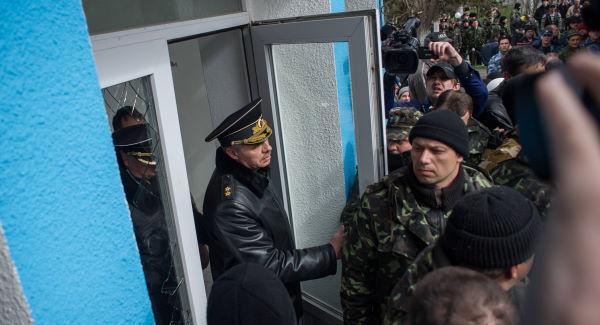
The EU leaders have much to ponder as the crisis increases, writes Europe Correspondent Ann Cahill

Germany key to Europe’s response to Crimean situation

EU leaders will consider their next step against Russia at their summit today and tomorrow in the full knowledge that this is a double edged sword in which everyone will suffer — including Ireland, where close to 4% of its foreign direct investment is in Russia.

Moscow has annexed Crimea, and there are thousands of Russian troops massed on Ukraine’s eastern border despite grave warnings from the EU and the US.

So far, the sanctions against a handful of politicians, military and advisors shows no signs of getting Vladimir Putin to back off.

Washington’s war-mongering is not expected to have much impact on the former KGB member, but for the EU, the situation is much more serious being on its doorstep.

EU leaders meeting in Brussels were to discuss energy efficiency and climate change and the re-industrialisation of its economy. But the summit has now been hijacked by the Ukraine situation.

Happily the three issues feed into one — oil and gas. The EU imports a third of its crude oil, a quarter of its coal, and 30% of its natural gas from Russia. Eight countries get more than 90% of their oil/gas, while Germany imports 40% of its gas needs from Russia.

Bilateral agreements with individual member states has helped undermine efforts to create a single energy policy, while the plan to diversify energy sources and providers, rely less on coal and oil and open up a single energy market, has been languishing for years. A boycott of Russian energy is threatening to do more for their energy and climate change agenda than years of pushing by the UN and others.

Maintaining unity on any issue is always a problem for the 28 countries and so far, to the mild surprise of many, they have succeeded in agreeing their approach to Putin and his actions.

Now, however, with the Russian President signalling he is happy to break any international agreement, all eyes will be on how the EU leaders will manage the next stage.

They devised a three phase strategy when they met in emergency session earlier this month and with the asset freezes and visa bans against 21 individuals earlier this week, they are ready to move to phase three.

They agreed that if Russia escalated its actions against the sovereign nation that is Ukraine, they would take more action. It was always clear that they recognised once Putin seized Crimea, there was little they could do — other than putting together an army, and that has never been on the cards.

They will agree the easy options — calling off the EU-Russia summit in June in Sochi, and leaving them off the invitation list for the G8.

But now they need to agree what other action to take. EU diplomats said they will first want to look at the totality of the relationship — the days of tit-for-tat, rolling out the guns are over. It has to be carefully thought out to achieve the objective — and at least cost to the EU.

“Sanctions are not about showing the other how much damage can be inflicted on the sanctioned party, but about demonstrating how much pain can be tolerated by the sanctioner,” said Georg Zachmann of the think tank, Bruegel.

Cutting off the gas taps would cost what is a relatively fragile Russian economy 3% of its GDP but it would affect some EU economies much worse than others. An arms embargo is on the table, but while France has said it would call off delivery of two ships, they point out that Russia is the world’s biggest exporter of weapons, so what good would that do? Freezing the assets of oligarchs could add to pressure on the Kremlin, but since so many depend on Putin’s goodwill for their wealth — and their freedom in some cases — they would prefer to annoy the West rather than him.

Such action would also hit London’s financial industry, while Cyprus and the Netherlands has the highest share of Russian foreign direct investment. Russia has threatened it would retaliate to sanctions by confiscating western assets. Here, Ireland would be vulnerable, having the fourth highest share at close to 4%.

Again Cyprus would suffer most at 30%, followed by the Netherlands at 12%. Cyprus is already in meltdown mode because of its banking crisis when most of its big Russian investors suffered losses and it has asked about compensation measures.

Russia, too, is vulnerable with its fragile economy the size of Italy, and its GDP ranked 58th in the world. But could it tolerate losing 3% of its GDP if the EU shut the gas taps? But finally, once again, the strength of the action and its direction will depend on Germany.

Annika Ahtonen, policy analyst at the European Policy Centre said, “The EU can only succeed if all member states stick together and start implementing a common energy policy worthy of the name. Germany, with questionable bilateral energy deals with Russia, has a special responsibility. The European Council is a good place for Berlin to raise its game and to show that it is willing to take a strong stance with rest of the EU vis-à-vis Russia.”

The other big issue will be to decide what the trigger will be for the EU to take the next step. Will it be sending unmarked soldiers into the eastern oblasts where the ground is already being prepared for Russian speakers to welcome their “liberators”? Will it be a virtual takeover of the elections for a new president in May? Or will it be further military exercises on the border intended to intimidate?

They are hoping that the OSCE, of which Russia is a member, will continue to agree to co-operate with a mission being sent to all parts of Ukraine (though probably not into Crimea), and that they will advise on the situation on the ground.

x

More in this section

Revoiced

Newsletter

Had a busy week? Sign up for some of the best reads from the week gone by. Selected just for you.

Cookie Policy Privacy Policy Brand Safety FAQ Help Contact Us Terms and Conditions

© Examiner Echo Group Limited