Time to pour cold water on burning issue
We are not in a war against fire. ‘Good’ fire is an asset in the wild, and hi-tech urban fire-fighting is only a quick fix, says Stephen J. Pyne.

Time to pour cold water on burning issue

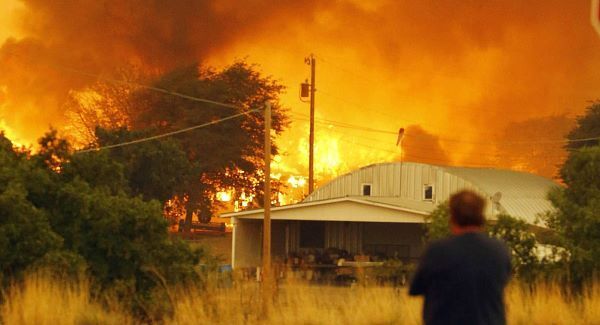
THERE is too much of the wrong kind of fire, too little of the right kind, and too much overall. The wrong kinds include the blaze that killed 19 firefighters in Arizona last week, and the ones that put southeast Asia under a pall, that incinerate communities, befoul ecosystems with effluents, and trash biotas by burning at the wrong times and intensities. The right kinds perform an ecological service by burning landscapes properly — and stay in their place.

Paradoxically, there is not enough fire on the planet; but, thanks to fossil fuels, there is too much combustion. The developed world has too few good fires, and the developing world has too many bad ones.

What to do about this depends on how we characterise the problem. The paradox is because fire is the great shape-shifter of natural processes.

Fire is not a creature, nor a substance, nor a geophysical event, like a hurricane or an earthquake. It is a biochemical reaction. It synthesises its surroundings. It takes its character from its context. Fire integrates everything around it — sun, wind, rain, plants, terrain, roofing, fields, and everything people do, and don’t do. It indexes the state of an ecosystem.

It is our signature act as a species, the one thing we do that no other creature does. We did not invent fire (it has been integral to Earth for 400m years), but we monopolise its controlled use.

Fire is universal, difficult to grasp, and tricky to wrestle into shape. There is no solution because there are many kinds of fires, and they change with their context, but some fire problems have technical fixes.

We can build machines that reduce combustion to its essence and contain it. We can erect houses that resist burning. We can design cities that prevent fires from spreading from building to building. But these fires are fixable only because we construct their settings.

We cannot survive without fire; but we need it in the right ways. It is a problem when it burns freely through cities, but it is also a problem when it is removed from wildlands that have adapted to it, because its absence can be as ecologically significant as its presence. The point is that urban fire is not a model for wildland fire.

Our templates for describing fire are misdirected. They portray the burn as a disaster and the fight against it as a war story. Because of the battlefield allusion, observers reason that there must be more sophisticated technologies than shovels and rakes to suppress the flames. We must meet force with greater force. Such metaphors misdefine the problem.

Over the past decade, the world has experienced untrammelled burning — what observers term ‘megafires.’ Explanations vary. Some point to climate change, with global warming producing deeper droughts and more extreme weather. Some of these fires have raged under abnormal conditions; some have not.

Others emphasise a buildup of combustible materials. The nature of such fuel accumulations runs the gamut, including swamp drainage in Indonesia, rainforest destruction in Amazonia, self-thickening woods in American wildlands as a result of fire exclusion, and everywhere the intrusion of urban sprawl and fire-prone houses.

Others blame changes in policy and practice. Lands legally recorded as wilderness will encourage more fire; and a reluctance to put firefighters at risk in remote settings — as well as cost concerns — argues for backing off and letting the next ridge burn, while offering point protection for threatened communities.

We need to be able to control bad fires. But suppression alone is the fire equivalent of a police state, not a liveable landscape. Rather, the great diversity of fires requires an equal diversity of means to cope with them or convert them to beneficial outcomes. To match problems with solutions, we have to characterise the issue properly.

A fire that burns into a community is a disaster, but if we see fire only as a disaster, then we will follow the example of many wildland fire agencies that are adopting urban, all-hazard models in place of traditional land management. This leaves them fighting the fires that break out, rather than managing the settings that sustain those fires.

Likewise, if we define the fight against fire as a battlefield, we will build up our forces, search for more powerful technologies, like air tankers, and accept firefighters’ deaths as inevitable. We will win battles, but kill crews in a war that does not exist.

Even if we accept the war metaphor, we are engaged less in set-piece conflicts than in an ecological insurgency that we cannot bomb or bulldoze into submission. In many settings, the best solution is to use good fires to contain bad ones. A generalised war on fire is as ill-conceived as, say, a global war on terror.

Fire is what its setting makes it. It is also a relationship. Fire and humanity long ago began shaping each other’s realms. Today, as always, we remain the best of friends and the worst of enemies.

* Stephen J. Pyne is a professor at the School of Life Sciences at Arizona State University.

More in this section

Revoiced

Newsletter

Had a busy week? Sign up for some of the best reads from the week gone by. Selected just for you.

Cookie Policy Privacy Policy Brand Safety FAQ Help Contact Us Terms and Conditions

© Examiner Echo Group Limited