Most vulnerable set to pick up the tab
PENSIONERS, the unemployed, PAYE workers, and medical card holders should be feeling afraid. Very afraid.
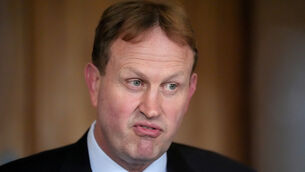
Public Expenditure Minister Brendan Howlin’s fear of industrial unrest in the public sector and/or fear of losing public sector and trade union electoral support means the budget is looking even more ominous for such groups.
Despite the country borrowing €1bn every month so it can meet the public sector pay and pension bill, the minister has wimped out of tackling the 800 allowances that have underpinned the pay packages of the most job secure workers in the country.
He promised to save €75m of taxpayers’ money. Now, we have to be happy with trimmings of €3.5m.
In the private sector, employers wouldn’t think twice of dealing a hammer blow to the allowances bill if forced to borrow to pay salaries. But, alas, the same hard logic does not exist in the Government’s approach to the public sector, for theirs is another world.
And so the Croke Park Agreement on public sector pay will remain intact, an impenetrable wall that no meddling politician or even troika economist is allowed to attack. Annual increments, which are unrelated to outstanding performance, will continue to ratchet up individual earning power and while private sector pensions nosedive, these same public sector workers can still expect tax-free lump sums one-and-a-half times their finishing salary and guaranteed pensions for as long as they live.
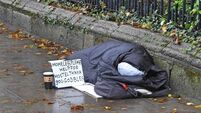
Instead, the Government will hit the unprotected: The hard-pressed mother reliant on children’s allowance to feed her family, the unemployed construction worker lying awake worrying at night, and the 70-year-old man with his life on hold as he waits years for a hip operation so he can walk again.
Quite simply, the ministers will turn towards the underprivileged, the unprotected, those incapable of putting up a fight; those who don’t have the capacity to grind the country to a halt, tearing down the Government’s much-cherished reputation as the poster boy of the IMF in Europe.
What they have allowed continue: nPlainclothes gardaí will continue to be paid for wearing their own clothes in the line of duty. This allowance ranges from €11.60 a week for a garda and €14.68 for a superintendent. An allowance of €2.87 a week for the “maintenance of official footwear” will also remain intact.
* Such allowances also exist in the Defence Forces. They are entitled to a civilian allowance of €1.33 a day to fund clothing they may need to buy for when they required to wear civilian clothing at work. Another high allowance is the “maintenance of essential services allowance”. This is worth €49.76 a day for weekdays, €74.70 for Saturdays and €99.50 for Sundays. They undertake such duties so they can aid civil authorities “in times of industrial unrest”.
* Staff at the National Museum also get a special allowance for “operating security equipment” at the Kildare St museum. They also get a separate allowance for locking up the building at night as it’s argued it is a job outside their core duties.
* An allowance is also paid to general operatives in return for their operation of the syncrolift at Castletownbere Fishery Harbour Centre. This allowance is not paid to staff operating the syncrolift at the other three fishery harbour centres that use a syncrolift. According to the department, it is difficult to justify the continued payment of the allowance given that it appears to be specific to just one centre. The origins of the agreement to pay the allowance are unknown. Where the syncrolift is operated outside of the normal working day overtime rates are paid.
* A special allowance of €47.92 is also paid each week to service officers for the delivery of post before 9.15am at the Chief State Solicitors Office. The staff were given this allowance so they would get the post in early, before senior staff went to court. Four officers are also given a €65 allowance towards footwear. This footwear allows them to walk to the post office and bring legal files in and out of court.
* There are also special allowances for driving a forklift or using a chainsaw for Teagasc, as well as special dirty allowances across the public sector for anybody — eg, general operatives, carpenters, and plumbers — who may get dirty in the course of their work.
What they may yet do instead:
* There have been suggestions that pensioners are going to have to cough up in this budget. Junior finance minister Brian Hayes has suggested free travel may have to be reviewed, with suggestions older people will have to make a contribution towards each journey. The IMF has also questioned the size of the contributory and non-contributory pension.
* A cut to the minimum wage to reduce labour costs has been recommended by the IMF in its latest review on Ireland’s recovery. The IMF has also noted that rents have fallen and that Ireland’s national minimum wage is higher than in the North and in Britain. But cutting the minimum wage may act as another disincentive to returning to the workplace.
* The troika is also pushing for a faster introduction of the property tax amid reports that most households will pay an annual charge of between €250 and €400 from next year.
* There is also a clamour from the troika for a reform of universal social welfare payments such as children’s allowance. In many cases in this country, the children’s allowance is helping families to meet mortgage payments.
* The IMF also suggested tougher means testing of medical cards and other state supports and a radical reform of third-level education by linking college fees to the costs and earnings potential of courses.
* The IMF said there is scope to redesign motor tax to provide significantly higher revenues, meaning it will cost significantly more. And the IMF said there is scope to expand the well-designed carbon tax to all fuel types.
* They are also refusing to take income tax off the agenda. The IMF said there is room to raise income tax revenues without increasing rates on lower-income workers.
The next three months is going to be horrific in the health services. There is serious concern in the Government and among our paymasters at Health Minister James Reilly’s failure to keep the health budget in the black. We already know agency staff are to be cut by 50%, meaning hospitals will be even more chaotic, overtime is to be cut by 10% and home-help hours are being slashed by 5.5%. In addition, 50,000 medical card patients will no longer qualify for nutrition, weight loss, and anti-cholesterol drugs. This is only the beginning however: The health spending overrun is heading for €500m at year’s end.