Sarah Harte: Is the urban/rural divide as straightforward as we think?
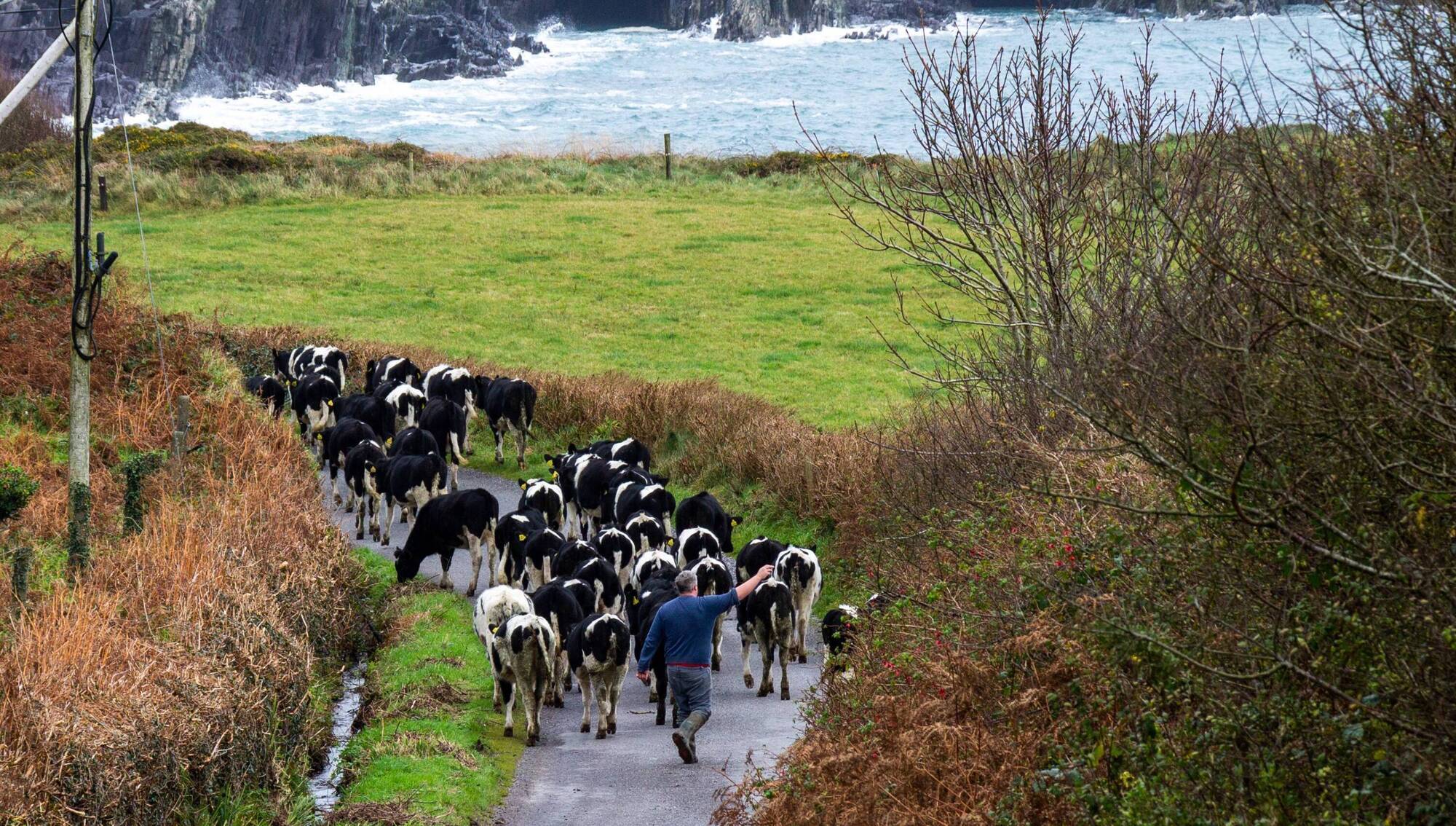
West Cork, where I live, has historically been a melting pot. There’s far more diversity than you might typically find in a suburb where people are largely stratified according to their postcode. Picture: Andrew Harris

The urban-rural divide is always close to the surface. But is it as straightforward as we think?
Interesting research from the Irish Examiner on rural attitudes this week confirms it’s a mistake to assume rural Ireland is one thing.
In a small country, the dance between the rural and urban has been going on forever.
Ambitious rural people have long left the countryside for opportunity. College, work, you name it.
In some cases, they never come back, yet a part of them hankers for home.
In other cases, they quickly become part of a fabric that sees the city as sophisticated, educated, and cultured, while the countryside they came from is cast as simple and backwards.
I’ve lived in the city far longer than in the country. I’m now transplanted to West Cork, where one side of my family has lived for centuries.
Living in the country gives you a new lens on urban attitudes to rural Ireland. Personally, I enjoy ‘metropolitan chauvinism’.
You can hear this city sophisticate in the butchers loudly ordering their meat. We welcome their custom during the relatively short summer season.
For some, it would seem there’s a severe drop at Newlands Cross. I had 30-plus years of being told episodically in South Dublin that I didn’t seem like a "country person".
When I interrogated why, it became apparent that I didn’t come across as somebody who lived in a tree and filed her teeth.
For a certain species of city dweller, rural Ireland is an amorphous lump.
Yet, rural Ireland is as diverse as Dublin’s suburbs.
West Cork, where I live, has historically been a melting pot. There’s far more diversity than you might typically find in a suburb where people are largely stratified according to their postcode.
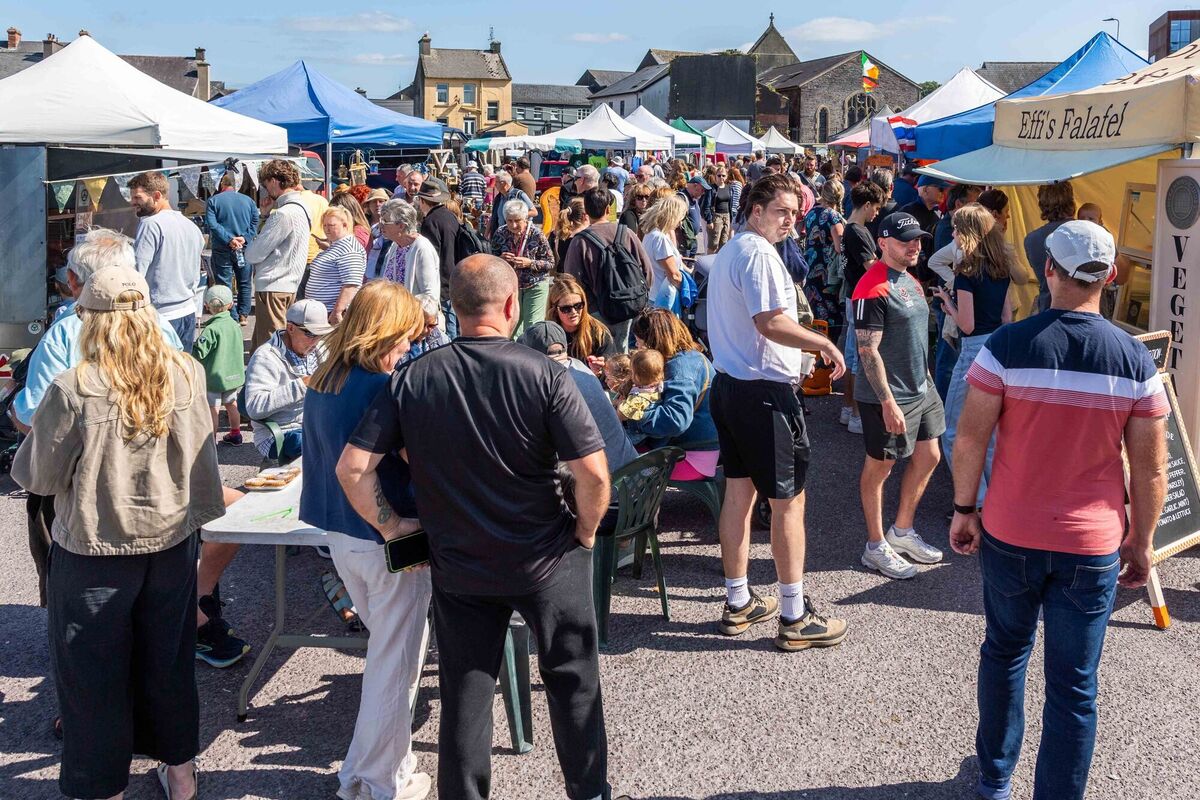
Stealth wealth exists where I live, with homes hidden down discreet lanes. Some fly back and forth to Brussels or London for work. Other people farm the land. There are teachers, doctors and all the other professions you find in the city. Some are hard-pressed, like anywhere else. Some are more conservative in their attitudes; others are extremely liberal.
In Skibbereen market on a summer Saturday, you will see the various tribes in action.
For one thing, ‘Skibb’ has one of the highest numbers of British nationals in the country.
The English vary greatly. There are the rich ones. Then a smattering who came to Éire probably because they couldn’t afford a house in the Cotswolds and give the distinct impression they hanker after the rolling hills of the homeland.
There are the artists, those seeking an alternative lifestyle, others drawn by our generous social welfare system, post-Thatcher refugees.
The vegetable growers are a mixture of English and locally born. The cheesemakers are a mixed bag. Locals and tourists frequent the stalls, including the Cork and Dublin bourgeoisie generally summering in Baltimore or Schull, with many sailors among their number in their vrum vrum cars.
You have hipsters, often in matching his-and-hers outfits. She has a geometric fringe and wears clothes in natural, breathable fibres, thrown on to look as if she doesn’t care. Himself looks like he does what he’s told as they pick up their kimchi and bottle of cloudy organic wine. More power to them.
The ’s Rural Ireland research highlights how the narrative of one-dimensional socially conservative rural communities is inaccurate.
A majority of rural adults in Munster, Leinster, Connacht and Ulster support a right to a termination. Four in five of those surveyed supported a five-day leave from work for women who had had a termination before 24 weeks.
That’s a seismic change in terms of liberalisation of attitudes. In a fifth-floor office in the IFSC in 2002, I keenly listened to the referendum results on the radio: the government’s proposal to roll back the X case was narrowly defeated.
The result revealed a huge socio-geographic split between urban centres and rural Ireland on abortion. Thank or curse the digital age depending on your perspective, but the social consensus has altered. That schism no longer holds true.
However, many rural adults feel disconnected from mainstream politics, with six in 10 believing the Government does not represent rural interests, while two-thirds suggest Independent TDs better represent rural issues.
This could suggest a swing to the right. There is, of course, a centre/centre-right traditional vote, but where I live, the Social Democrats leader Holly Cairns tops the poll. Rural attitudes don’t fit neatly onto a left/right axis any more than they do in cities.
Rural adults doubt a Dublin-centric political class represents their interests. Take one issue: the shows 87% of those surveyed agree the rules on building one-off homes in rural areas should be relaxed.
Policy needs to change because the current rules make it harder for rural families to stay in the communities where they have lived for generations. So short-sighted.
Only a third of rural adults feel they have access to reliable public transport. So no, we’re not a bunch of petrol heads, but we need our cars. As for electric vehicles, there’s a dearth of fast-charging points, and we drive much longer distances.
Material circumstances partly shape rural voting behaviour.
West Cork, as a friend tartly pointed out to me, cannot be said to represent all of rural Ireland. I would never claim it did. There are parts of rural Ireland that are disadvantaged and marginalised at local, national and EU level, with economic degeneration. Pockets where people are more clannish and the dominant rural voice is different.
However, if you want insularity, cliquish conformity and a narrowness of purview then visit the highly parochial silos in some Dublin suburbs. Fraternising in such enclaves, I sometimes imagined somebody might shout: ‘Call security, there’s an individual in the building.’
This isn’t an anti-city polemic. I love Dublin and Cork for different reasons. But cities are not necessarily citadels of enlightenment or even diversity.
Thirty years ago, would you have wanted to be ‘the only gay’ in the village? No, you would have instinctively headed for the city.
Country class is probably policed in ways that don’t affect me as ‘an outsider’. But there’s an innate social and emotional freedom here.
I could bowl down to the village shop or into Skibbereen wearing a pillow slip or a pair of trousers held up by bailer twine, and nobody would bat an eyelid.
Try that in the leafy suburbs.
CONNECT WITH US TODAY



Be the first to know the latest news and updates