Michael Moynihan: Cork must start preparing a heat-health action plan for 2027 now
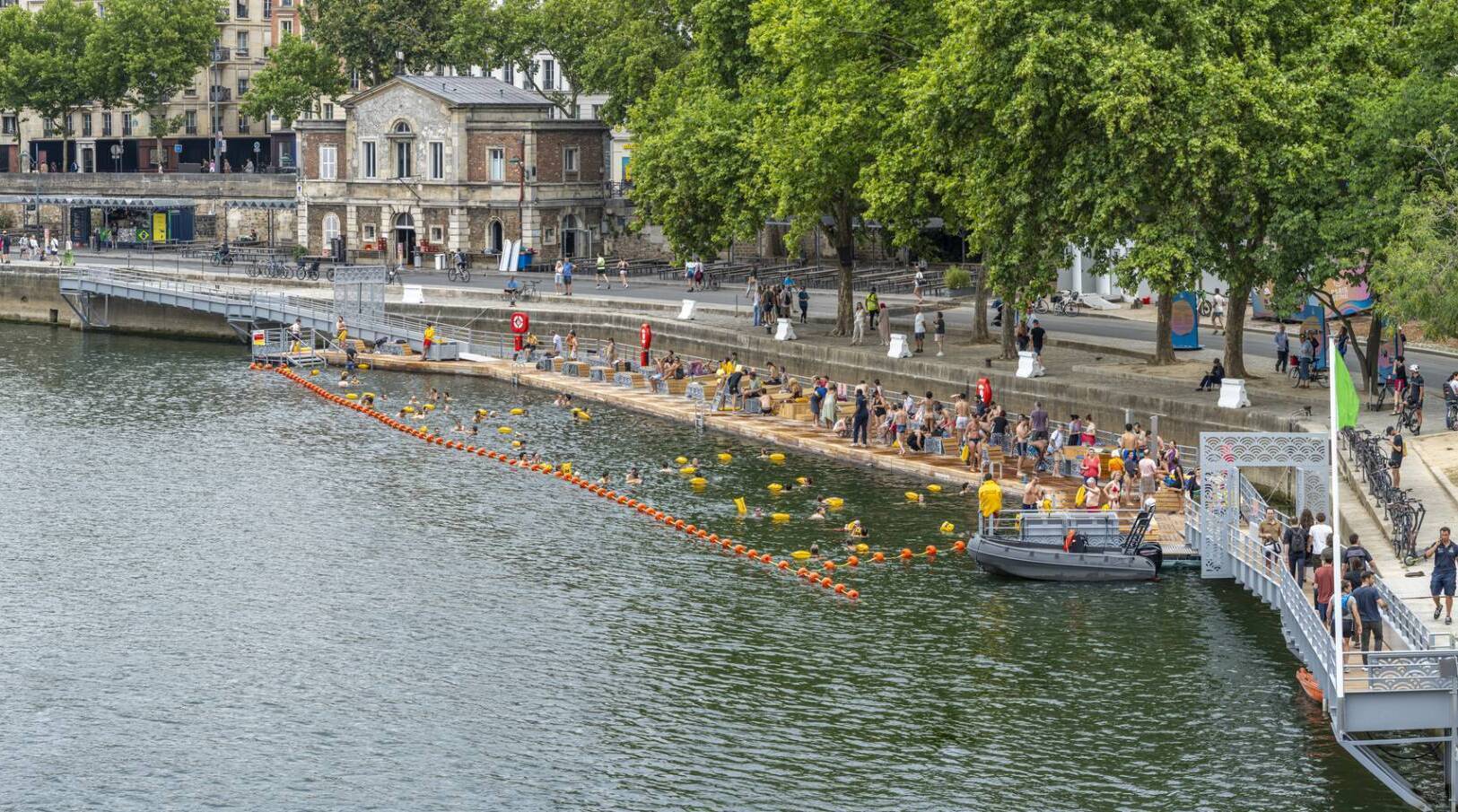
Summer swimming in the Seine and Paris Beach. The local authority has taken the lead here, looking after swimmer safety and monitoring pollution levels, but it has also created swimming facilities in other parts of the city, such as the Canal Saint Martin.

The schools are almost fully back in session now, which means hundreds of thousands of sacks and backpacks and lunch bags are getting readied, and hundreds of thousands of parents are getting ready to greet the autumn with a song in their hearts.
This time of year often sees a little improvement in the weather, a final flicker of heat and light from the summer to remind everyone of what they’ll be missing. You know what I mean: the temperature spikes and the sky clears just as the kids are trooping indoors.
Of course, this has been a summer of spiking temperatures already. Since May we’ve had heatwaves and hosepipe bans at various points, with last month officially recognised by Met Éireann as the second hottest July since 1900, the driest July on record, and one of the sunniest months ever on record for Ireland.
There was also widespread recognition this summer that our cities are not prepared for the health impacts of extreme heat, a fact noted by the Irish Climate and Health Alliance. Among its findings was one particularly striking observation that parts of Cork City were up to 15 degrees hotter than others during the heatwave.
Read More
Warming (sorry) to its theme, the alliance called on Cork City Council to begin drawing up heat-health action plans as summers continue to get warmer year-on-year.
What can we do to prepare the city for extreme heat, then? I had a look around to see what other cities are doing, and to see whether we could learn any lessons from them.
In Paris, for instance, they have turned to the Seine, which has six designated swimming sites.
The local authority has taken the lead there, looking after swimmer safety and monitoring pollution levels, but it has also created swimming facilities in other parts of the city, such as the Canal Saint Martin.
In that location a 100-metre swimming zone is accessible via a dedicated pontoon and offers nearby changing facilities and showers for added convenience.
The great Niall Kenny has advocated for years for lido-style facilities in Cork which would be an invaluable resource in hot weather and which lacks only the will to be created.
Perhaps a 100-metre zone running along the South Channel by the event centre... well, maybe not.
Paris also has 55 misting stations which use drinkable water and spray a refreshing, cool mist for those suffering in the heat, as well as 11 separate summer Totem fountains.
Taken in conjunction with its 1,200 water fountains, the city is clearly working hard to help those overheating in the summer months.
Could we adopt this scheme? It can be tricky at times to find a source of water in the centre of Cork without having to presume on the goodwill of a commercial outlet. We could do with it.
Across the border in Spain, the punishing heat has led to a different sort of campaign. In Barcelona this summer, the city unveiled 75 new shade structures in a variety of public spaces as part of its ongoing plan to combat rising temperatures.
The programme, known as Ombres (Shadows), began three years ago and aims to adapt the city’s public areas to severe climate conditions; the installations involved will cover 38 playgrounds, 21 city spaces, and 16 schoolyards, which will creates a sizeable shaded area.
Barcelona aims to continue expanding the number of shaded spaces into next year and plans to have over 200 new spaces by next May.
Those structures, by the way, are canopies. In real terms they resemble old fashioned shop front canopies, but in Barcelona they can be used to extend across narrow streets to offer shade to pedestrians.
When I say narrow streets think in terms of Oliver Plunkett Street, which seems an obvious place to try this in Cork.
Of course, such streets and thoroughfares aren’t the only option. Barcelona City Council has its famous Refugios Climáticos scheme, for instance — a climate shelter network of spaces where people can take shelter from the heat during the summer and from the cold during the winter network.
There are 500 summer spaces and over 300 winter spaces: some are indoor spaces, like libraries or civic centres, while others are outdoors, like parks or block interiors.
All are free to enter, apart from the municipal swimming pools (which have subsidised entry fees) and the general aim is that the shelters have good accessibility, with chairs or benches to sit down and free water to drink. As those spaces include public and private spaces, some of them offer free Wi-Fi and toilet faculties as well.
Little wonder that the Refugios Climáticos plan is being used in other cities across Europe.
What’s interesting is that Barcelona has moved to offer relief to those suffering from the heat in the short term rather than focusing on long-term infrastructural projects which could take years to yield results. The same could be said of Paris’s use of pre-existing facilities such as rivers and canals.
Trees and green spaces, of course, are among the key weapons in the fight to help people stay cool in the heat. In Barcelona there’s an interesting focus on creating such green spaces on a small scale — in derelict and abandoned areas between buildings, for instance, as opposed to large-scale traditional parks which might take years to plan and build.
In Paris there’s a different approach. Earlier this year your columnist saw the now-famous urban forest in the Place de l’Hôtel de Ville — the broad concrete forecourt in front of Paris’s municipal offices saw 2,500 square metres converted to use by trees selected for their resistance to pollution, the density of their foliage, and their resistance to heat in two separate groves on either side of the square.
Granted, given the departure of green spaces from Bishop Lucey Park and the old fire brigade substation in Blackpool there seems to be less of an appetite for trees here (even our much-missed robot trees).
And that’s a pity, particularly when you bear in mind the Bosco Verticale initiative in Milan. These are apartment blocks which are almost entirely covered with trees, shrubs, and plants of various kinds (Bosco Verticale means vertical forest in Italian).
Given the number of apartment blocks being constructed in Cork could there be an argument for a similar approach here?
This is certainly the time to consider organising these measures. It’s no good waiting until next May or June, when the mercury starts to climb, and trying to come up with a heat-health plan then.
By then it’s too late. As we all learned long ago, ní hé lá na gaoithe lá na scolb.
CONNECT WITH US TODAY



Be the first to know the latest news and updates