Terry Prone: Trump not as unique in presidential awfulness as we might assume
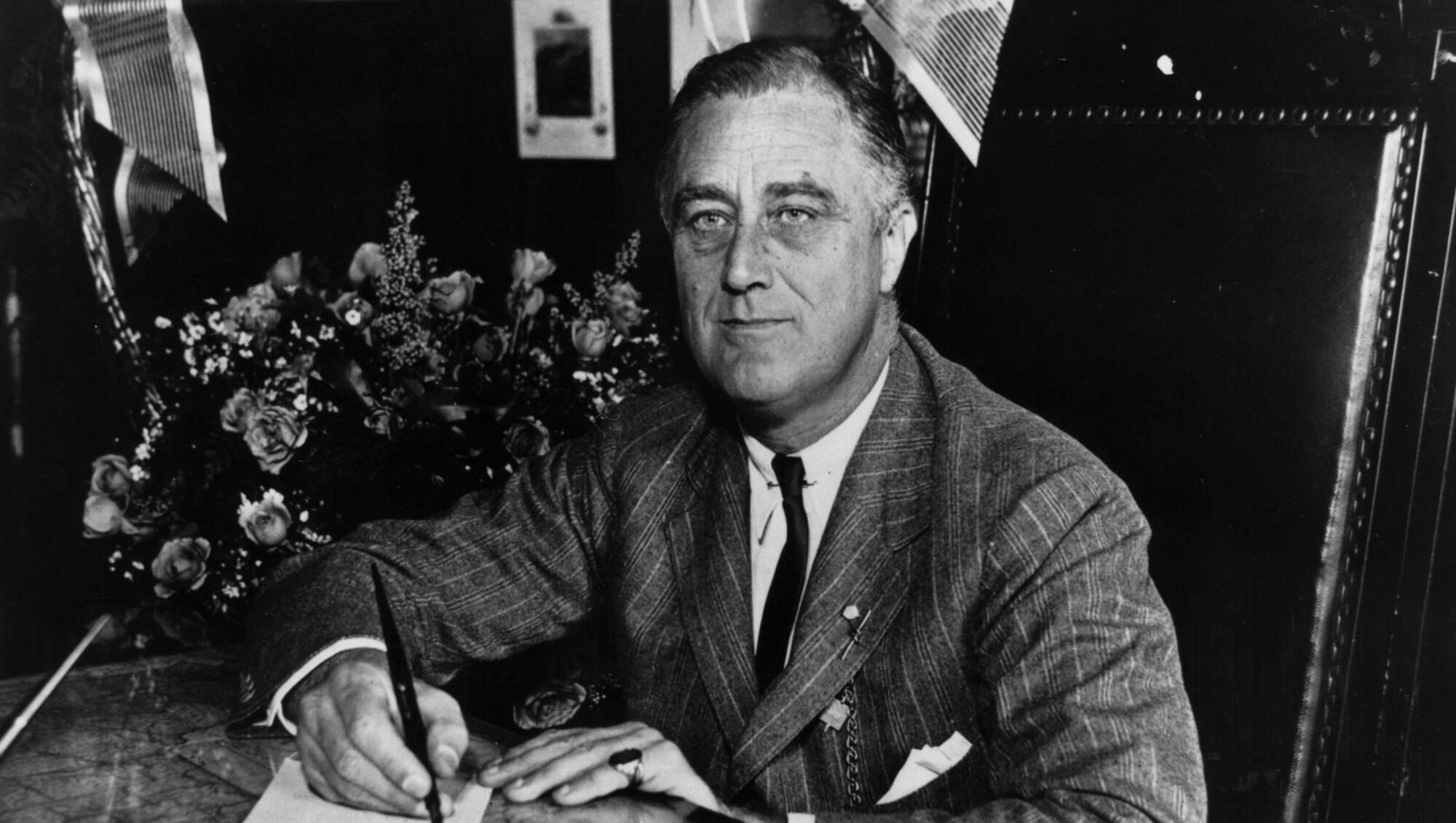
US wartime president Franklin Delano Roosevelt is looked on favourably as a principled and effective leader by history, but he shared many of the attributes and character of the incumbent at the White House.

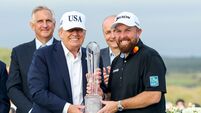
This weekend has to be the first time that the Irish Open divided the nation politically. Nobody could compute the numbers on either side. We just know that golf fans, people who see the Doonbeg hotel and resort as providing nothing but benefits for the local community, and fans of everything the Trumps stand for were on one side. On the other were protesters and commentators who see Trump as a real and present danger to the world, a figure in the White House unprecedented in the variety, indeed promiscuity, of the threats he poses.
It’s fair to say that many of the latter group of commentators and protesters are transfixed by the uniqueness, the very singularity of Trump. Apart from passing references to Richard Nixon, the current American president is rarely juxtaposed with other presidents in public discourse. He is sui generis, watched with the condemning eyes of those who believe that while he might share a few factors — like a domineering, bullying, contemptuous rich father – with the worst of previous presidents, he self-evidently shares nothing with the best holders of the office. That goes without saying.
Or maybe it doesn’t.
One of the most revered twentieth-century occupants of the White House was Franklin Delano Roosevelt, a suave, educated Brahmin widely regarded as having brought the US through the Depression and the Second World War, while communicating with the citizenry with honesty and charm. At first glance, FDR had nothing in common with the current incumbent. He would never, for example, have promised the electorate $5,000 each if his party held on to power in the mid-term elections. That’s a certainty.
HISTORY HUB
If you are interested in this article then no doubt you will enjoy exploring the various history collections and content in our history hub. Check it out HERE and happy reading
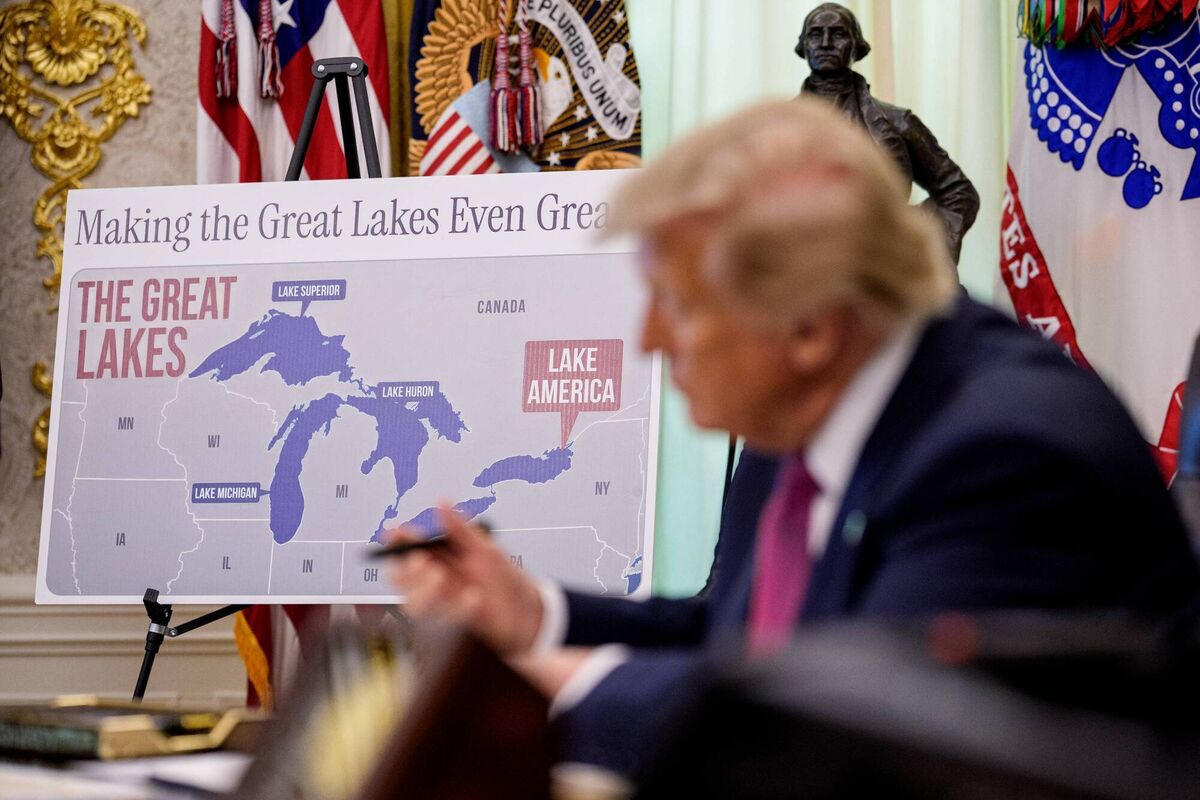
It’s tempting to believe that since FDR’s brain power was at a different level to Trump’s, that he would never have demonstrated the current president’s tiny attention span, lurching, as he does, from posting nasty edited videos suggesting — falsely — that the UK’s King Charles uncaringly walked away from a man who had fainted, to re-naming Lake Ontario as Lake America.
However, the limited attention span is the first of many things that FDR actually did share with Trump. He was easily bored, was Franklin, as was noted by those around him, who choreographed their inputs to get past his lack of sustained focus, which was so obvious that Britain’s foreign secretary during the war, Anthony Eden, was quietly appalled by it, calling it Roosevelt’s “cheerful fecklessness.” That fecklessness was somewhat compensated for by the president’s wife, Eleanor, who was doggedly diligent in everything she touched and to whom he effectively outsourced anything he couldn’t be bothered to study.
Mention of Eleanor inevitably surfaces another commonality between the two presidents: marital infidelity. Trump may have been more coarsely open about his wanderings, but Roosevelt was just as untrustworthy. Having broken it off with his mistress when Eleanor’s knowledge of the affair threatened his political future, having promised his wife that it would never happen again, Roosevelt (with the appalling connivance of his daughter) resumed the relationship decades later and actually died in the company of his mistress. His wife later found this out, which probably wouldn’t have bothered him.
But then, his successor, Truman, called him “the coldest man I ever met. He didn’t give a damn personally for me or you or anyone else in the world, as far as I could see.” He was the smiler with the knife, in one case telling a subordinate he approved the latter’s plans, knowing he had instructed the man’s firing that same day.
A rotten administrator, he played men off against each other constantly and — just like Trump — ladled hurtful nicknames onto people, the significant contrast being that Trump does it to journalistic and political enemies, whereas Roosevelt did it to his best friends. “Henry the Morgue” was what he called one of his closest buddies, in reference to Henry Morgenthau’s permanently worried expression, which, given what we now know about Roosevelt’s respect for individuals, may have been more than justified.
Like Trump, although Roosevelt’s fans would claim with more justification, he was, according to then General Eisenhower, “almost an egomaniac in his belief in his own wisdom.” That faith led him to talk all the time (sound familiar?) to such an extent that the public servants who dealt with his successor couldn’t get over his efficient brevity: “No long, drawn-out soliloquies.” His Trump-like affection for the sound of his own voice also led him to express opinions which, even at the time, should have been unacceptable. He told a Catholic and a Jewish friend that “this is a Protestant country and the Catholics and Jews are here under sufferance.” The great Jewish screenwriter Ben Hecht was shocked, and made no secret of being shocked, by Roosevelt’s casual anti-Semitism, which Hecht believed had led to Roosevelt having no interest in bombing the railroad approaches to death camps like Auschwitz, which, Hecht claimed, had indirectly caused the deaths of hundreds of thousands of Jews.
Yet Roosevelt was seen, and largely continues to be seen, as a principled and effective president. That’s partly because of another commonality with Trump: copping on to the mass medium of the day. Roosevelt brilliantly understood radio, the mass medium of his time and by-passed an argumentative commentariat with his “fireside chats” allowing ordinary people the illusion of being close to him.
It was helped by Roosevelt’s attitude to medicine, also not far from Trump’s. Of course, Roosevelt didn’t ever pull a stunt like the one Trump wanted to pull during covid, where he suggested stripping off a jacket to reveal a Superman tee shirt underneath. Roosevelt’s faking was more profound. Although crippled by polio, then known as Infantile Paralysis, which forced him to use a wheelchair, he managed to ensure that he was never seen publicly or photographed in the wheelchair, and on the one occasion when a photographer got a shot of him in it, the photographer was roughed up by the Secret Service and the film exposed so it was useless. In consequence, it is believed that only one single photograph exists of FDR in his wheelchair. Now, that’s faking.
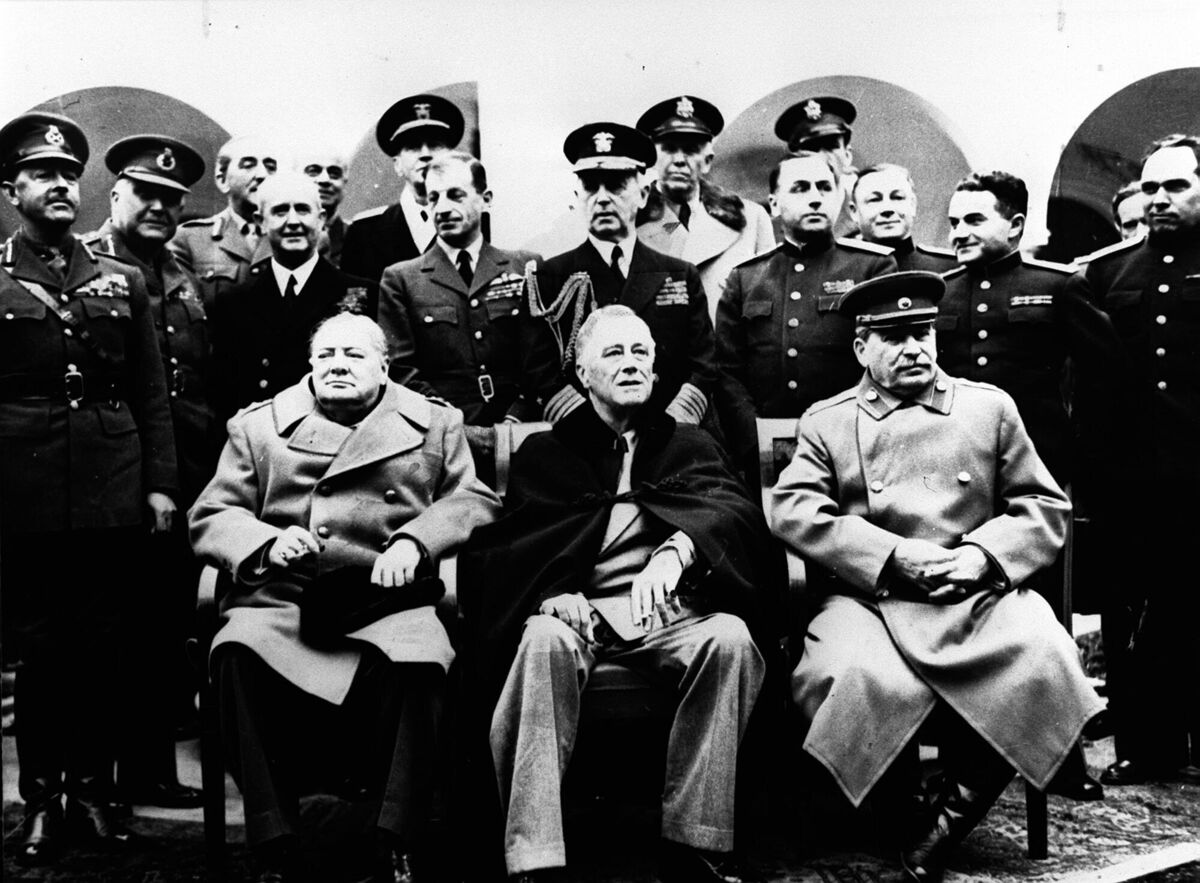
But, like Trump, Roosevelt made it his business to never ask his doctors questions that might result in answers he didn’t like. Getting at least the beginning of a fourth term (as Trump would, if he could) might not have happened had America known just how frail and damaged was their president. It is tempting to suggest that it was the frailty so obvious at the conference with Stalin and Churchill at Yalta, that led to Roosevelt agreeing with the former’s suggestion that 150,000 Nazis would be shot once they surrendered. When Churchill evinced revulsion at the possibility, Roosevelt joked about reducing the number to 50,000. It never happened, but the proposal, and the presidential amusement, was outrageous.
It’s a mistake to fuel outrage at president Trump by portraying him as uniquely crass.
One of the most revered predecessors in US presidential history ran him close.

CONNECT WITH US TODAY



Be the first to know the latest news and updates