Clodagh Finn: On this 250th anniversary, think of the Quaker who crossed enemy lines to warn Washington
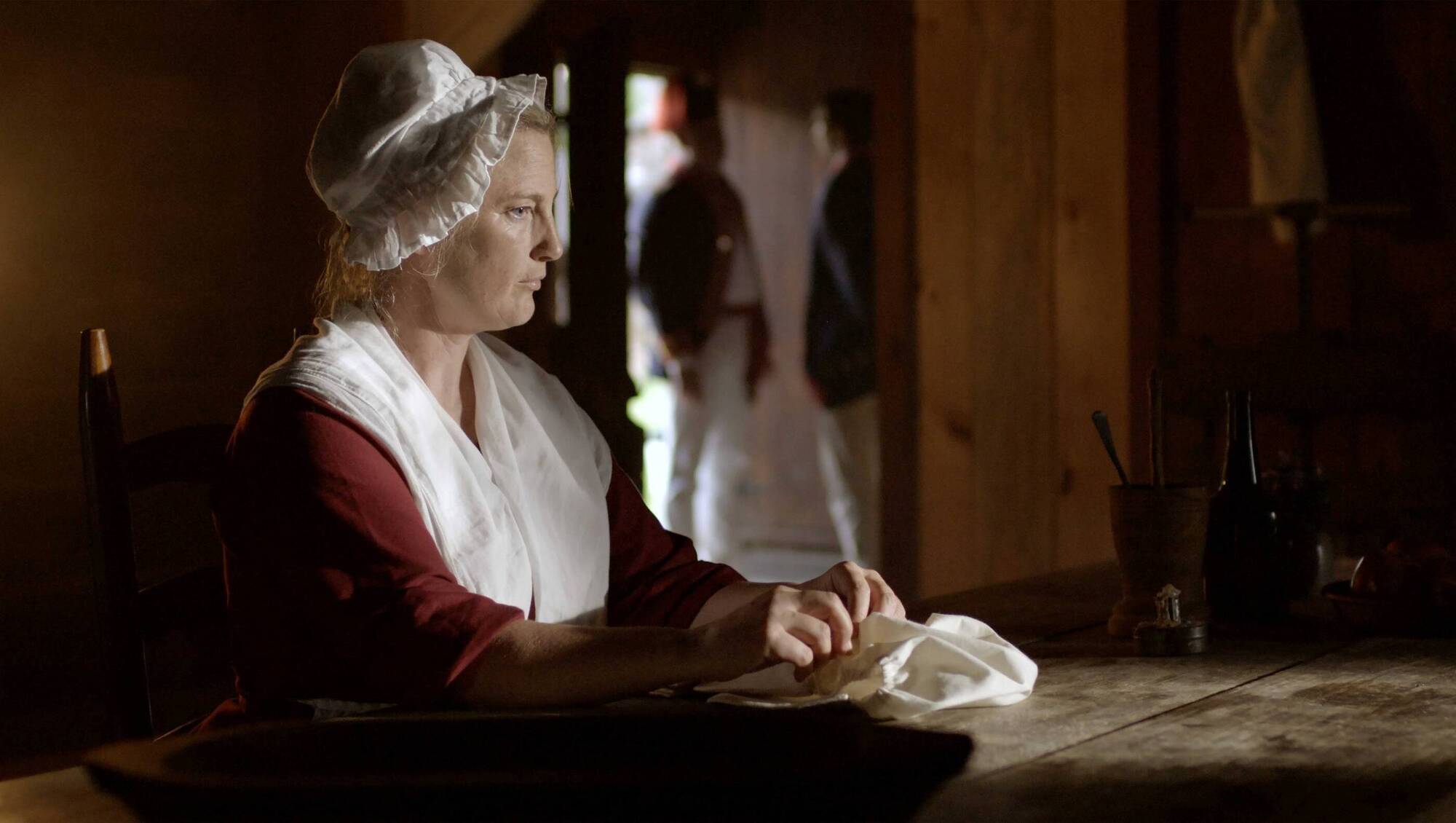
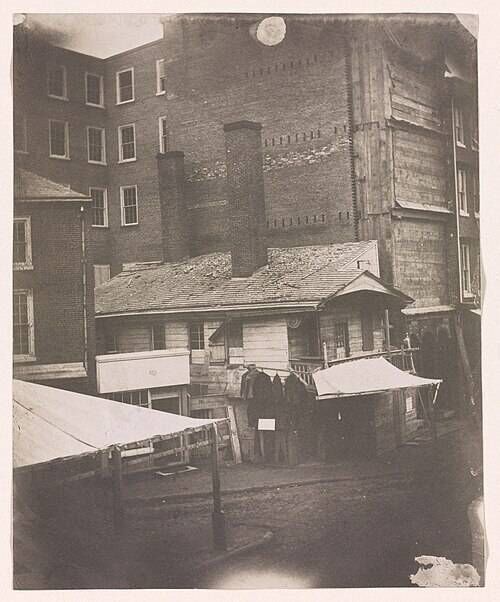
Lydia Darragh was a pacifist and already led a very busy life in her adopted city of Philadelphia where she worked as a well-respected midwife, wet nurse, mortician, and hat-maker
Lydia Darragh is mentioned in Philadelphia Quaker archives, and it’s clear she was deeply involved in the local area.

Lydia Darragh is mentioned in Philadelphia Quaker archives, and it’s clear she was deeply involved in the local area.

Today, on the 250th anniversary of the Declaration of Independence, I will be thinking of Lydia Darragh, the Irish Quaker who went through enemy lines to warn George Washington of a planned ambush by the British.

In the vast sweep of history, her brave action is an interesting but short chapter. To me, however, it is fascinating — and important — not least because it reminds us that many “ordinary” Irish people helped to win the war that gave birth to the US.

I’ve put ordinary in inverted commas because there was little commonplace or banal about the Irish who made often life-threatening contributions to the US war of independence, as Cormac Ó hEadhra spells out in a two-part documentary now airing on TG4.

Wexford man John Barry, for instance, earned the title “Father of the American Navy”. Stephen Moylan, of Cork, is credited with the earliest use of the phrase, United States of America.

A plaque to John Dunlap, who printed the Declaration of Independence, has recently been unveiled in his home town of Strabane.

HISTORY HUB

If you are interested in this article then no doubt you will enjoy exploring the various history collections and content in our history hub. Check it out HERE and happy reading

Irish-American Margaret Corbin, who took her fallen husband’s place at a cannon in the 1776 Battle of Fort Washington, continues to inspire and inform the many myths that grow up around such struggles.

The real-life story of Lydia Darragh has had its fair share of embellishment too but, unlike so many others, this Dublin woman who felt compelled to warn George Washington’s army of an impending attack wanted nothing to do with war.

As a Quaker, she was a pacifist and already led a very busy life in her adopted city of Philadelphia where she worked as a well-respected midwife, wet nurse, mortician, and hat-maker.

She must have found it difficult enough when her eldest child Charles, born in Dublin in 1755, disobeyed Quaker doctrine to join the continental army that united the 13 colonies under commander-in-chief George Washington.

Then, she was put in an impossible position herself. Here is how one evocative account describes the unfolding drama: In early December 1777, Lydia Darragh’s husband, William Darragh, was told that some of General William Howe’s British troops were going to hold a special meeting at their home. The family was instructed to retire to bed early.

The request piqued Lydia’s curiosity, so she decided to eavesdrop. Or so journalist Robert Walsh Jr tells us in this 1827 account from the American Quarterly Review: “She took off her shoes and put her ear to the key-hole of the conclave. She overheard an order read for all the British troops to march out, late in the evening of the fourth, and attack General Washington’s army, then encamped at White March.”

Lydia must have found it difficult enough when her eldest child Charles, born in Dublin in 1755, disobeyed Quaker doctrine to join the continental army that united the 13 colonies under commander-in-chief George Washington.

When she heard the news, she went to bed and pretended to be asleep. The officers, as they said they would, knocked on the door when the meeting was over so that she could let them out and extinguish the fire and candles.

“Her mind,” Walsh wrote, “was so much agitated that, from this moment, she could neither eat nor sleep; supposing it to be in her power to save the lives of thousands of her countrymen; but not knowing how she was to convey the necessary information to General Washington, nor daring to confide it even to her husband.”

There are a few different accounts of what happened next, but the most-quoted is that Lydia Darragh went out into the bitter cold of a December day, telling her family that she needed to go to Frankford to get some flour.

She secured a permit to pass through British troops on the lines and, leaving her bag at the mill, made her way to the American lines. There, she encountered American Lieutenant Colonel Charles Craig and told him she was looking for her son. She asked him to dismount and walk with her.

While they walked, she told him what she had heard. She begged him to make the “most solemn promise never to betray her individually, since her life might be at stake with the British”.

'Parcel of fools'

Colonel Craig passed on the information to General Washington who, in turn, prepared for the surprise attack forcing the British to “march back like a parcel of fools”, as Walsh put it.

And here’s the bit that would make your blood run cold. Suspecting a leak from the Darragh household, a British officer returned to question Lydia.

Walsh reports that “she followed him in terror; and when he locked the door, and begged her, with an air of mystery to be seated, she was sure that she was either suspected or had been betrayed.”

Some reports claim she said nothing — given the Quakers’ regard for the truth — while others suggest she told him the family had all gone to bed early that night, which was true. In any event, she was not rumbled.

Another account from Elias Boudinot, who managed intelligence in the American army, describes meeting Lydia Darragh in 1777. He wrote: “A little poor looking insignificant Old Woman came in & solicited leave to go into the Country to buy some flour.”

The woman put a dirty old needle book, with various small pockets in it, into his hands, he said. At first, he found nothing but, in the last pocket, he found a piece of paper outlining General Howe’s plan to come the next morning with “5000 Men — 13 pieces of Cannon — Baggage Waggons, and 11 Boats on Waggon Wheels”.

It is interesting that Lydia Darragh was described as “an insignificant Old Woman”. Her age, then close to 50, was something of a superpower, allowing her to move through enemy lines without raising suspicion.

Perhaps that is what inspired other claims that she became a spy, passing information by sewing it into the buttons of her son’s coat.

Historian Robert N Fanelli, the author of Lydia’s Tale: The Mystery of Lydia Darragh, Irish Quaker, Patriot Spy, doesn’t believe it though. While his book contains the word “spy”, he believes her action was a one-off intended to save lives — including that of her son.

Quite apart from the dramatic action that has secured this Irishwoman an unlikely place in history, Fanelli’s meticulously researched book offers a rare insight into the life of a mother of six, skilled in several profession, within the Quaker communities of Ireland and America.

Thanks to the Quaker instinct for archive-keeping, an account of Lydia’s marriage to the family tutor William Darragh in 1753 survives along with the vows they made to each other — and the marriage certificate which was signed by some 52 witnesses in Dublin!

It was too early for wedding photos, of course, but we do have this family description of the bride: “[She was] of fair complexion, light hair, blue eyes, very delicate in appearance and extremely neat.”

We also get a glimpse of the silk-weaving district around Meath St, Dublin, where her extended family are likely to have settled after moving from Wexford. There was a Quaker meeting house nearby.

Lydia, the youngest of John and Mary (Aldridge) Barrington’s six children, was born around 1728. She had already given birth to six children herself before she and her husband emigrated. She lost three of those children in infancy, and was pregnant again when, in 1763, she set out for what would soon become the US.

The couple had means and connections. Lydia is mentioned by name in Philadelphia Quaker archives, and it’s clear she was deeply involved in the local area. While she was later removed from her religious community for her political activism, she was buried in the Quaker graveyard when she died in 1789.

And, unusual for a woman of the time, the Independent Gazetteer honoured her with an obituary. It mentioned her “skill, tenderness, and assiduity” as a midwife, and said she had extended her sympathy to all.

Her contribution to the American war of independence will be mentioned in part two of Réabhlóid Mheiriceá: Na Laochra Gael (Irish Heroes of the American Revolution), which airs on TG4 on Wednesday at 9.30pm, but there is so much more to Lydia Darragh.

x

More in this section

Revoiced

Newsletter

Had a busy week? Sign up for some of the best reads from the week gone by. Selected just for you.

Cookie Policy Privacy Policy Brand Safety FAQ Help Contact Us Terms and Conditions

© Examiner Echo Group Limited