Mick Clifford: Finglas school told to dream, empower, inspire while battling hazards to its pupils

Disadvantaged school has had to launch a GoFundMe to kickstart efforts to get the State to address a leaky roof in a country that is, on paper at least, among the richest in the world
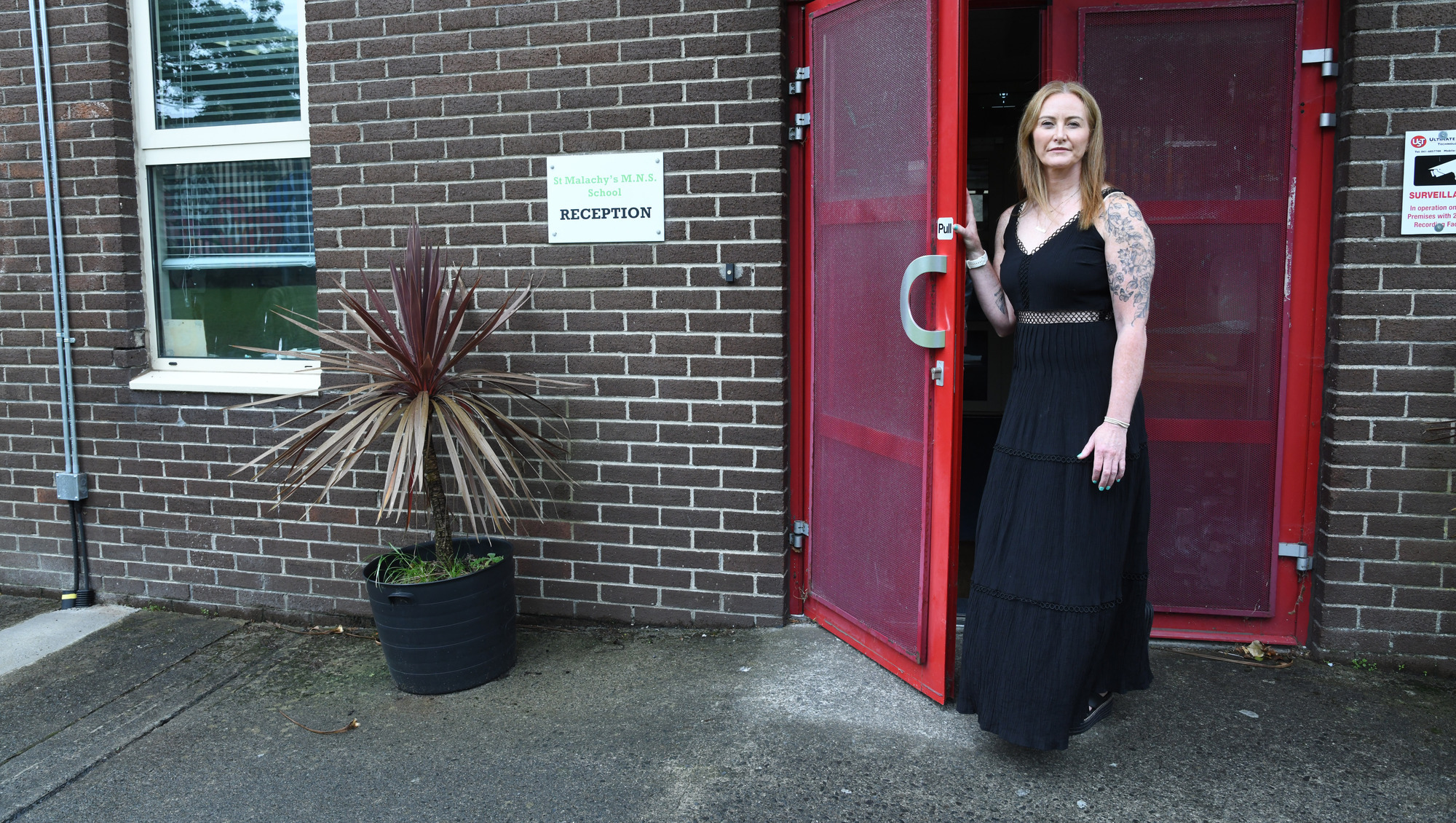
 Michelle Eustace, the principal of St Malachy's NS in South Finglas, has started a GoFundMe for the leaking roof. Picture: Moya Nolan

Michelle Eustace, the principal of St Malachy's NS in South Finglas, has started a GoFundMe for the leaking roof. Picture: Moya Nolan

Michelle Eustace dreads the rain. If she’s at home, getting into the car, and the sky begin to thicken, she feels an urge to hurry, to get in before there’s a mess in one of the classrooms.

When she’s at work, a darkening sky has her mentally moving into action stations and figuring out who and what will have to be moved. Even when she’s on holiday, many miles from the Finglas school where she is principal, the sight of the rain can disturb a sense of anxiety within her.

In the modern age, school principals have plenty to worry about. The fact that this one dreads the rain speaks volumes for official attitudes to education disadvantage, something that attracts plenty of rhetoric which is often not matched by action.

Rain, for the principal of St Malachy’s NS in South Finglas, means that the roof will start leaking. Things got so bad last month that Eustace felt obliged to set up a GoFundMe campaign to kickstart efforts to get the State to address this health hazard for children.

It has been like that for the guts of five years, but now the water can come falling from an increasing number of locations. It could be the therapeutic room, a special space for those children who are deemed to be carrying a particular weight of disadvantage whether that be material, emotional, or even just hunger.

Of late, the rain had been dropping through the ceiling in one of the two autism spectrum disorder (ASD) classrooms that were refurbished in recent years — albeit without the work addressing the problems with the roof.

The rain is also a frequent visitor to one of the classrooms in the 160 pupil school that is located in one of the most disadvantaged areas in the State.

St Malachy’s is a Deis-plus school. The category, an enhancing version of the Deis scheme that has been around for over 20 years, was officially launched in March. It purports to provide extra resources for 121 schools located in the most disadvantaged areas of the State.

An initial investment of €48m was announced by the minister for education, Hildegarde Naughton, for these schools. All of this sounds like a plan to take seriously the societal scourge in which some children begin life with the kind of disadvantages that are almost impossible to overcome.

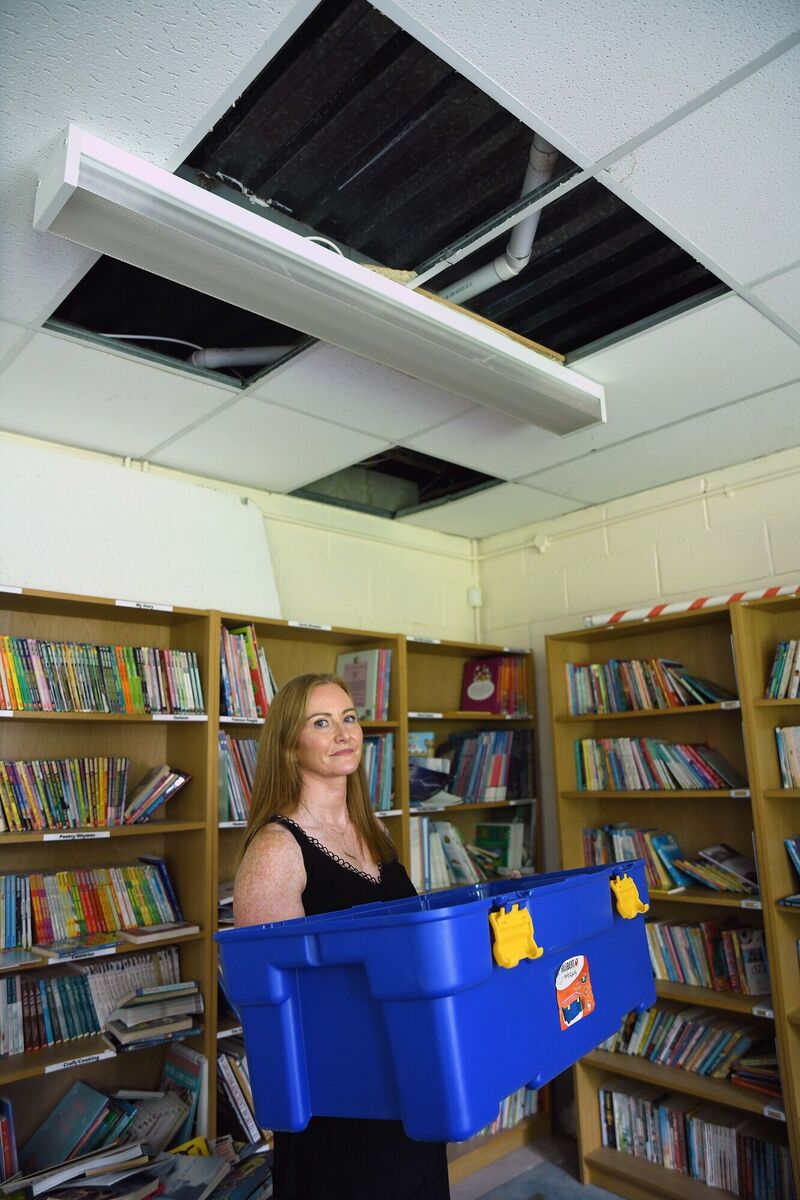
 Michelle in the school's library with several plastic containers and towels on the floor where the roof above has a substantial leak,  rendering the room unusable for the whole school community. Picture: Moya Nolan
Michelle in the school's library with several plastic containers and towels on the floor where the roof above has a substantial leak,  rendering the room unusable for the whole school community. Picture: Moya Nolan

Deis is even a catchy acronym for “dream, empower, inspire, succeed”.

Official reports can point to something being done, but don’t mention the leaking roof because that would put a dampener on the self-congratulatory tone coming from the department.

Eustace has attempted to get access to a summer works programme.

“We didn’t get it despite the state of the roof by now,” she says.

We were told that the focus at the time was on science labs

She is now attempting to have this basic health hazard addressed through a special works programme. In order to do so, a case must be presented. In order to present a case, professionals must be contracted to examine and study the problem and provide a blueprint for solutions.

Except, a school like St Malachy’s doesn’t have the kind of resources required to employ such professionals. Ultimately, a GoFundMe campaign was necessary.

“We would be most grateful if you could help us raise this money so that we continue to keep this wonderful place of learning water tight and safe for our pupils. Thank you,” the fundraising site reads.

Around €4,000 is required, of which more than €1,700 has been raised.

This is happening in a country that is, on paper at least, among the richest in the world. It is happening in an area of severe disadvantage. If the same scenario arose in a middle-class enclave, a surfeit of power and resources would ensure it was quickly addressed.

Instead, this school is told to dream, empower, inspire, and succeed, and try to ignore the water leaking into classrooms.

Autism spectrum disorder class

The ASD class that receives one of the leaks is a story in itself. A few years ago, the local special educational needs officer visited the school and declared that it had accommodation that could be used for an ASD class.

There has, due to political and media pressure, been a major push to increase the number of ASD classes in order to meet demand.

Despite this, some schools in areas where demand is high continue to resist. Last week, The Irish Times reported that up to 30 schools have admission policies which are used to prevent the opening of an ASD class.

What happened in St Malachy’s is of a different order. The space earmarked for the ASD class was being rented by a charity and a creche provider. Both had to vacate, and their loss of tenancy cost the school some much-needed revenue.

Still, St Malachy’s, unlike other schools, wouldn’t be found wanting. Eustace offered, on the basis of economies of scale, to host two ASD classes.

A total of €700,000 was invested in providing the new rooms. However, since then, one has remained empty because the demand locally is not there for two classes. The National Council for Special Education (NCSE) would have been aware of this as it conducts regular surveys.

But that doesn’t matter to the powers that be. What matters is that a box has been ticked, another class provided.

That little stat can be included the next time there is a parliamentary question or media inquiry. No mention that there is a leak in the roof of the empty ASD class because getting that fixed is not a priority. Can you imagine a school that is not located in an area of severe disadvantage being subjected to that?

There are inequalities in society that are, in some ways, unavoidable.

Resources are often distributed to places that don’t have the greatest need. But when it comes to children, there is general consensus that all must be at least given a shot at making a life for themselves.

Schools in areas of severe disadvantage have a job of work that goes way beyond the rudiments of education.

The school can be a refuge, a harbour, what today is called a “safe space” for young lives that are already fighting against the odds.

“We have kids who are just holding on,” Eustace says.

“Once they get into secondary school, if they don’t have some grasp of the basics of managing, they will be lost.

“A big difference can be made in primary school for children who get a rotten start at life. Why can’t that be properly recognised?”

It is recognised to some extent, but when you get down to the details there is often a chasm that the State, through its permanent and elected offices, doesn’t want to address, usually because it’s just too much hassle.

Peel back the layers of spin and the real picture of educational disadvantage can be seen. It’s a vista you won’t find in any government press release.

More in this section

Revoiced

Newsletter

Had a busy week? Sign up for some of the best reads from the week gone by. Selected just for you.

Cookie Policy Privacy Policy Brand Safety FAQ Help Contact Us Terms and Conditions

© Examiner Echo Group Limited