Shona Murray: Enlargement is vital for Europe's future
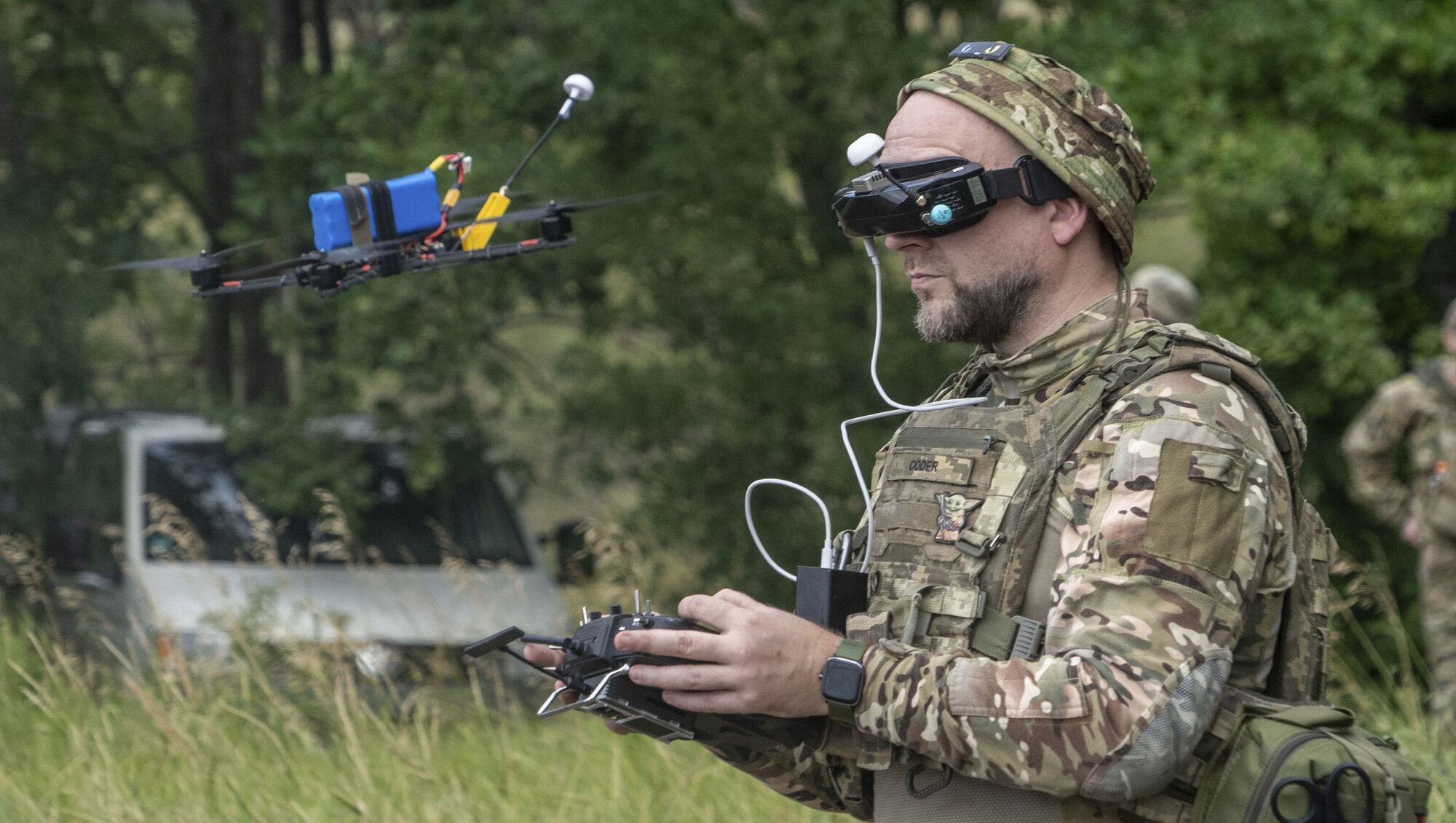
Ukraine is now seen as not only on a viable path to EU membership, but one which can bring a lot of advantages, especially considering its vast experience developing advanced drone technology in defending itself against Russia. Picture: AP /Andrii Marienko

Ireland’s return to the helm for the six-month rotating presidency of the European Council begins on July 1.
And coincidentally, enlargement is back with a bang, just like it was in during Ireland’s 2004 presidency, when Áras an Uachtaráin held a massive celebration officially welcoming 10 new members into the union: Cyprus, Czechia, Slovakia, Poland, Estonia, Lithuania, Latvia, Hungary, Slovenia, and Malta.
However, from then until Russia’s full-scale invasion of Ukraine, enlargement had been firmly frozen as a priority.
EU governments soon realised they rushed into a major expansion without adequately laying the groundwork for problems ahead.
With those, along with all the economic and social opportunities within the internal market, came responsibility. The EU had a lack of workable procedures to sanction states that substantially veered from democratic norms.
The contagious, destructive actions of Orban’s Hungary from 2010-2026 turned many EU leaders off enlargement for good.
However, it wasn’t just Hungary. Under Poland’s last far-right Law and Justice party, Warsaw was deemed a threat to the functioning of the EU over its dismantling of the country’s justice system, imposing politically aligned judges.
On other occasions, governments in Slovenia and Czechia brought similar concerns about conflicts of interest and democratic backsliding.
The idealistic view that it would be relatively seamless to transition from in many cases a post-communist era to democracy, along with an internal market bound by rule of law, came crashing down over the last 10-15 years.
Read More
As a result, several potential EU countries have languished in the waiting rooms in their bids to join — North Macedonia, Albania, Bosnia and Herzegovina, Montenegro. That came even though, overall, the admittance of countries like Poland — with its transformed economy becoming one of the fastest growing in the world — has been a success for Europe.
With expansion languishing, instead of pro-actively assisting such countries to pick up the pace of reform when it comes to corruption, organised crime, protection of the free press, de-oligarchisation and other key areas, Brussels risked leaving them open to interference by Russia.
But a shift is occurring.
Initially after Russia’s invasion of Ukraine in 2022, Kyiv wasn’t even on the list for candidacy, although indeed it was eagerly looking westwards. Its 2014 association agreement on trade and other areas triggered Putin to intervene and stop Ukraine on its path away from Moscow’s orbit.
Ukraine is now seen as not only on a viable path to EU membership, but one which can bring a lot of advantages, especially considering its vast experience developing advanced drone technology in defending itself against Russia.
This is particularly important for frontline countries such as the Baltics or Finland, which are deeply concerned at the US retreat from the transatlantic relationship, as well as Europe’s overall security architecture.
For those of us having reported on the drama and shock of some of the bloc’s most difficult confrontations with recalcitrant member states, this week was a moment to remember.
On Wednesday, the newly appointed government in Hungary led by former/reformed Orban acolyte Peter Magyar lifted its long-held veto on Ukraine’s membership ambitions.
Under former prime minister Orban, Budapest blocked or interfered with almost all EU policies aimed at supporting Ukraine while it defended itself from Russia’s ongoing invasion.
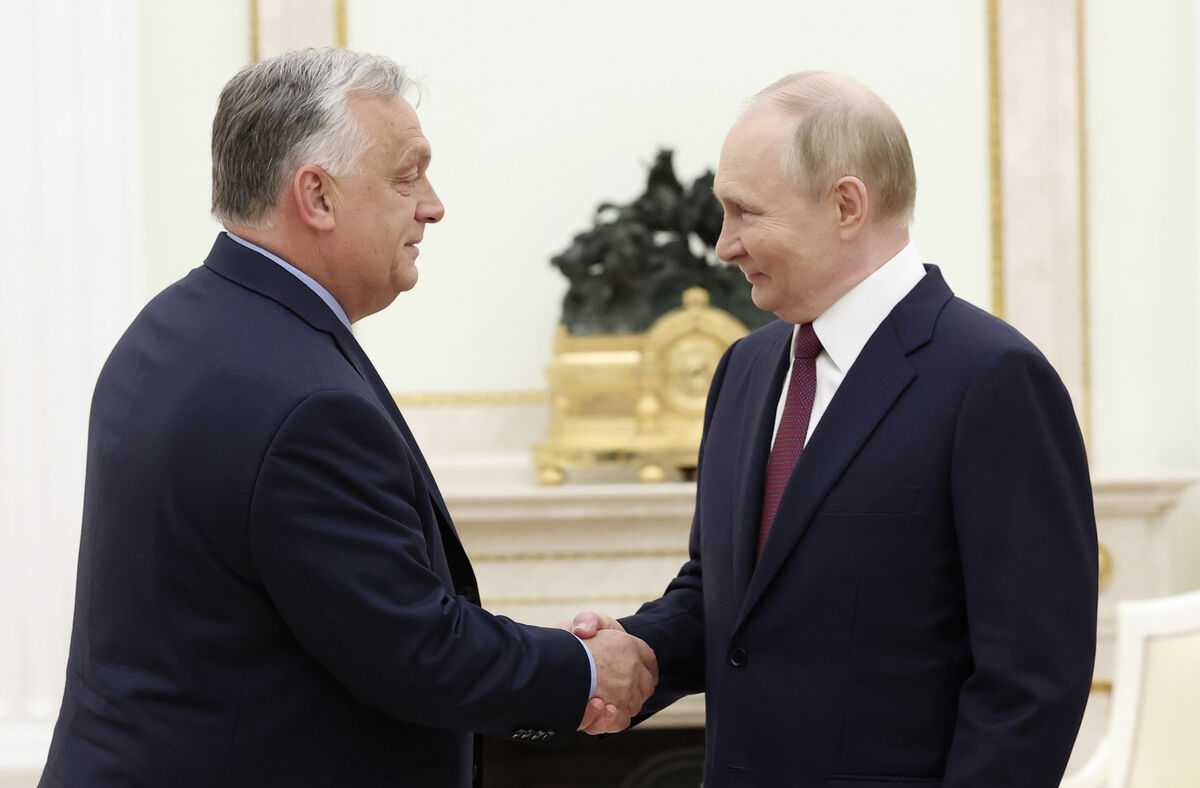
Before losing his 16-year run as premier in March’s election, separate leaked audio appeared to show both Orban and his foreign minister, Péter Szijjártó, committing their loyalty to Moscow, including amending the EU sanctions list to remove some Russian individuals Brussels intended to sanction as part of Moscow’s invasion.
In a phone conversation Orban is heard telling Putin “I am at your service.” Based on Orban’s consistent anti-Ukraine, pro-Kremlin behaviour at the EU, there was obvious suspicion the EU’s most Moscow-friendly leader was a Trojan horse. But the tapes appeared to prove it.
It’s therefore understandable EU governments which failed to stop Orban in his tracks have been wary of inviting other countries into the union. After all, he started out a respectable centre-right pro-European leader before he veered off course.
But the drive behind enlargement these days is less about benevolence towards former Soviet states than the need for the EU to derive influence from its size.
While the initial driver of this round of enlargement was a response to the Russian invasion, a hostile US under Donald Trump, deteriorating relations with China, and an unstable global outlook means the EU needs to bring together like-minded countries to wield greater strength.
Finnish president Alexander Stubb said this week the EU needs to grow to 40 countries.
“In this moment, we need to think big and geographically, we need to enlarge or at least create memberships which are flexible enough to bring in a sum total of 40 European states — or even non-European,” Stubb said.
For now, Montenegro and Albania are the frontrunners for entry, followed by Moldova and Ukraine.
But Iceland and even Norway are reviving their national conversations about what it could also mean to be firmly inside the bloc. Ireland’s presidency will be part of writing this new chapter.

CONNECT WITH US TODAY



Be the first to know the latest news and updates