Elaine Loughlin: Politicians need to stop treating public like a baby
Both the Government and opposition seem to be blinded by short-term thinking and solutions, writes Elaine Loughlin
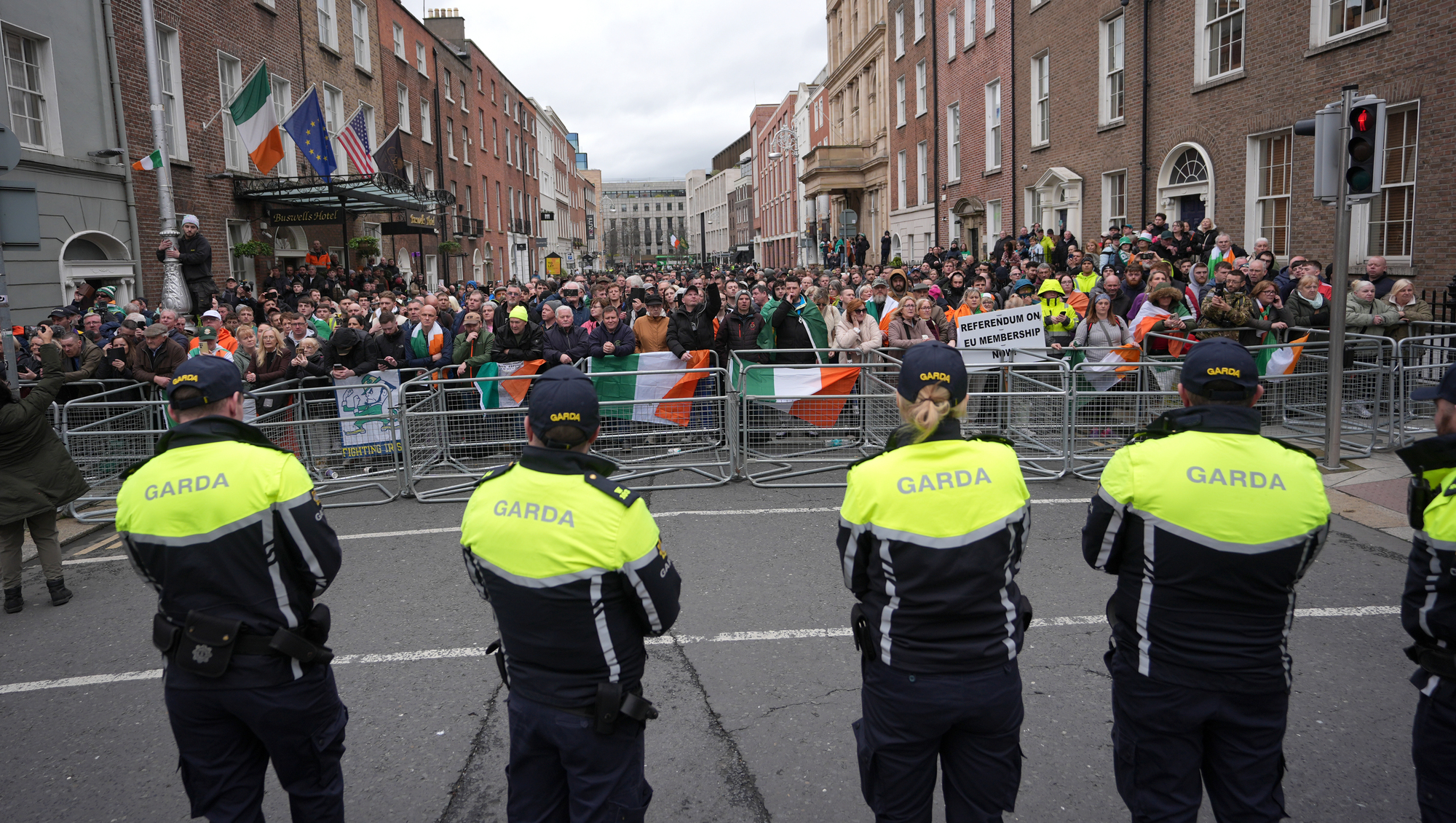
A Garda cordon stand in front of the crowds of people gathered outside Leinster House, Dublin, during a Dáil confidence motion in the  Government, which was triggered over its handling of recent fuel protests in April.

A Garda cordon stand in front of the crowds of people gathered outside Leinster House, Dublin, during a Dáil confidence motion in the  Government, which was triggered over its handling of recent fuel protests in April.
I returned from maternity leave this week.

Thankfully many of my fears didn’t materialise: My laptop still works; my political contacts still remember who I am; and most importantly, everyone on my team in work and at home, has survived the last five days.

But akin to taking a step back from a renaissance masterpiece, being away from the Leinster House bubble for 10 months provided some clarity on the bigger picture.

Here’s some of the things I realised about politics during my time away from reporting, analysing, and being stuck in the weeds of our political system.

Politicians need to stop treating voters and the country like a newborn baby.

In those dark hours, every new parent has found themselves on the verge of despair trying to settle an upset infant.

The panic usually hits around 4am, when every life decision made is questioned and all conceivable methods are deployed: An extra feed, a nappy change, the white noise machine, another bottle, and maybe even an aimless middle-of-the-night drive.

In that moment, the sleep-deprived parent will do anything to comfort their child and get themselves through to the dawn — there is little thought of the following 24 hours, let alone how the family might plan for a future of budgeting for childcare or university fees.

As it bounces from one crisis to another, the Government has also taken a ‘throw everything at them in the moment’ approach, and has less of a view on the longer term impact decisions have on the nation.

But with one eye always on the next election, it’s not just those in power who take this approach and members of the opposition are often blinded by short-termism too.

Fuel protests

This was evident in the recent fuel protests — when under pressure severe pressure, the Coalition decided to raid the exchequer surplus to appease fuel protesters with a €505m package. The supports announced on a Sunday include the postponement of a rise in the carbon tax, along with further cuts to excise on fuels, and a scheme for green diesel intensive businesses.

Fiscal measures such as carbon taxation are designed to incentivise behaviours and investment that reduce emissions. 

However, as climate justice researcher Kieran Harrahill pointed out, the effectiveness and public acceptability of such policies depend on the availability of viable alternatives and the perceived fairness of their implementation.

He made the argument that subsidies to low-income farmers, for example, could assist in diversifying the agricultural sector — alongside supporting the development of green jobs, which create new income streams and reduce their reliance on international markets.

With soaring oil prices hitting people’s pockets, the crisis provided the coalition with a tangible example of why we must wean ourselves off fossil fuels.

It provided political leaders with the opportunity to be bold in their actions and to lead the conversation around the need to transition to greener alternatives across transport, business, and housing.

This vision wasn’t just lacking across the Government benches, the main opposition parties were equally focused on the immediate term stop-gap funding.

Any calls for more ambitious, but possibly publicly unpalatable approaches, were barley heard amid the cries for a reduction in the price at the pumps.

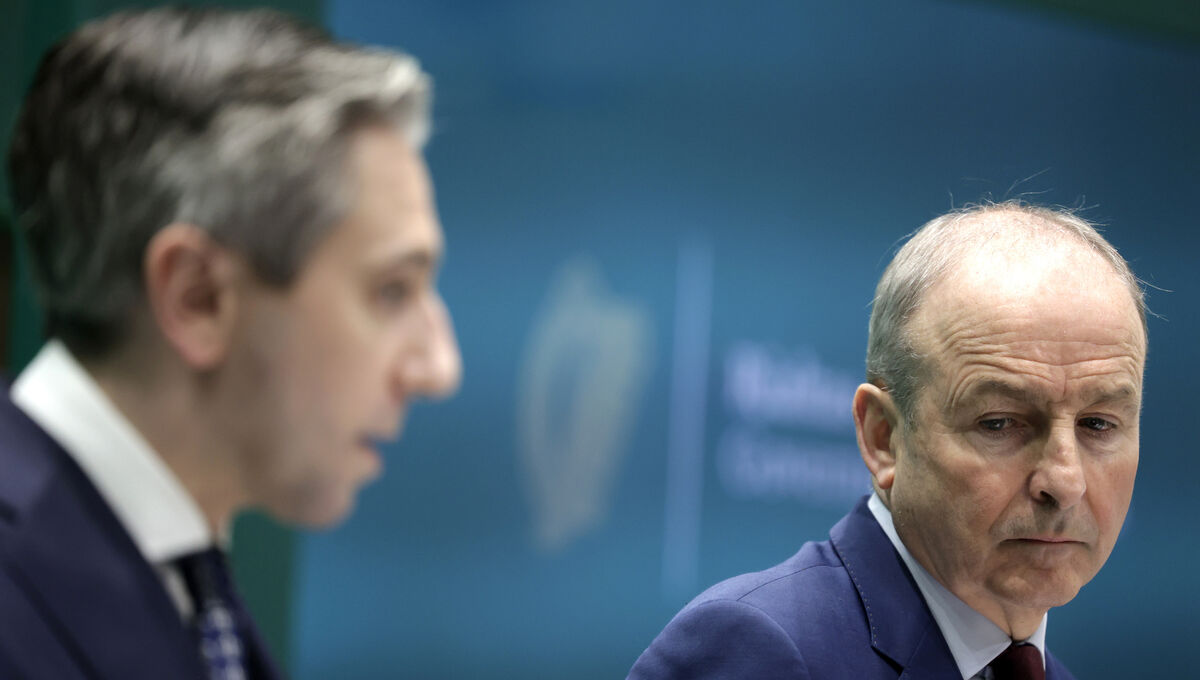
Taoiseach Micheál Martin and Tánaiste Simon Harris. The Government eventually gave into demands stemming from April's fuel protests. Picture: Leah Farrell/RollingNews.ie

The public doesn’t know how the system works.

Scroll a community Facebook page, enter a group chat, or bump into someone in the supermarket and the Government is always to blame.

A lot of the time the Government is of course to blame, but there are many instances where people feel let down for which our legislators have no control.

The roles and responsibilities of our representatives are not fully understood by the general public. 

It doesn’t help when it comes to actual power, Ireland has a “hyper centralised” system, which stymies local government and is out of step with our international neighbours.

The lines of delineation between councillors and TDs can often be blurred with parish-pump politics still in operation at a national level.

Add semi-State bodies and authorities to the mix and the understanding of who does what in delivering, maintaining, or even changing systems and services becomes even less clear to the public.

The electoral commission, set up in 2023, has a role in delivering educational and information programmes to promote public awareness of, and participation in, the State’s electoral and democratic processes — but arguably we need to go much further than this.

There is also a growing detachment from the political system and an apathy towards politicians, which could be a more complex task to address.

Those who shout the loudest get the most

Roisín O’Donnell’s grippingly tense novel, Nesting, tracks a mother fleeing a controlling relationship with her two children.

Like the other 17,000 homeless people in Ireland, the main character finds herself in emergency accommodation, smuggling a rice cooker into the city centre hotel where she has been placed to feed her two young daughters.

When life involves washing miniature clothes in a sink and drying them on the side of the bath while your children sleep, taking time out — what time? — to go on a protest march doesn’t come into the equation. Simply surviving is a challenge.

Mothers taking their children from hotel room to school and back again each day don’t have a lobby group.

All sectors of society deserve to have their voice heard, but some have the capacity to shout far louder than others.

This is seen in the budget measures Government make each year and the pledges that are quietly shelved.

A decision to reduce Vat rate to 9% for food, catering, and hairdressing services due to come into force in July followed a very successful lobbying campaign from industry reps.

Meanwhile, the implementation of the living wage for the lowest paid worders has been pushed back to 2029 and an expansion of statutory sick pay has been out on hold.

The power of protest was seen most recently with the fuel convoys, but has succeed in getting the attention of successive governments — most notably back in 2008 when pensioners from across the country launched a revolt against an attempt to end the automatic medical card entitlement. 

The march on the capital forced the then Fianna Fáil/Green Party/Progressive Democrat government to row back on the plan.


For those caring for a relative with a disability, for parents desperately applying for a school place for their autistic child, for those with chronic illnesses, for the minimum-wage worker applying for yet another rental property, having the resources to launch a concerted campaign to bring the country to a halt is a luxury beyond them.

Politics is a mad profession

This week, groups of canvassers will be out knocking on doors across much of Galway and inner city Dublin ahead of Friday’s two by-elections.

 For candidates, getting to meet as many of their constituents and press the flesh in a bid to transform those encounters into votes is still essential, even in the online era.

Having this as the interview process for a job is a little bizarre. The job, which has the potential to be highly impactful, requires a specific qualification, although attending funerals, community meetings, and local events gives you an advantage.

Sometimes being a relative of someone who did the same job before you can also be beneficial. 

Inside Leinster House, there are long hours and late nights, with Dáil debates and committee sessions all mixed in with keeping on top of constituent queries.

Having successfully completely all these steps, the entire process starts again for elected TDs at a general election after five years, if they are lucky.

x

More in this section

Revoiced

Newsletter

Had a busy week? Sign up for some of the best reads from the week gone by. Selected just for you.

Cookie Policy Privacy Policy Brand Safety FAQ Help Contact Us Terms and Conditions

© Examiner Echo Group Limited