Author interview: A powerful depiction of the fight for independence from coercive control
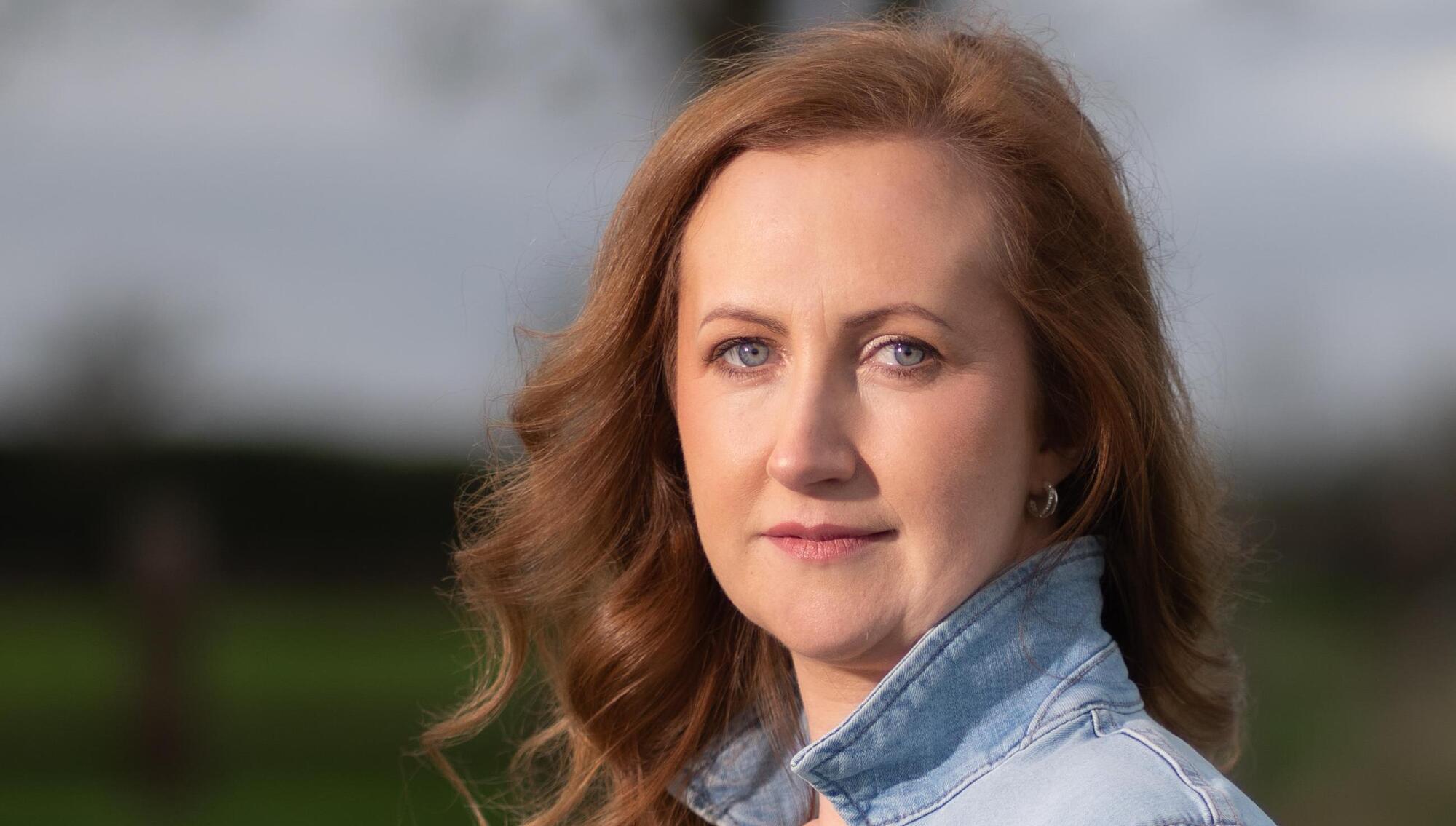
Roisín O’Donnell: 'My challenge was, can I tell this story in an engaging way with hope and light'
Author interview: A powerful depiction of the fight for independence from coercive control

Following the success of 'Nesting', Roisín O’Donnell is working on her second novel. Picture:Barry Cronin

  • Nesting 
  • Roisin O'Donnell
  • Scribner, €16.99/ Kindle, €12.84

I meet Roisín in a Dublin hotel, which is fitting, since her debut is partially set in such a place. But whereas we’re here for a chat over tea, her protagonist, Ciara, is confined to her hotel room.

“Anyone can walk into a hotel like this,” says Roisín, glancing around the bar, “but it’s not the same as someone who has to live there because there is nowhere else to go.

“People in emergency accommodation aren’t allowed to use the main hotel entrance, and they’re not allowed to use the hotel’s facilities.”

This powerful debut, Nesting, opens when Ciara and Ryan Fay take their two young children to the beach at Skerries. 

Ryan suggested it, and Ciara is hoping for a rare, carefree afternoon, but from the moment they arrive, his mood darkens. 

What, Ciara wonders, has she done wrong this time? 

We’re immediately immersed into the most powerful depiction of coercive control I have ever read. 

We live in Ciara’s head as she finds the courage to break away from Ryan and watch her as she struggles to survive.

The novel has received stunning early reviews and has sold to America. And it all started at the end of 2020, with a call from RTÉ’s Clíodhna Ní Anluain.

“She asked me to write a short story for the Spoken Stories series,” says Roisín. 

With each series writers are given a word to interpret however they want.

“With the Centenary of Irish Independence coming up, we were asked to reflect on what independence meant to us.” 

Roisín decided to write a day in the life of a woman who had escaped an abusive marriage and was living in a hotel.

“It was her struggles and triumphs within one day. I was thinking, how do you manage to maintain your sense of self — because she does. That was what interested me.

“She’s in this grubby hotel room in a mad hurry, trying to get to work on time. She’s trying to get coats and gloves on her two kids, and they’re like octopuses.

“She’s an interesting character and has a sense of hope about her. She won’t accept money from her family because she’s trying to be independent again.” 

The story, read by the actress Siobhan McSweeney was broadcast in 2021 and Roisín assumed that was the end of it.

Inspiring course at the Irish Writer’s Centre

Her life was hectic at the time. A lifelong writer, she had first been published after encouragement from Dave Lordan, who moderated an inspiring course in Experimental Writing at the Irish Writer’s Centre.

“He was the first person to really encourage me.” 

A clutch of her stories were published in various literary magazines, then she sprung to prominence in 2016 with her debut short story collection, Wild Quiet.

“That happened very quickly,” she says. “New Island asked if I had enough stories for a collection. I said, ‘yes,’ and they said, ‘We’ll publish them.” 

In the succeeding years, however, working full-time as a primary schoolteacher, Roisín found it difficult to produce much writing. And it became harder still when her two daughters came into the mix.

After her story was broadcast, Roisín couldn’t let the story go.

“I wanted to know what happened to Ciara next,” she says, “and I started writing down ideas as to how it could develop.

“I decided to go right back to the beginning, but, working full-time, at first I wasn’t sure if I could do it, or even if I should.”

But the story would not leave me alone.

 It was a very different process from short stories.

“To go from 5,000 to at least 80,000 words was intimidating,” she says.

“You have to start with uncertainty, but the great thing about a novel is that you have your characters and know their world.

“With collections, having 12 stories, 12 sets of characters and 12 settings is notoriously difficult.”

Towards the end of the year, she took an online course with Curtis Brown Creative, which helped her focus.

“I wrote the novel in snapshots of time. I’d get up early — even earlier than the children — when I wasn’t too tired, and I would write bits of it on my phone before picking the girls up from school. It helped to stay in the moment.”

Dealing with such a potent topic was challenging.

I wondered how I could show the tension between Ciara and Ryan without reverting to the tropes we are used to, the stereotypes and I set myself certain limitations.

“I couldn’t allow any physical violence or any visible bruises, but how would I show that tension and portray those psychological things?
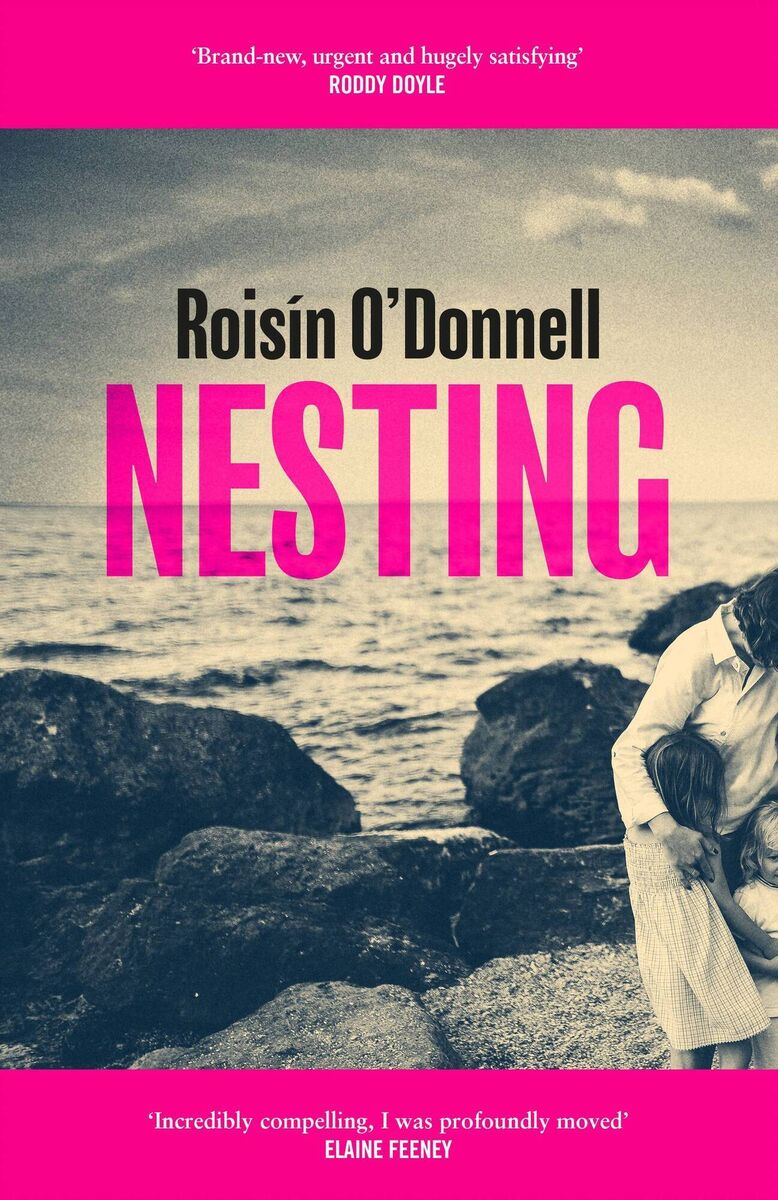
“With coercive control, everything has a price. You’re socialising too much or not enough; and eventually Ciara is in a position where she pre-empts what Ryan will say next.

“It takes so much head space that she’s no time to think of herself. Shame is a huge factor, because she’s always being told that everything is her fault.

“My challenge was, can I tell this story in an engaging way with hope and light.”

She’s managed it brilliantly and has kept the novel authentic, carrying out extensive research to ensure that she had got everything right.

“I got advice from Threshold and Women’s Aid. I spoke to people who had experienced emergency accommodation, and to Dr Melanie Nowicki, whose study of the lived experience of families in hotels is brilliant. It really shocked me.”

There are times when the level of Ryan’s control makes Nesting an uncomfortable read. What was it like living in Ciara’s head?

“There were definitely places where it was emotionally challenging,” says Roisín.

“I’d get really tired and have to take things easy. The novel is very tense, but I wanted to stay true to Ciara and the tension comes from her. The pacing comes from what she is dealing with.”

There are also wonderful scenes of lightness and joy peppering the text.

“It was great to write those moments when Ciara experiences success and starts working again, and to write of her friendships as well. I could feel that physicality — the joy and the release of that.”

To simplify things, Roisín used her own biography to create Ciara’s background. Roisín looks and sounds Irish, but like Ciara, she was brought up in Sheffield to Irish parents, moving to Ireland at 18. 

She, too, has one sister she’s close to, and both took a TEFL course and travelled after college.

“I used my background to give Ciara authenticity, as there are too many two-dimensional stereotypes of people experiencing homelessness.”

I wanted to give her back her humanity. And writing so close to my life when my children were small, fed into the book, adding texture.

Roisín had little faith in Nesting. Trawling bookshops and libraries, realising there were no Irish books featuring homeless families, she convinced herself that nobody would want to read such a book. She was wrong.

“My agent Eleanor Birne took me on within a day of me sending over the book,” she says, “and when we sent it out early in 2023, someone was interested within 24 hours, and we ended up with a nine-way auction. It was mad.”

With the luxury of a career break, Roisín has now embarked on her second novel.

“It’s at its early stages getting ideas and writing things down as I try to work out how it all fits together. I don’t like to pin myself down to anything.”

To gain inspiration, she takes a walk, returning to her desk with fresh eyes. And she has recently acquired Rosie, a Cavapoo puppy.

“She’s great. And she is always a distraction.” 

x

More in this section

Scene & Heard

Newsletter

From music and film to books and visual art, explore the best of culture in Munster and beyond. Selected by our Arts Editor and delivered weekly.

Cookie Policy Privacy Policy Brand Safety FAQ Help Contact Us Terms and Conditions

© Examiner Echo Group Limited