Sarah Harte: Bent over a stone wall, I thought: 'Is this how it ends?' Then a stranger showed up
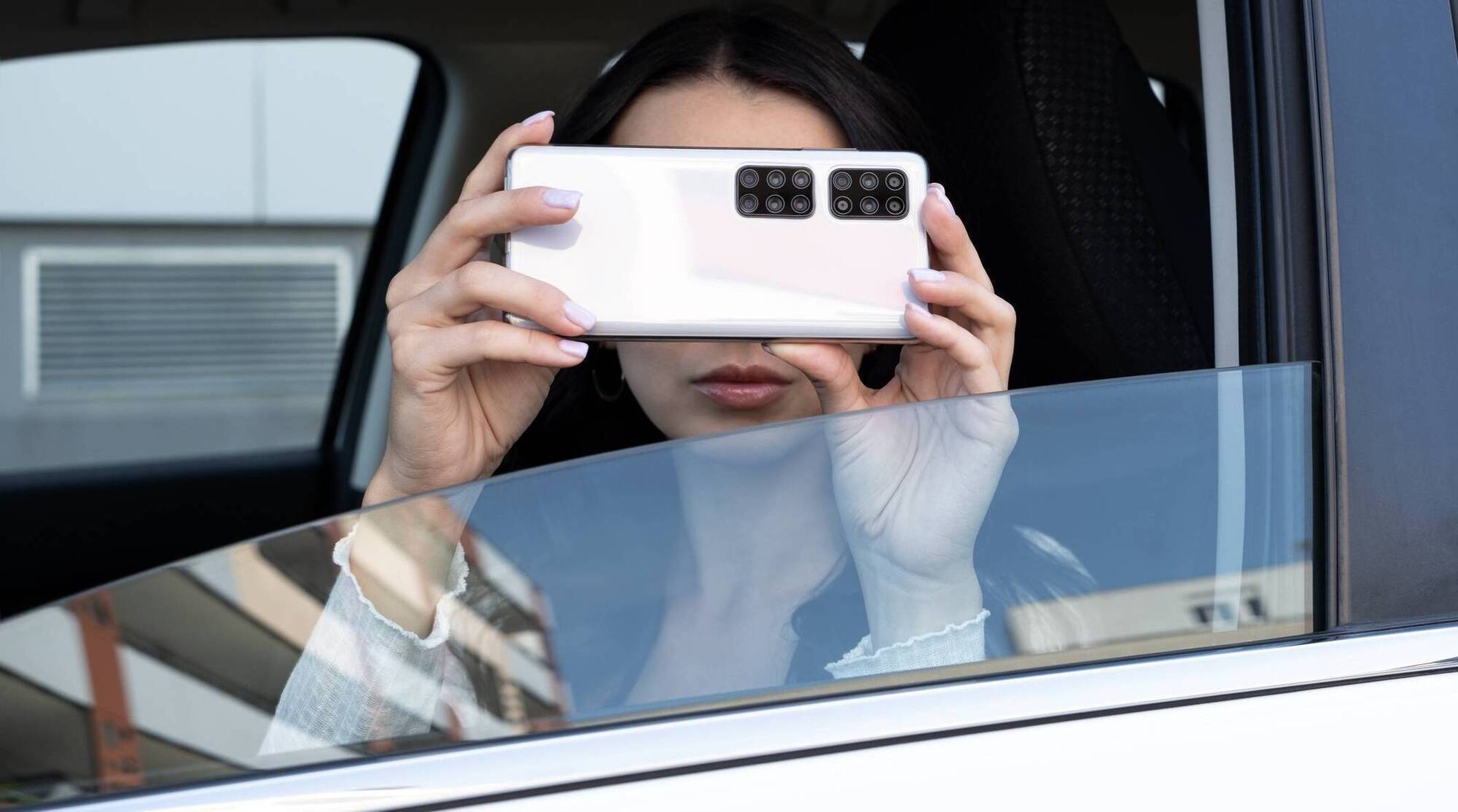
One noticeable shift in social behaviour in recent years is the phenomenon of bystanders passively filming an accident rather than rushing to help.

If you’ve lived on this planet for a while, you’ve probably figured out that some people are more compassionate than others. Apparently, empathy has a genetic component, can be influenced by familial socialisation, and can even be influenced by the culture you live in.
Living in rural Ireland, I would say there is a strong sense of ‘Ar scáth a chéile a mhaireann na daoine’. But of course, compassion is not limited to rural communities.
Bottom line, some people are more wired to detect others’ emotions, including fear, which primes them to respond empathetically to others’ distress. For example, to jump in to rescue strangers in emergencies.
Last week, I had the occasion to experience a stranger rushing to my aid. While out for a walk, I was having a stressful conversation on the phone when I had to hang up abruptly, overcome by severe heart palpitations. Bent over a stone wall, I thought: "Is this how it ends, alone on a quiet country road?"
Read More
I heard a car pass. Then a reversing sound. I turned, gasping. Through the open window, a stranger said: "You’re in trouble." I nodded, tapped my chest and said "heart". The pain was acute, and my speech was gone.
He loaded me into his jeep and sped to a nearby house where a doctor and nurse live because it’s a long road to Cork City or Bantry. Access to emergency medical help is always an issue in rural Ireland.
The National Ambulance Service (NAS) is more than one-third short of its staffing targets. The matter of massive understaffing has been raised in the Dáil this month. Potential industrial action by ambulance paramedics is planned for May.
There are handover delays in emergency departments, reducing their availability to respond to urgent rural calls. For that reason, there are endless local fundraising drives for defibrillators in my community.
Defibrillators are vital due to long ambulance response times and crucial for saving lives during cardiac arrests. Small rural communities like ours are brilliant at doing things for ourselves, but more national policies for rural Ireland, with concerted planning to reverse our limited access to services across the board, would be good.
Anyway, the Good Samaritan left me in the care of the Good Samaritan doctor and nurse. They disrupted family time to lie me down flat, slap on a monitor, and do the necessary.
Afterwards, I discussed the concept of the Good Samaritan with a pal, who referred me to Ross Douthat, a Catholic writer for . He has a podcast, .
This month on Douthat’s podcast, ‘Did Jesus Rise from the Dead? A debate’, his guest, Bart Erhman, a Christian atheist, argued that the idea that we should help people in need, even if we don’t know them, derives from the teachings of Jesus rather than from Greek and Roman philosophy.
The idea is that loving your neighbour means that if somebody is in need, even if they’re not of your religion, community, or nationality, you help somebody not because you have an affinity with them, but because they need help.
This has implications for immigration policy, which sits badly with ethnocentric anti-migrant conservative Catholics currently locked in a battle for the heart of the Catholic Church with progressives.
Ross Douthat advocates a middle way between inhumane closed border policies and liberal open border policies, positing that a society also has a responsibility to preserve cultural stability. I disagree with some of what Douthat says, but he’s a stimulating thinker, and it’s healthy to exit our echo chambers.
My friend thought that even if Irish people practised Catholicism in dwindling numbers, we still identified with the Church's values of social justice and charity toward neighbours.
On balance, I think Irish culture values community because we are not yet hyper-individualistic. Nobody wants a herd of sheep who can’t think for themselves (we’ve arguably been there), but too much individualism and prizing your uniqueness and self-expression, and our commonalities with others risk getting obscured.
There are some signs indicating a weakening of our collective sense of responsibility towards one another.
In recent years, a shift in social behaviour has been noticeable. One example of this that stands out is the phenomenon of bystanders passively filming an accident rather than rushing to help.
Almost a year ago, a young man drowned in the River Lee as people filmed his death.
Emergency service workers asked people who had filmed the tragedy to delete footage and not to share it. His heartbroken mother, on the radio, questioned how people could film her son’s death rather than throw lifebuoys.
There’s also an appetite for viewing such footage. In the aftermath of the attack on Scarlett Faulkner in Birdhill, Co Tipperary, gardaí asked members of the public not to share the video footage on social media platforms or messaging apps, but instead to provide it to investigating gardaí.
In Germany, it is illegal not to help somebody or to film or photograph accident victims.
The Protection of Accident Victims from Non-Consensual Recording of Images Bill 2022 proposes criminalising the recording or sharing of images of victims, with a fine of up to €5,000, up to 12 months’ imprisonment, or both.
It is stuck at the committee stage as a private member's bill proposed by TD Duncan Smith of Labour. The bill doesn’t impose a legal duty to help.
The Irish Law Reform Commission has previously advised against introducing a general legal duty to rescue, not least because it might put people off helping for fear of getting into legal trouble.
But legal sanctions are one thing; how our moral conscience works is another matter.
The causal link between smartphones and the rewiring of our brains to make us less compassionate is being researched.
Causality is hard to prove because, as with a cardiac event, many negative outcomes can be attributed to multiple potential causes rather than a single, unique trigger.
But several studies, including one in the American National Institute for Medicine last year, suggest that digital environments, in particular social media, blunt emotional responsiveness by creating ‘habitual detachment’ from others’ emotions.
The context for this paper is online behaviour, but presumably this blunting of empathy might bleed into real life.
Another paper from the in February suggests that we are "witnessing a shift in human emotional and moral processing driven by technology…. Desensitization to violent, high-arousal content is now a measurable neurobiological phenomenon that re-shapes how people experience empathy, form moral judgments, and understand the suffering of others".
We cannot deny that our phones have changed us. Social media platforms use algorithms that quietly shape us and lure us online.
Acts of real-life pro-social kindness towards a stranger, no matter how small, like a nod, a smile, a hello, or even a brief chat, can contribute to what psychologists term ‘psychological richness’.
This increases trust and reduces cynicism, helping to build a kinder, more co-operative society.
As human beings, we are often fragile.
Which is why we need to hang on to our decency and take care of each other as we bumble through life, which, let’s face it, can be challenging.

CONNECT WITH US TODAY



Be the first to know the latest news and updates