Jennifer Horgan: Middle-class kids learn selfishness early — it's no wonder they won't change the world
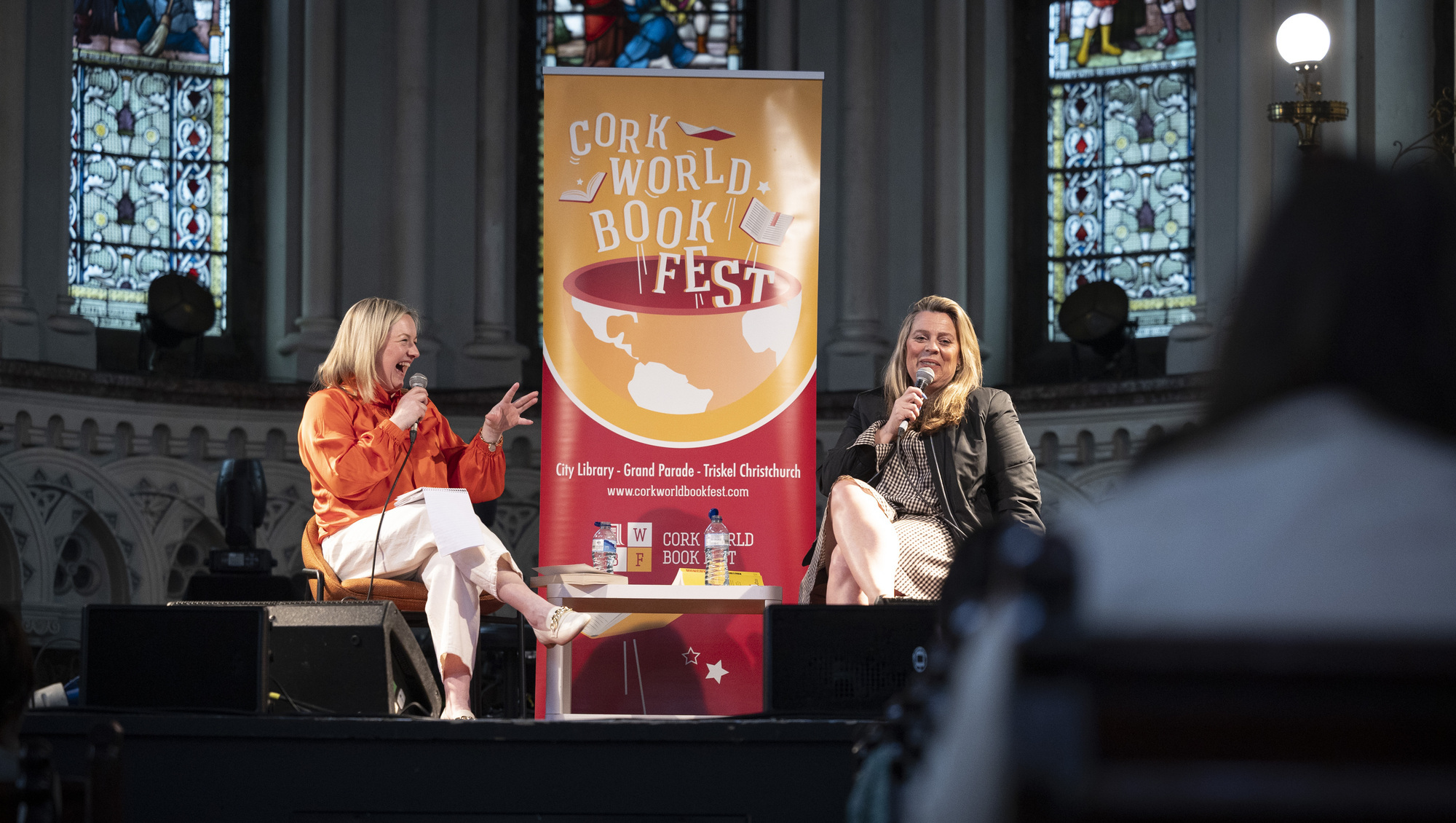
Katriona O’Sullivan (right) in conversation with Deirdre O’Shaughnessy (left) in St Luke's church discussing her latest memoir, Hungry, at the 22nd Cork World Book Fest last weekend. Picture Clare Keogh

Katriona O’Sullivan is masterful at building empathy.
I listened to her speak in St Luke’s church last weekend as part of Cork’s World Book Festival. She was there to discuss her latest memoir , a book that’s much like her first in theme, but (unlike ) is entirely rooted in her body.
Both types of empathy flooded the church as she spoke. Cognitive empathy, a capacity to empathise by understanding Katriona’s distinct life experience, and affective empathy, a mutual emotional reaction.
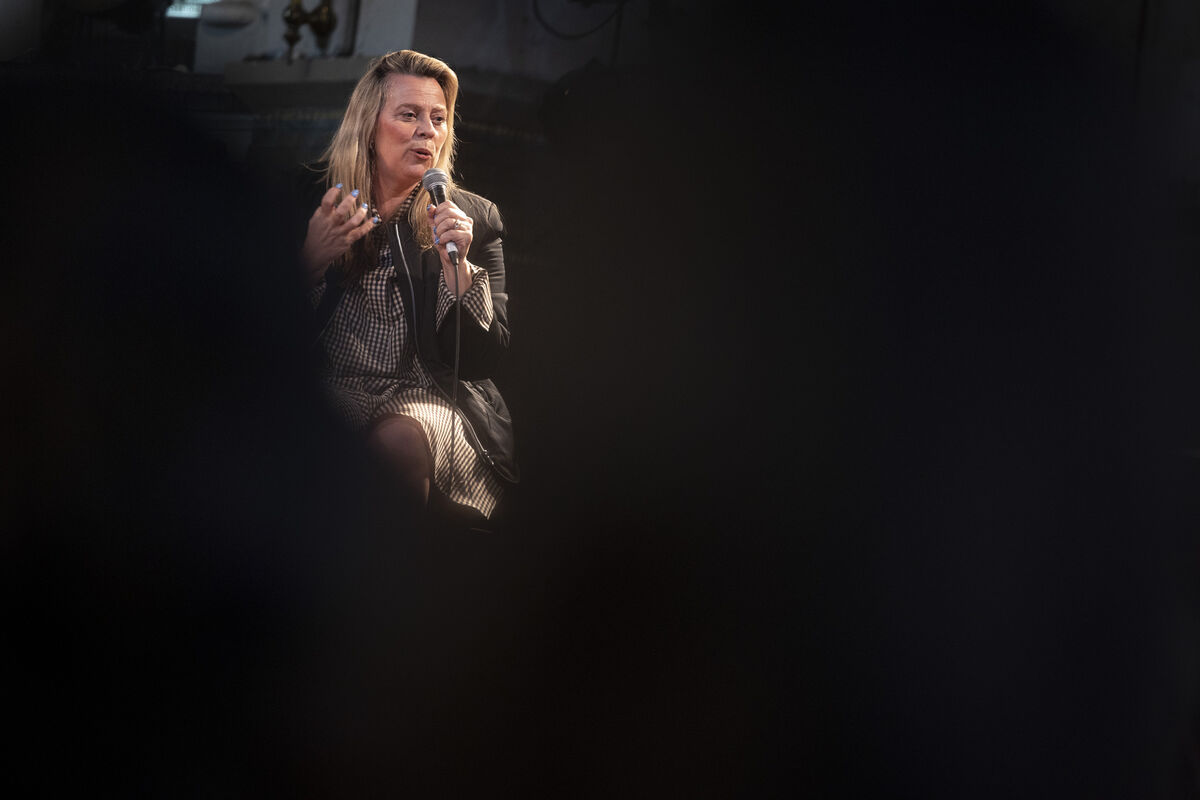
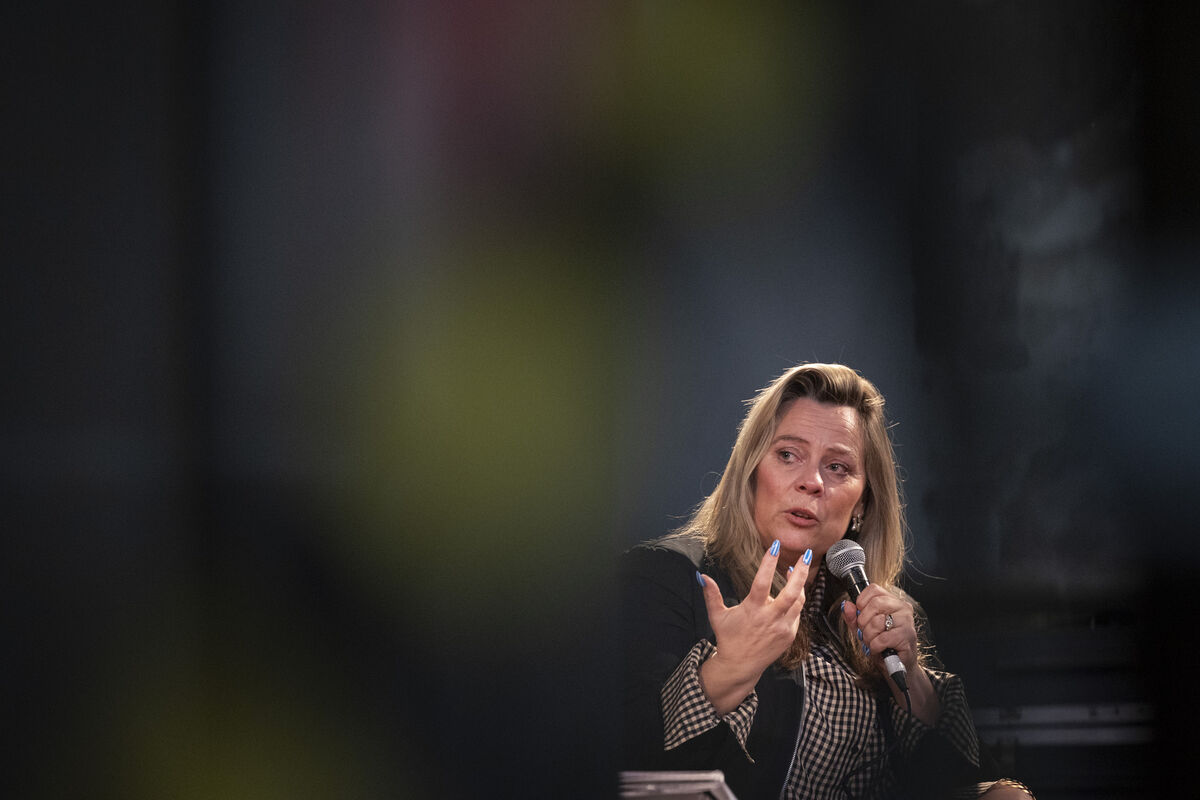
Every eye was on her as she invited a mostly female crowd to travel back in time to meet her seven-year-old self — a scared, hungry, urine-soaked, neglected little girl. At times, it felt like this blonde-haired child was standing right there on the stage, between the adult Katriona and interviewer Deirdre O’Shaughnessy.
There is no doubt in my mind that what O’Sullivan is doing is revolutionary, and she knows how to scale it up. Indeed, she live-streamed the Gate’s stage production of to schools back in March, and 23,000 students from across 29 counties found themselves immersed in the sell-out show.
I suspect, and have heard rumblings, that some middle-class parents weren’t thrilled about the streaming, complaining it was too much, too upsetting, too triggering — even for students as old as 16. O’Sullivan has presumably heard these complaints but is not for turning.
During her chat in St Luke’s, she was forthright about her desire to "normalise" realities like sexual abuse as they’re depressingly common, particularly for poor children. Poverty is depressingly common too, affecting one in five children in Ireland, with over 5,500 children currently experiencing homelessness.
These realities considered, what struck me was her absolute rejection of words like "resilience" in relation to her own achievements.
Her success, she shared, is down to the attention her father gave her as a small child, and the redemptive presence of committed teachers, therapists, and social workers. Words like resilience, she said, put pressure back on the individual, letting the State off the hook.
I liked her metaphor — that we are all trying to grow towards the light but some of us have too many obstacles in our path; we get “bent out of shape”. Images of last week’s Prime Time came to mind as I listened. Alongside the little girl on stage, I saw again the boy pointing to where he’d slept in a car park.
I wonder how O’Sullivan feels about applying the same philosophy to middle-class children. If poor children are determined by their upbringing and context, middle-class children can be determined that way too, right?
It genuinely surprised me when she said she can’t understand why privileged people don’t do more to change the system. I would have thought it was obvious.
Privileged people don’t try to change the system because they haven’t always been taught how to empathise with people beyond their circle. Many have been taught to fear them, to focus on their own success, to game the system not change it.
The light in this scenario is empathy and these children simply can’t get to it. Privilege narrows the perspectives of children.
As writer Raoul Martinez puts it: “Identities are shaped to serve the interests of those who get to do the shaping.” Middle-class children don’t choose the private school, the elitist sports, or their wealthy group of friends.
I am not suggesting middle-class kids deserve the same level of empathy as poor children. It doesn’t work as a direct comparison.
But middle-class children deserve some empathy — if they’re also being determined by the world in which they grow up.
The bottom line is this — in the absence of actively moral parents, privileged children are trained to be selfish. Our school system is like a mini-American dream. Study hard and you can be anything, it tells us.
It’s working. People in Ireland are becoming very wealthy indeed. The number of super-rich people living in Ireland has almost doubled in the last five years. Last year, the Central Bank shared that the richest 10% of households hold almost half the wealth.
Our education system is proving successful at creating people who care deeply about accumulating personal wealth. The State helps by failing to invest in infrastructure we desperately need.
Private individuals, often past pupils of private schools, are only too delighted to fill the gaps. They see no moral issue with profiting from the State’s failures. They line their pockets. Extend their kitchens. Happy days.
We start children’s selfishness training early. At the age of eight, middle-class children in Ireland see nothing unusual about banking at least a few hundred quid, sometimes close to a thousand, for simply darkening the door of a church.
It’s great for their piggy banks. Not so great for their souls.
Extra curricular activities become highly competitive at a young age. Parents jump up and down on the sidelines, egging on the over-zealous coach.
Few children are set to become professional athletes but we prioritise winning an U12s league cup over letting children play for a bit of fitness and fun.
Secondary school does little to reduce selfishness. It is a race to get points, a game. In its worst guise, charity is used to paper over the cracks of ever-deepening inequalities.
Of course, little Johnny can go skiing for Christmas. Didn’t he spend an afternoon collecting for SHARE?
I understand why Katriona O’Sullivan writes that her mother Tilly had little choice in becoming an addict and a prostitute. I feel similarly about little Johnny. Not to the same extent, but I can’t entirely blame him for ending up as big Johnny, a privileged asshole.
The system designs little Johnny to turn into big Johnny, someone trained into equating his self-worth with the size of his car, the width of his garden, the height of his garden walls.
As strange as it might sound, little Johnny needs our empathy too. Someone needs to show him the truth of the world so he can have some hope, any hope, of changing it.
I’m addressing myself here. I’m good at talking the talk when it comes to social justice. To some extent, I’ve walked the walk, but I need to do far more to build empathy in my children.
I’m struck by the absence of opportunities to do so. I must try harder.
Young people need to experience the reality of the world in concrete ways, visiting community centres, nursing homes, hearing from members of the poor in shared environments, getting access to theatrical productions like .
Parents of middle-class children are bombarded with reasons to fear the world. They even fear parts of their own city; they see crime and addiction and don’t understand they’re symptoms of something far more complex.
Against all logic, they genuinely believe they are self-made success stories.
If we could bottle the empathy that Katriona O’Sullivan managed to draw up from that crowd at St Luke’s last Sunday we could change the world.
We need more like her.
- Katriona O'Sullivan's interview at the Cork World Book Fest will feature on next Tuesday's episode of The Deirdre O'Shaughnessy Podcast — available on irishexaminer.com or search it wherever you get your podcasts.
CONNECT WITH US TODAY



Be the first to know the latest news and updates