The world turned upside down
Legend has it that the English ballad ‘The World Turned Upside Down’ was the tune played by the British military band when Lord Cornwallis surrendered to George Washington at the Siege of Yorktown in 1781 during the American War of Independence.

The world turned upside down

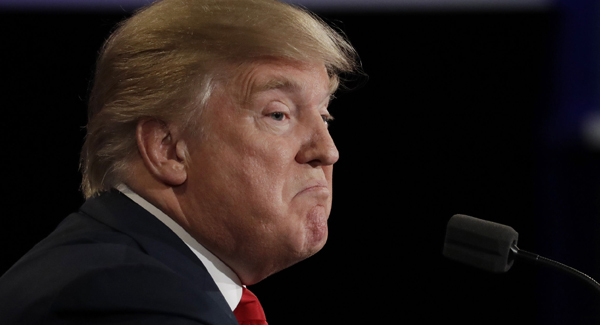
It would be an appropriate anthem for Donald Trump and his supporters as he has certainly turned the world of American politics on its head.

But the fallout goes wider than that as the world has suddenly become more volatile, uncertain and anxious.


Like Brexit, the economic repercussions could be enormous. Pointing to the fundamentally fragile state much of the world is still in eight years after the financial crisis, the respected American economist Paul Krugman believes the election of Trump is likely to spark a global recession. Other commentators are less pessimistic but there is little doubt that it could pose enormous challenges not just for the US economy but also for other countries, Ireland included.

Part of Trump’s election drive was to halt and, if possible, reverse the growth of foreign manufacturing by US companies, to “bring the jobs home,” as he put it. If that becomes a reality we could be in trouble, considering the extent to which we rely on foreign direct investment. He has the passion and drive to do it and, with Republican control of both the US Senate and the House of Representatives, the political muscle as well.

Coupled with the fallout from Brexit, Trump’s election is a double-whammy for Ireland and will require great skill and commitment by our political leaders and business community to limit the adverse effects arising from both.

There is also the issue of the undocumented Irish in the US to consider. Trump made great play during the election campaign of keeping Mexican economic migrants out of the US. If he puts that into practice it would be almost impossible for him to make an exception of the Irish.

It would be easy for us on this side of the Atlantic to dismiss the election of Trump as having been driven by ignorance and prejudice but the fact is that it was also driven by desperation. Nine million Americans have lost their jobs since Barack Obama assumed the presidency in 2008. During the same period the number of Americans forced to rely on food stamps — part of the country’s crude welfare system — doubled from six million to 12m. It is little wonder that many working-class Americans chose Trump.

His election should also be viewed in the broader context of political disenchantment sweeping across many European states, including the UK and Ireland.

The first reaction by many analysts here to Brexit was that the British were bonkers, but that is too simplistic and ignores the real anger against the EU felt by many ordinary and quite sane UK voters. Just like the Washington elite in the US, many EU institutions and politicians have become detached and disconnected towards the citizens of Europe. Unlike Brussels, Ukip and the leading Leave campaigners listened to voters.

When the financial crisis forced Ireland into a bailout, that humiliation was compounded by the imposition of savage austerity, resulting in real and tangible economic distress for thousands of our citizens. There are also signs across Europe, in France, Germany, Austria, Italy, Spain, Portugal in the west and south to Slovenia and others in the east of a growing rise of right-wing extremism wrought by poverty and austerity.

If modern history has taught us anything it is that widespread economic deprivation can lead to revolution and even war. Far from condemning Brexit and the election of Trump, the political elite in Brussels must look to their own failings and work to re-engage with ordinary EU citizens.

The result has also called into question the accuracy of election polling. Those responsible clearly got it completely wrong, ignoring the fact that, even moreso than the weather, those who take part in online and smartphone polls are unpredictable.

TV entertainment has been more accurate in predicting the US presidency than political pollsters. In 1969 Dan Rowan of Rowan and Martin’s Laugh-in US TV weekly comedy show accurately forecast the election of Ronald Reagan as president to the very year. The ‘News of the Future’ segment on the show also predicted that the Berlin Wall would fall in 1989, which is what exactly what happened. Similarly, in a futuristic episode of the cartoon show The Simpsons aired in 2000, Donald Trump is depicted as US president.

“May you live in interesting times” is a saying of supposed ancient Chinese origin purporting to be a blessing but which is, in fact, a curse.

It was employed by the late Robert Kennedy in a speech in Cape Town, South Africa, in June 1966.

Kennedy said: “There is a Chinese curse which says ‘May he live in interesting times.’ Like it or not we live in interesting times. They are times of danger and uncertainty; but they are also more open to the creative energy of men than any other time in history.”

Following the election of Donald Trump as president of the United States, the time we live in has just become more interesting than ever — and dangerously so.

More in this section

Revoiced

Newsletter

Had a busy week? Sign up for some of the best reads from the week gone by. Selected just for you.

Cookie Policy Privacy Policy Brand Safety FAQ Help Contact Us Terms and Conditions

© Examiner Echo Group Limited