New security approach can save lives - Defending the people of Europe
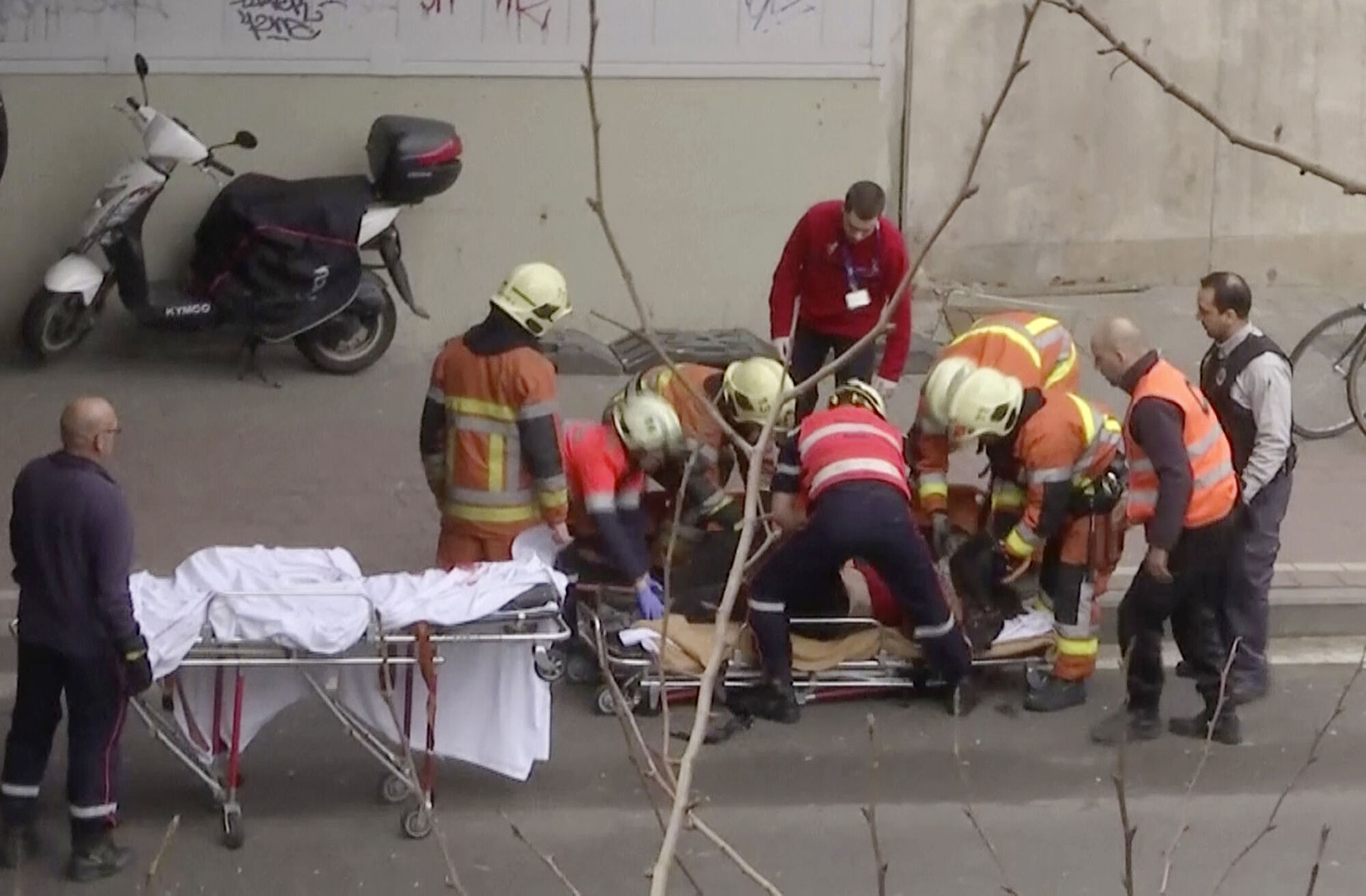
Understandable because the first order of business is to protect innocent citizens from those intent on mayhem, terror, and destruction. As a result, authorities in major European cities such as London, Paris and Frankfurt responded to the attacks by stepping up the number of police on patrol at airports, railways and urban transport hubs.
Predictable because a security response is only half the answer to this new form of terrorism.
It is essential in any free society that civilians should feel safe not just in their homes but also in their towns and cities. That includes using urban transport, like the underground as well as airports and railway stations, that serve millions of people every day in Europe.
But, as the Paris attacks last year and those in Brussels show, that guarantee of safety can no longer be assured.
The reason is that, even in modern times, the armed forces of nations in the West invest time, training and resources into combating large-scale assaults on their territory. Countries with large populations like the United Kingdom and France invest billions in nuclear arms and other industrial-scale war machines, designed to defend their citizens against attack by nations traditionally seen as the enemy.
The irony of this is that while they may have the capacity to engage militarily with other major states who have the capacity to launch an attack against them, they are all but powerless when faced with a hidden enemy that may only involve a few hundred or a few dozen combatants.
The emergence of the suicide bomber in recent years has stretched even the most sophisticated security regimes. The most challenging aspect of this is the realisation that the people who carried out the atrocities in Belgium have no regard for human life — including their own.
Instead of large-scale military capacity, we must invest time and resources in human intelligence, derived from communities that possess intimate knowledge of the extremists within their midst.
It is a sad but undeniable fact that most of those who planned these recent atrocities are Islamic militants, but that does not mean that all Muslims are terrorists, any more than all Irish in Britain in the 1970s and ’80s were terrorists during the height of the IRA’s bombing campaign.
This is not a time to alienate Muslims, but a time to engage with them, respect and befriend them, and persuade them that the slaughter of civilians in their name does neither their beliefs nor their culture any favours.
It is also a time for Muslim leaders to roundly condemn in unequivocal terms those who perpetuate such atrocities. A number of Muslim organisations in Ireland yesterday offered their condolences to the families of those who lost their lives, but most of their concerns were about Islamophobia.
Praying for the dead is a compassionate and humane response but it is scarcely enough. The word ‘condemn’ should be included in their vocabulary.