The lost lions of Ethiopia
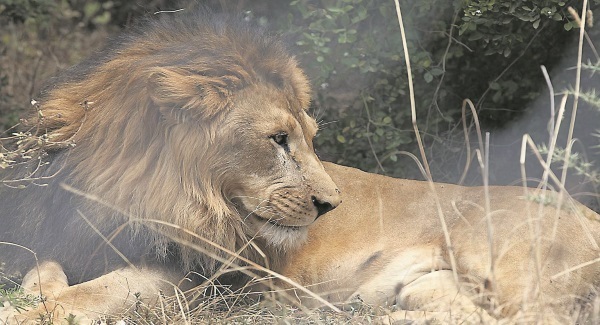
Their descendants have lived in Addis Ababa Zoo ever since. Slightly smaller than other African ones, Ethiopian males have distinctive dark manes extending down their breasts and along their bellies.
Five years ago, scientists ran DNA tests on 15 of the Addis Zoo’s 20 lions. The animals proved to be unique, their genes uncontaminated by ones from elsewhere. Though not sufficiently unique to merit ‘species’ or ‘sub-species’ designation, they were genetically distinct enough to justify special conservation efforts. However, this was seen as a lost cause; few, if any, wild lions were thought to remain in Ethiopia or in nearby Sudan.
This has turned out not to be the case; Hans Bauer of Oxford University has just announced that there are lions in Alatash National Park in north-west Ethiopia and in the Dinder National Park across the border in Sudan. Local people knew the animals were there but, up to now, the experts dismissed their claims.
Born Free, the film based on Joy Adamson’s book about Elsa the lioness, was released in 1966. To celebrate the 50th anniversary of the film, the Born Free Foundation declared 2016 the ‘Year of the Lion’ and sponsored an expedition to Alatash. The team, led by Dr Bauer, searched for signs of the cats and broadcast lion calls over loudspeakers. The breakthrough came with the discovery of ‘pugmarks’. Then camera traps were set up at strategic locations. Like the motion-sensitive security devices we use to protect our properties, the cameras take flash photographs of animals moving in front of them. Soon the scientists were rewarded with pictures of the ‘lost lions of Ethiopia’.
Dinder Park, adjacent of Alatash on the other side of the border with Sudan, must also have lions, the study team concluded.
This vast wilderness area is much larger than Alatash and seldom visited by people. The two parks have little surface water, so there are relatively few animals on which big cats can prey. There are likely, therefore, to be only one or two lions per 100km2 there, giving an overall population estimate of ‘100 to 200 lions for the entire ecosystem, of which 27 to 54 would be in Alatash’, says Bauer. Given the scarcity of food, lion prides are likely to be small, not more than three or four individuals. Prides elsewhere in Africa usually have about half a dozen members. Groups of up to 30 are occasionally recorded.
Lion populations are declining relentlessly throughout Africa. Numbers have fallen by 50% to 75% in the last 35 years. The cats now occupy only 8% of their former range. The North African Barbary lion, which roamed the Atlas Mountains into the 20th century, is gone. So is the Cape lion of South Africa.
Three quarters of the original lion habitat has been lost to massive land-use conversion. As the human population of Africa increases, so does the demand for bush-meat, which is cheaper than farmed equivalents. In cities, bush-meat has become an exotic delicacy. Wildlife trapping is organised, almost on an industrial scale, in some areas. Big cats are also targeted for the illegal trade in body parts. Governments are criticised for neglect. From their point of view, lions are a nuisance and of no economic value except for tourism.
Sixty-seven locations in Africa still have significant numbers of lions but only 15 areas are thought to support more than 500 animals. Over 96 million people live in Ethiopia, the second most populous African country, and two million more are added each year. That lions should have survived there is remarkable. The discoveries at Alatash and Dinder mean that the map of lion distribution can, for once, be extended, a most welcome development.