Accident and emergency crisis: Persistent, intolerable failure
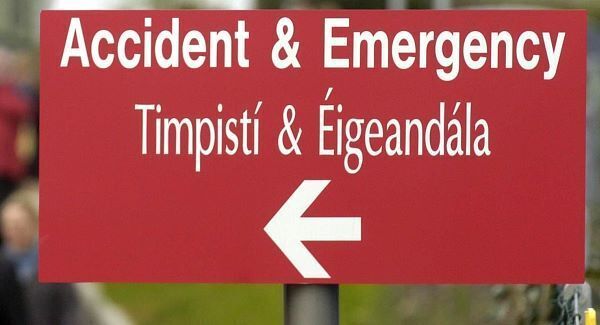
Mistreatment on this grand scale is profoundly disrespectful to both patients and hospital staff but, at this stage, the impact goes far beyond health issues.
This entirely predictable shambles has a deeply negative impact on our national self-esteem, our international image, the morale of hospital staff, and our over-stretched ability to believe that we, through our political and public administration organisations, are capable of rebuilding a broken system.
It is very hard, against this embarrassing, fumbling background, to believe that the country is in recovery mode.
Irrespective of political allegiance or ambition — and the fact that every Government has tried unsuccessfully to resolve this perennial calamity makes that leap easier than usual — this is a shaming symptom of recurring, dangerous and unacceptable failure.
Even if resources — and something around 2,000 closed hospital beds — are the primary issues, it is unbelievable that more effective management would not at least ease this dreadful bottleneck.
That every programme to resolve these issues is measured in years rather than months strengthens the impression that this annual fiasco is a consequence of institutionalised, insulated bureaucracy and health leaders struggling to design and then deliver the changes needed to prevent this eruption every January.
This is not the first time we have reached this point and, tragically, it may not be the last.
Almost a decade ago, in March 2006, the HSE set up a task force to find a solution to the recurring A&E crisis.
Their comprehensive findings were published in June 2007 and contained many sensible, practical recommendations.
Yesterday’s record figures unfortunately shows that the report, and all of the work that went into it, had little or no impact.
Indeed, many of the lead actors in 2006 are involved today and they must wonder why their report has had so little impact.
They must also wonder what else they can propose that might resolve the issue.
That report was not the only set of proposals offered on this issue and a common theme is that we need more nurses and doctors.
This seems a challenging ambition in the face of limited budgets and work procedures that mean so many of the downstream services A&E specialists depend on are not always available at the optimum moment.
About half of the people who can afford private health insurance renew policies at this time of the year and it is difficult to imagine how a marketing department in a health insurance company could come up with a more compelling argument for private cover than the chaos in A&E wards in recent days.
Politicians have dismissed challenges by saying anger is not a policy, but it is time that a righteous anger was brought to bear on this persistent, intolerable failure, one that has become a blot on our health service and our society.
CONNECT WITH US TODAY



Be the first to know the latest news and updates