Odd sound of frogs croaking
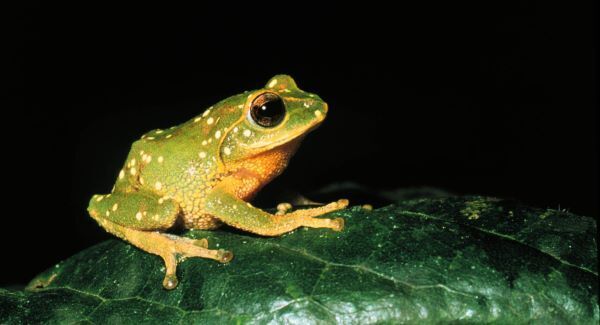
Suddenly I heard an odd sound. It came from the bottom of the hedge on the far side of the pond. The croak of a frog. It happened several times, at intervals of about a minute, and then it was answered by another, more distant frog.
This was odd for two reasons. First of all the common frog, the only species found in Ireland, is one of the least vocal of all amphibians. I once spent a few days in early April travelling on the inland waterways of southern France, where they have a lot more frog and toad species than we do, and I was kept awake at night by their choral enthusiasm. And in late May and early June in parts of west Kerry natterjack toads are amazingly vocal. But common frogs don’t make a lot of noise.
The second odd thing is that they only do it at certain specific times of year. In Ireland common frogs come out of hibernation early, in the second half of January. Almost immediately the males have breeding on their mind and start calling to attract females. The females also croak, though it’s a quieter sound with a different pitch, but they have only ever been recorded doing so during the actual act of mating. In Ireland this normally takes place in late February or early March. It’s much later in colder countries. Common frogs in the high Alps don’t breed until June.
Between the end of March and the end of January Irish frogs are supposed to be silent. But this was a summer evening at the end of July and two of them were calling. I don’t understand this and a quick search of the literature has left me none the wiser.
Since I built the ponds at the edge of the patio I’ve learnt a lot more about amphibians. Both frogs and newts have bred in them but I seldom see them there outside the breeding season. The frogs only stay a couple of weeks and the newts, which breed a little later in the year, for a couple of months. But there are exceptions to this general rule. Both species will come back to the ponds if the weather is either very hot or very cold.
I think this is because it’s easier for a cold-blooded creature to regulate its body temperature during extreme weather when it’s surrounded by water than when it’s surrounded by air. And amphibians have lungs and breathe air when they’re adults, but they retain the ability to absorb oxygen from water through their skins, so they can survive without breathing.
CONNECT WITH US TODAY



Be the first to know the latest news and updates