Jennifer Horgan: Elizabeth Strout book teaches that children's work is learning how to live
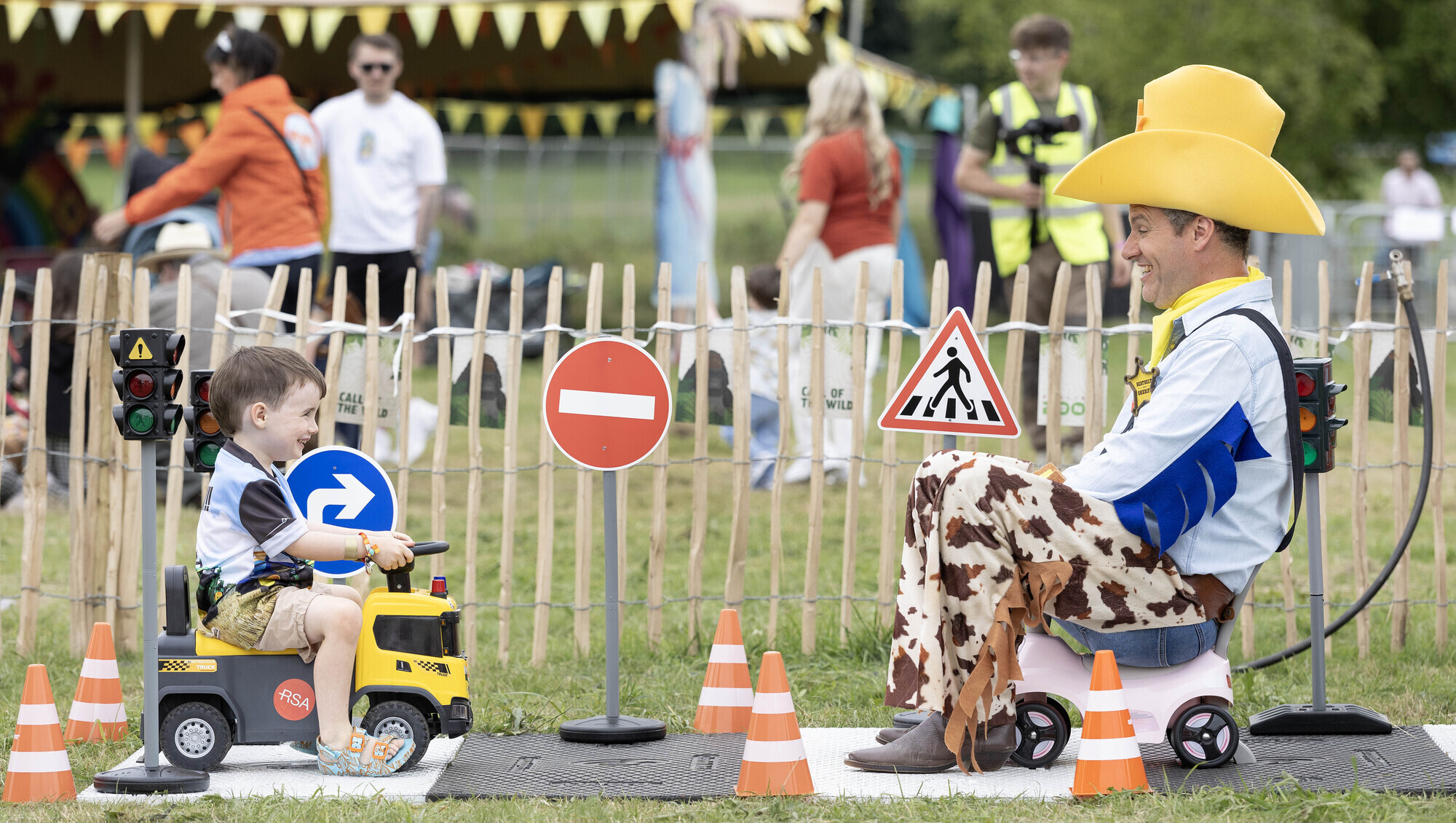
William O'Flaherty (four) from Kanturk, Co Cork, takes on the Seat Belt Sheriff, at the RSA 2026 summer road safety programme at the Kaleidoscope Festival in Russborough House, Blessington. 'I’ve decided that I’m done with adults demanding young people change the world for them. Young people have enough going on.' Picture: Finbarr O'Rourke

To be alive is a private thing.
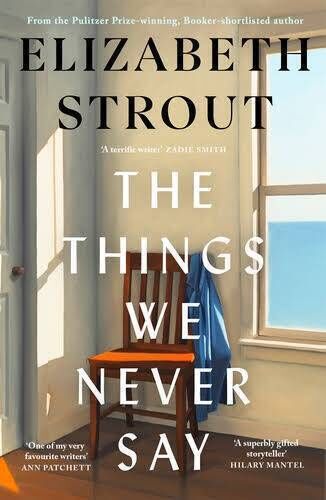
What a line! It’s from my book of the summer, The Things We Never Say, by Elizabeth Strout. It’s a must read, especially for teachers.
Strout’s protagonist, Artie Dam, a teacher, is coming back into school with me in 10 days time, and I’ll be glad of his company. I’ll bring that line too. It reads: 'It was a private thing, to be alive. He (Artie) understood this now'.
Wow — I was so struck by the truth of it. I feel it all the time, that isolation, even in company, and especially in teaching. You become so aware of the privacy of living in a classroom of 30 people. Still, you must try to communicate, knowing every person exists in their own universe.
It feels like a miracle when a class connects, and it is a small miracle. That’s what teaching is about. It is about creating a connection, one that allows learning to happen.
I came across a great blog this week by a fellow English teacher, Conor Murphy. His job is not just teaching the curriculum, he writes, it’s being a teacher. Above all else, “What’s more important are the students in front of you. What’s more important is making them feel welcome, safe, seen. What’s more important is respecting them for who they are now, and who they might be in the future.”
Strout captures Murphy’s message about students perfectly. She includes plenty of conversations between Artie and his class. They call him DAMN-DAM. There are two students in particular who get under his skin. More than anything else, and against a lot of background noise, he wants them to find a place in the world.
I’ve been thinking about this in the run-up to the next school year. I’ve decided that I’m done with adults demanding young people change the world for them.
Young people have enough going on. They have the act of living, its private nature, to manage and navigate. But far too often, we overload them. A social problem arises, and that important and sensitive work they should be busy with, gets de-prioritised.
Take the horrendous killing on our roads as one example. According to Road Deaths Ireland, 126 people have died on Irish roads already this year, 27 in the last 30 days.
Our first response is always the same. We demand schools teach children about road safety. It is too much for adults to do so, or to cut down on their own driving, or to take dangerous drivers off the road for good.
Creating a better public transport system is nice in theory but it impacts private property. The best answer is to teach young people about road safety in schools. A powerpoint will fix it, or at least it’s something we can all say we’re doing.
I could list half a dozen other examples of how we use schools to alleviate adult problems.
Forget grammar, literature, and world history, schools should make the world a better place. Forget giving young people space to breathe, to figure out their own path in their own time. Time is a luxury they can’t have anymore. They are global citizens with global problems.
Look at the climate crisis many adults choose to ignore. I have friends half-preparing for life in a bunker, yet I’ve lost track of the number of programmes and initiatives running in our schools to save the world.
I’m dizzy from flags and passports, banners and medals, forms and surveys, and how schools are being funded to create their own little armies of supercharged, injustice-fighting citizens.
We are preparing teenagers for a great war when most adults haven’t even acknowledged the battle.
I don’t mean to imply that schools have no role in social change, but it must be a measured one. I’m lucky to work with great teachers who understand that children can only be a small part of a much bigger solution.
Let me offer one example of getting the balance right.
I had a good chat this summer with the founder of Pickerpals, Patrick Jackson. I’m a fan of the programme, ever since I did it with my youngest during the covid years.
The Pickerpal programme is fun for children and good for their community. They pick up rubbish with a picker. It’s that simple. Patrick Jackson told me that he wants children to share experiences and stories and to hear the message that “there is a place for you” in the world.
Children take turns with the pack and feel they’re contributing to their local community. I can still see my little six-year-old smiling in her high-vis jacket. It felt amazing to leave the house with purpose, to walk the deserted streets doing our bit to lighten everybody’s load. Something like Pickerpals I can get behind.
But the expectations we have of young people, particularly teenagers, sometimes get out of hand. It may be an easy fix. It may offer us adults hope in the darkness. But that does not make it okay.
Yes, they are the future. Yes, we need to teach them as best we can. We need to ensure that they are kind and empathetic but honestly, we need to give them a bit of space to grow up first. It is not their job to right our wrongs.
Schools are buzzing with opportunities for trailblazers and changemakers. What about the introvert, the child who just wants to doodle, or learn to make lasagna? How do we make them feel about their place in the world? Do we make them feel selfish for not righting our adult wrongs quickly or wholeheartedly enough?
Childhood is a distinct and separate stage of life. Too often it is eroded by adults.
Maybe I’m all wrong. Perhaps childhood was just a blip in the history of our species… Not too long ago children had no time to laze or learn, play or daydream. They had to work. Off they went, up the chimney, out onto the field, or off to mind the little ones.
Nowadays, we don’t assign children to unpaid jobs, but occasionally, we place too much responsibility on very young shoulders. It’s fine if it comes from them but we must be careful not to overload them with initiatives and problems.
I read this week that the decision to defund USAID could result in over 14,000,000 deaths, disproportionately of children under five. How can we look to these victims of adult behaviour and expect them to save us adults too?
We can’t. So my plan is to teach English instead, with a focus on the students in front of me.
As Conor Murphy puts it: “What’s more important is respecting them for who they are now, and who they might be in the future.”
To be alive is a private thing. Alongside teaching the curriculum, I think that is more than enough to grapple with. My new friend Artie Dam agrees.

CONNECT WITH US TODAY



Be the first to know the latest news and updates