Enforcement of points system is key
Emotions are running so high that even Gay Byrne was called on to resign as head of Ireland’s road safety campaign.
Remarkably, according to today’s Irish Examiner analysis of road death statistics over a quarter of a century, the chances of being killed in an accident in the Republic today are three times lower than in 1980.
When it comes to a question of blame, Government ministers have been quick to point the finger at drivers, urging them to take personal responsibility. In contrast, the public tends to blame the Coalition for lacking the political will to provide sufficient resources for gardaí to combat the crisis of fatal accidents more aggressively.
Rejecting the resignation demand, Mr Byrne yesterday defended his position, saying the safety body was not even legally in existence yet, and claiming that “a fair bit of work” has already been done with the aim of improving road safety.
Against this backdrop, today’s analysis of road deaths over a 25-year span makes intriguing reading. The figures show, for instance, that motorists are three times less likely to be involved in a fatal road accident today compared to the 1980s. That puts a different complexion on the debate surrounding the current spate of road deaths. During a grim 48 hours this week, there were 12 fatalities.
With more cars on the roads, the dramatic increase in commuter and other traffic has been seen as a major contributory factor in the recent spate of fatalities up and down the country.
Contradicting this line of thought, the survey shows that with just over 900,000 vehicles on the road in 1980, some 564 people lost their lives in traffic accidents that year.
Ten years later, despite only a slight increase in traffic, the number of road deaths had fallen to 478. By 2003 the death toll was the lowest on record at 335 with just under two million vehicles on the roads.
Showing there can be no room for complacency, the trend was reversed in 2004 which saw 374 fatalities with over two million vehicles on the roads.
Continuing the negative trend, last year’s death toll was 396.
According to the National Safety Council, the statistical improvement was due to a combination of education, engineering to eliminate accident black-spots plus greater use of dual carriageways and motorways.
Since the early ’90s efforts to improve road safety have succeeded. The safety cCouncil holds that more than 9,500 deaths and serious injuries were prevented during that time.
Apparently, a marked turnabout in road safety improvement was seen in the mid-1990s, coinciding with hard-hitting TV ads plus the launch of Ireland’s first road safety strategy. Sadly, no improvement in accident statistics will console the families and friends of those who have died and continue to die in senseless road accidents. Moreover, the present negative trend is a cause for serious concern.
If education and road safety measures explain the earlier success rate, the low enforcement of the penalty points system is rightly being blamed for the recent reversal.
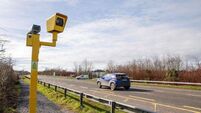
Tougher regulations, outlawing the use of mobile phones by drivers, introducing random breath testing, and privatising speed cameras, were signed into law by President Mary McAleese yesterday.
Experience shows that robust enforcement of penalty points can transform driver behaviour for the better. The spotlight is now focused on the Government, on the gardaí, on motorists — and on Gay Byrne.
CONNECT WITH US TODAY



Be the first to know the latest news and updates