Social partnership - Grounds for optimism in pay deal talks
Some consensus still needs to be achieved, but there has been substantial progress in a number of key areas during the latest round of talks — the most protracted since the beginning of social partnership.
Under the pay aspects, workers will get a 10% wage increase, to be introduced in four phases over the next twenty-seven months.
In return the labour force is to cooperate with a programme of modernisation and flexibility.
The government, meanwhile, will have increased freedom to outsource work within the civil service. This recognises that, in certain situations, public service work can be done more efficiently by contracting it out to people with the expertise required for a particular job.
Civil service management may, at its discretion, also outsource certain work, in exceptional circumstances, in order to avoid excessive delays in the delivery of services. A dramatic example this latter scenario would see cooperation in the area of driver testing.
Transport Minister Martin Cullen had sought to outsource 40,000 driving tests last March, but an aspect of Sustaining Progress blocked this — a stipulation that the “core work” of civil servants could not be outsourced.
Tentative agreement has now been reached on that outsourcing in order to tackle what has become an unmanageable backlog. Driving testers have agreed to an outsourcing plan recommend by the Labour Relations Commission.
Unions are also amenable now to open recruitment for senior civil service positions that were previously confined to promotion from within the service — a recognition that more open recruitment is essential if the Civil Service is to attract the broad range of experience and skills necessary for proper administration.
The proportion of open recruitment available for executive grade officers is to remain at 50%, but for the first time open competition will be used to fill a proportion of vacancies in the ranks of principal, assistant principal, and higher executive officers. In addition, a percentage of professional and technical posts will also be filled in this way.
Health sector reforms will provide for radiographers and medical laboratory staff to work outside regular working hours, meanwhile as part of their normal duties. This affords recognition of the need for change in the traditional nine-to-five office hours in healthcare, as patients require treatment around the clock.
Negotiations on how this is to be implemented are due to be finalised by March of 2007. Talks on other outstanding issues like pensions, employment standards, and aspects of the social and economic agenda have yet to be concluded, but the Irish Farmers Association (IFA) rejoined the talks, last week, after a two-month withdrawal over the nitrates issue.
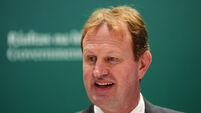
IFA President Pádraig Walshe contends that a core issue will be proper government funding for various farms schemes. It is a pity the IFA withdrew from the talks earlier. There must be no question of holding the whole process to ransom at the eleventh hour, if other segments have come to agreement.
In fairness, it should be noted that much work has been done to preserve social partnership, which has played such an important role in revitalising the economy since the late 1980s. Important work remains to be done, but there are now real grounds for optimism.

CONNECT WITH US TODAY



Be the first to know the latest news and updates