Michael Moynihan: 50 years later, how has Cork changed since the 1976 heatwave?
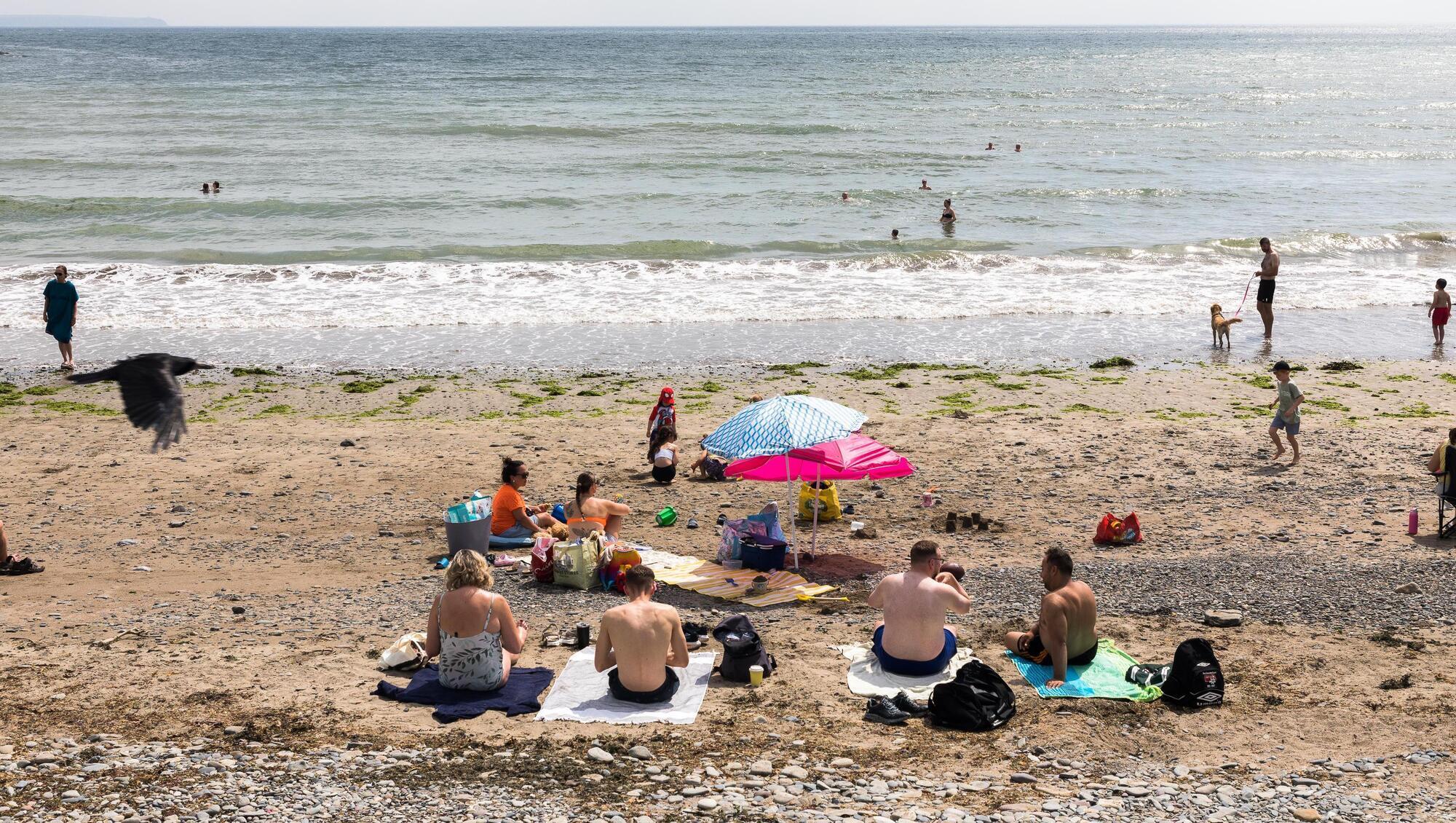
We didn’t know in 1967 what we know now about skin cancer. Picture: David Creedon

Remember the last heatwave?
That was something else, wasn’t it? The sun, the sweat, the . . . heat.
One of the worst aspects of being in the furnace was the fact that you felt a little guilty if you were enjoying it, because global warming is causing it.
The last time we had a ferocious heatwave, back in 1976, there was no need to worry about climate change, of course. Someone sent me a link to an RTÉ Archives’ clip from that summer, and it was an education.
At the end of the clip a reporter was rubbing oil into the back of a lady on the beach and it was hard to work out what was more eye-opening: the HR disaster unfolding in full view or the fact that the oil in question was probably sun tan oil. In other words, not a protective cream designed to save your skin from the damage and health risks posed by the sun, but an oil designed to make you tan and thus become even more susceptible to the damage and, etc., etc.
O tempora, o mores.
Read More
Of course, we didn’t know then what we know now about skin cancer. It was an age when people liked their skin tone to approach ‘mahogany’, a term often used as a positive description.
The comparison between heatwaves now and heatwaves 50 years ago set me thinking, though. I had a flick through that RTÉ Archive page to see if there were any other interesting comparisons to be made. Specifically, between Cork in the mid-70s and Cork now. We’re better now at protecting our skin than we were then: have we improved in any other areas?
A report from February of 1976 identified an issue which will resonate for those interested in the infrastructure of the city. What was then Cork Corporation had employed a consultant to evaluate the issues with some of the city quays, because they were sinking.
The RTÉ report stated, in fact, that the worst affected areas were around Anderson's Quay and Parnell Place, which were estimated to be sinking at a rate of two inches every six months.
What happened after that report? Another RTÉ report, broadcast in 1981, identified further issues with the waterfront but noted parenthetically that five years earlier the most dangerous of the quays had been "completely repaired”.
If issues with the riverfront have been a recurring feature of Cork life for decades, so have the vagaries of industry.
Another report from 1976 illustrates how employment patterns at that time differ from today’s, and how quickly such patterns can change. The report focused on industry in the harbour area in particular, with footage from a helicopter flight over Cobh and other locations showing a very different industrial landscape.
“At the centre of the change is the Cork steel industry,” according to the report. “The State-owned Irish Steel Holding, Verolme Dockyard, is a place where large machines and complex technology meet and provide hundreds of jobs.
"The construction of the £78 million Nitrigin Eireann plant at Marino Point is the largest plant of its kind in Europe and is further evidence of industrialisation in the region. The plant is due for completion in March 1978 but under strict planning considerations.”
Little wonder “Cork is well on the way to becoming the Ruhr Valley of Ireland,” as the reporter said. It was a catchy comparison but heavy industry — even in the Ruhr Valley — was in decline everywhere and Cork proved to be no exception.
Verolme was still profitable in 1978 but was losing its competitiveness in an increasingly challenging market. It closed in 1984 with the loss of 500 jobs, though at its peak, over a decade earlier, the shipyard employed more than twice that number.
The Irish Steel plant lasted a good deal longer, but it still closed in June 2001 with the loss of 400 jobs. Nitrigin Éireann Teoranta opened that new plant alright — in 1979, though, not 1978 — and its operations were taken over eight years later by IFI in a joint venture with the British-based Imperial Chemical Industries. That plant closed in 2002 with the loss of 220 jobs.
In retrospect the reporter should have compared Cork to Silicon Valley, but in fairness, it was the mid-70s: who had even heard of silicon?
Last week, the Department of Education published the results of a survey which shows a rising demand for non-denominational education in Ireland now. Yet fifty(one) years ago Cork was leading the way here.
The RTÉ archive has a report from 1975 about Ashton School in Ballinlough, which emerged from a merger of Rochelle School and Cork Grammar School and accommodated 380 pupils, with a view to accepting up 500 students eventually.
The school “is both co-educational and multi-denominational, which is a first for the city of Cork” and still thrives today.
Transport, as vexed an issue in the 70s as it is now, popped up in a report from 1978, and one aspect of the coverage will ring a bell with anyone consumed by thoughts of Bus Connects Cork or the Cork Luas (Cluas, folks, Cluas: it’s right there).
“Saint Patrick's Street will be closed to through traffic and areas of it, along with some side streets, will be pedestrianised,” according to the report, which then adds: "Córas Iompair Éireann (CIÉ) will get new busways and traffic priority. This proposal favouring public transport may cause controversy, but the planners recognise the essential role of public transport and deny they will force cars out of the city centre.”
Fair to say that “may cause controversy” was doing a lot of heavy lifting in that sentence half a century ago, and is doing as much lifting even now.
Many other nuggets in the archive are equally enjoyable, even if that’s not quite the term for a report on the possibility of a high-rise car park being plonked on the English Market. Thankfully the traders faced down the Corporation on that one. The footage of Cork starting the three-in-a-row of All-Ireland senior hurling titles is good fun, though.
The public transport report above mentioned the rail line to Midleton — which of course reopened in 2009 — and that brings me to my favourite 1970s Cork-oriented footage.
This is an impressionistic short film about the train journey from Heuston Station in Dublin to Kent Station in Cork, which shows the locomotive and carriages being prepared for the trip, and the unloading of supplies for the dining car.
This consists of “120 portions of bacon, 90 portions of sausages, 20 portions of chops, five thin pans of bread, eight large toasting pans, 20 brown cakes from the railway bakery, 15 dozen ham sandwiches, two to three dozen steaks, 12 portions of chicken and ham, two pounds of cold roast beef, and 12 portions of plaice. 100 portions of chipped potatoes...”
We now have a trolley service on the Cork-Dublin train. No steaks.
Yes, skincare has improved since the 70s. Not everything else has.

CONNECT WITH US TODAY



Be the first to know the latest news and updates