After 300,000 workers took to picket lines, can Government and unions finally strike a deal?
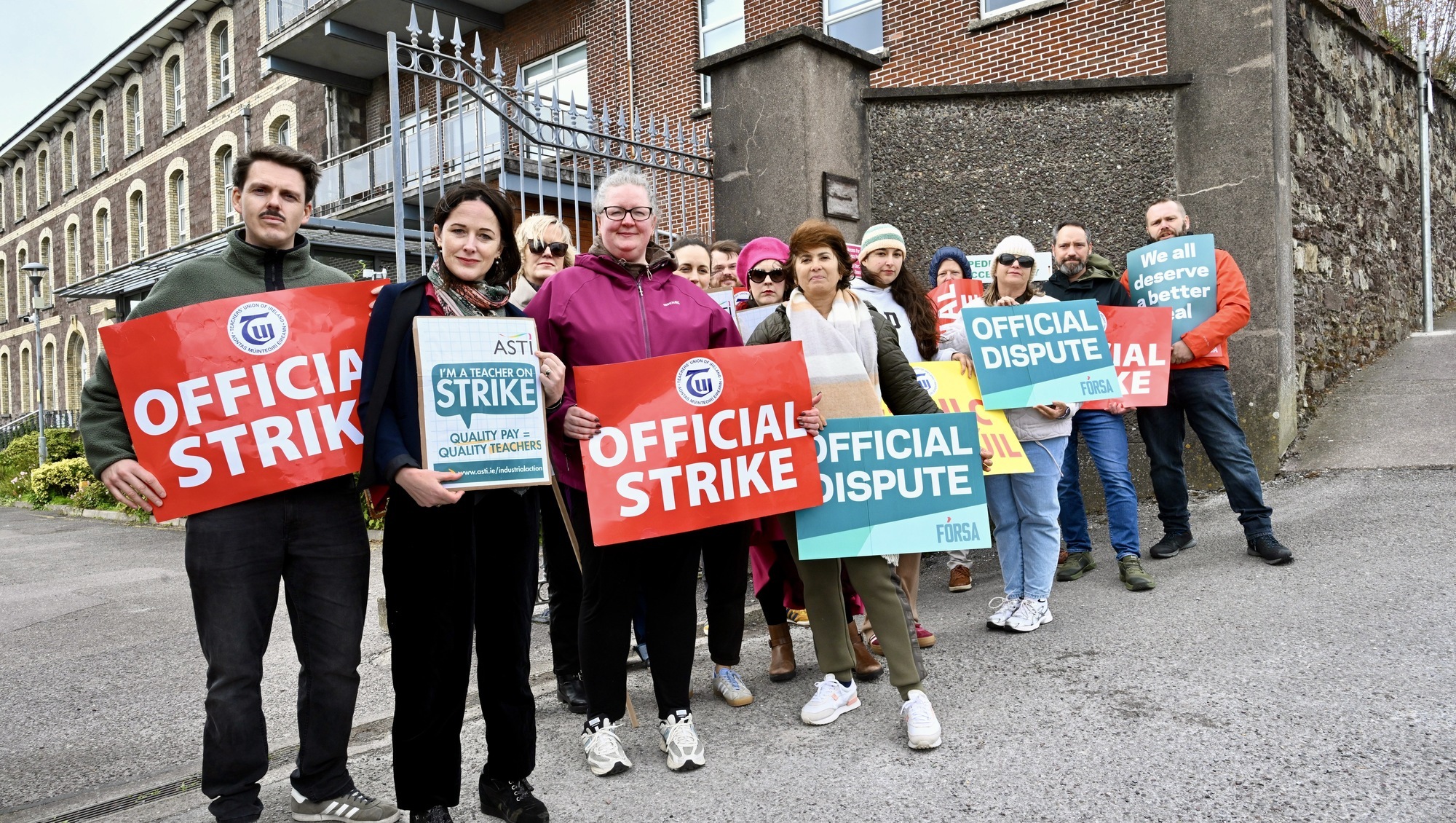
'Irish Examiner' columnist Jennifer Horgan (second left) and colleagues from ASTI, TUI and Fórsa unions on the picket at Cork Educate Together Secondary School during the national strike by public sector workers on Wednesday. Picture: Larry Cummins
On Wednesday, 17 years of relative industrial peace were shattered as more than 300,000 public sector workers took to pickets across the country.
It was a show of force by unions not seen in almost two decades, when strikes in 2009 saw more than 250,000 civil servants, including gardaí, hit the streets over pay cuts imposed by Brian Cowen’s government.
The country is in a markedly different position to the post-crash years. Rather than struggling with empty coffers, the State is in a strong fiscal position, with Government spending projected to reach €125bn by the end of next year.
Despite the State largesse, workers on picket lines around the country spoke of the impact of the rising cost of daily essentials, bills, and fuel.
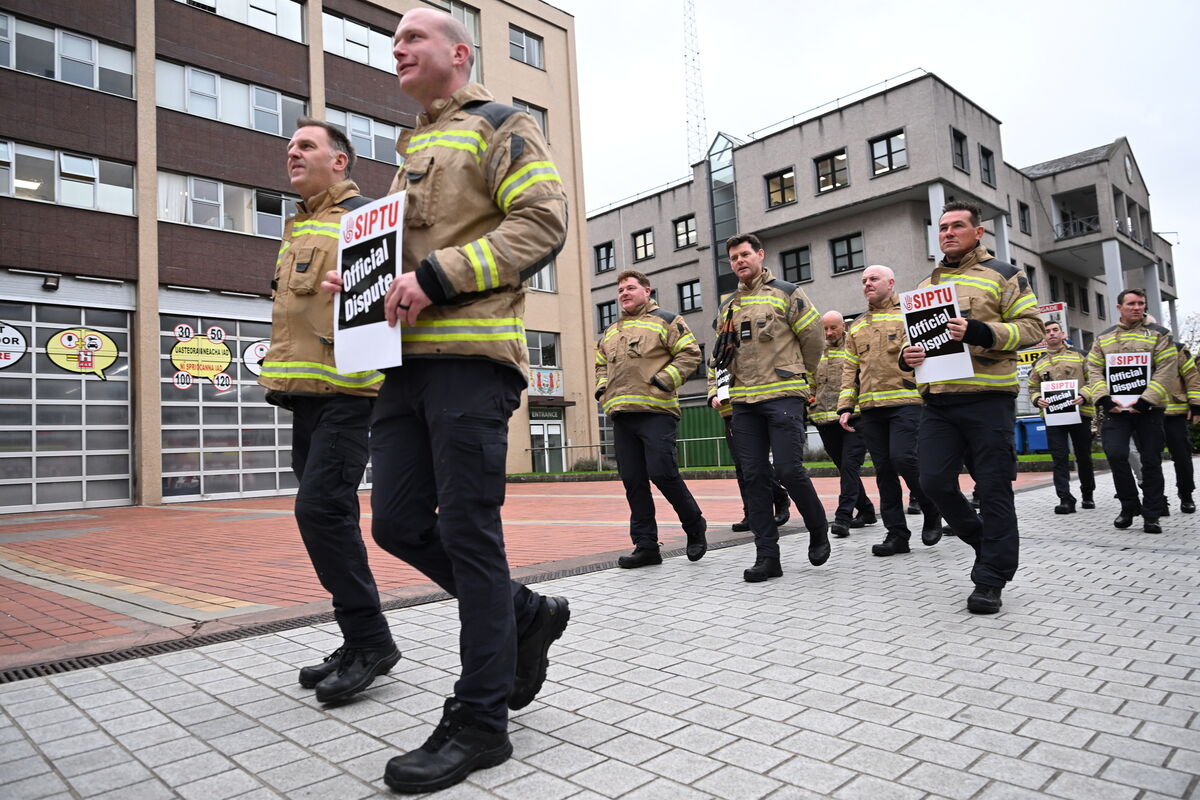
Outside Anglesea St fire station in Cork, firefighter Cathal Murray spoke of the failure of the Government to reach a “proper structured pay deal” for public sector workers.
“People are finding it hard at the moment with the cost of living, increase in fuel, rent, home-heating costs. I think the Government is not engaging properly with unions, and hasn’t for a long time.”
Read More
April’s fuel protests have also led to a hardened approach by unions, with one source saying: “The louder people shout, the higher the Government jump.”
The message of Government not engaging is one shared within the unions, with one official questioning if ministers had any “sense” of unions in the modern era.
They pointed out that most senior Cabinet ministers have little or no experience of dealing with major industrial disputes, with strikes that have occurred in recent years tending to be more localised.
The only current ministers who were in Government at the time of the 2009 strikes were Taoiseach Micheál Martin and social protection minister Dara Calleary, who was then a junior minister for labour affairs.
The Taoiseach did not help matters last week when he railed against the prospect of a picket outside Leinster House and argued there were no grounds for a strike.
He called for a derogation for Leinster House staff and, when asked whether he would cross a picket line, Mr Martin said: "I made my position clear in terms of where I think there can be derogations, and there doesn't need to be a picket."
The remarks drew strong criticism from opposition parties and trade union figures, with Sinn Féin's Louise O'Reilly, a former trade union official, describing them as "disgraceful".
It was not just Government ministers entering unfamiliar territory.
For many younger workers, Wednesday was likely their first experience of standing on a picket line.
With working from home only becoming more common since covid hit six years ago, Fórsa also warned members that activities such as logging on to a work laptop at home to answer emails or taking work-related phone calls would be regarded as crossing the picket line.
Wednesday "is a strike day regardless of workplace location", said a Fórsa spokesperson.
While disruption remains significant, whether through cancelled healthcare appointments or school closures, the changing nature of work has made some of the impacts more manageable.
For example, some parents no longer need to take leave to care for children affected by school closures, reducing the disruption compared with two decades ago.
But as workers took up their spaces on picket lines early on Wednesday, the hard talk of Government on any negotiations seemed to be softening.
Jack Chambers, the public expenditure minister, told RTÉ’s late on Tuesday that pay “absolutely” could be discussed as a priority.
“We want to deliver a meaningful, credible, and fair deal for workers,” he said.
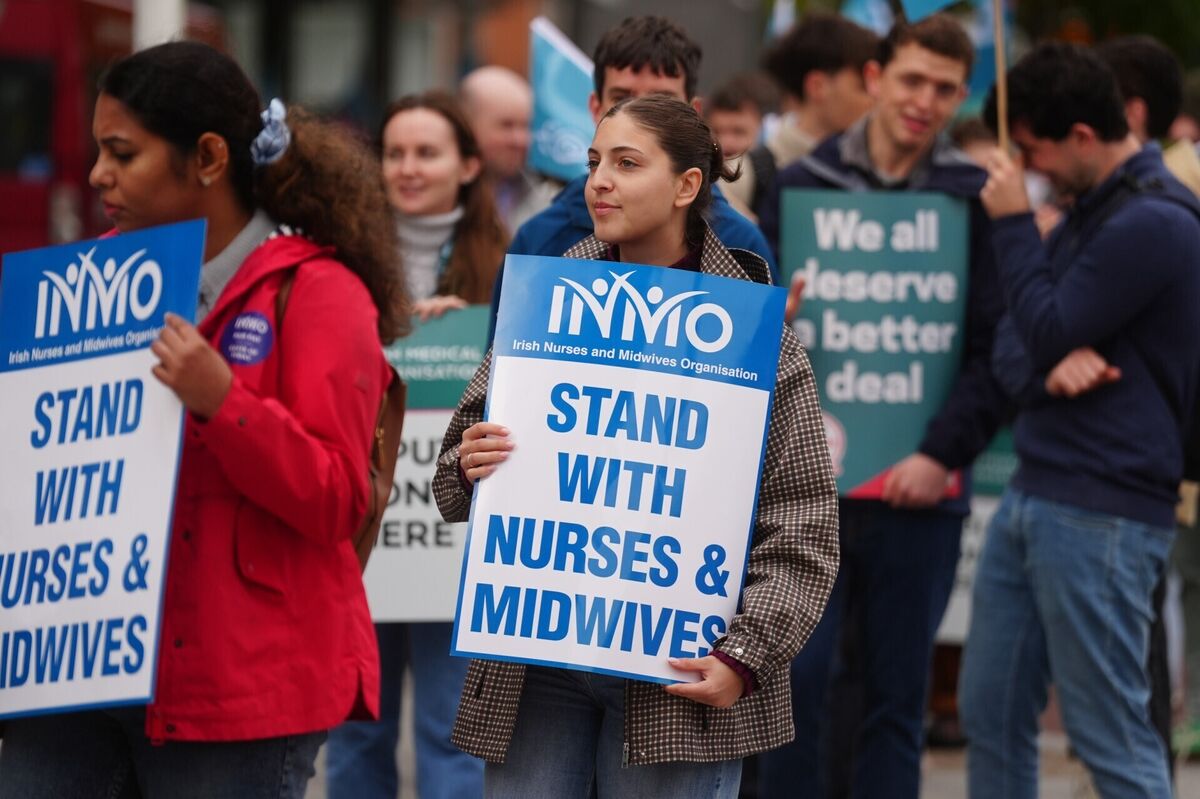
As senior union leaders, including the heads of Fórsa, Siptu, the Irish Nurses and Midwives Organisation, and Irish National Teachers' Organisation arrived at the Mater Hospital for a photocall with striking workers, space appeared to be emerging for a way forward.
Fórsa general secretary and Irish Congress of Trade Unions’ public service committee chairman Kevin Callinan said there may be a “pathway to talks” if the Government was serious about putting pay at the centre of negotiations.
He called for the Taoiseach to intervene directly through the appointment of an "honest broker", assisted by one Government representative and one union representative.
“If that's possible, we'll work with it. If it doesn't happen, we're going to have another strike next week and beyond,” said Mr Callinan.
"You see today that people are struggling with the cost of living. They want a real, meaningful response to that, and that's the only way this dispute is going to be resolved."
There were signs that both sides were looking for a way out of the impasse, with a potential opening beginning to emerge — not to direct negotiations, but rather a pathway towards talks in what had until then appeared an almost intractable dispute.
One Cabinet minister pointed to the softening language on both sides, saying Mr Chambers had managed to "change the tone" through his intervention on .
They added it would be a "surprise" if workers were still on picket lines on Wednesday, October 21.
As the strike wound down last Wednesday, backchannel talks were beginning behind the scenes between the Government and unions, in a bid to get both sides around the negotiating table.
More positive soundings came from Mr Chambers, who told RTÉ’s that €1.2bn set out for a pay deal would only be the “starting point” in any talks, rather than being the whole package.
One Government source described the early engagement as sensitive, which continued to be the refrain into Thursday and Friday from within the Coalition.
White smoke began to emerge shortly before 6pm on Friday when simultaneous statements from the Government and unions confirmed that a way forward had been agreed.
As proposed by Mr Callinan earlier this week, an “honest broker” has been appointed in the form of Workplace Relations Commission chair Kevin Foley. He will be assisted by Department of the Environment secretary general Oonagh Buckley and ICTU general secretary Owen Reidy.
While next Wednesday’s strike action has been called off, workers will remain on a work-to-rule in the days ahead.
The path back to industrial peace is now visible, but the toughest part of the journey may still be to come.
- Tadgh McNally is a Political Reporter.

CONNECT WITH US TODAY



Be the first to know the latest news and updates