Mick Clifford: The smell of Garda scandal is spreading — but is the justice minister paying attention?
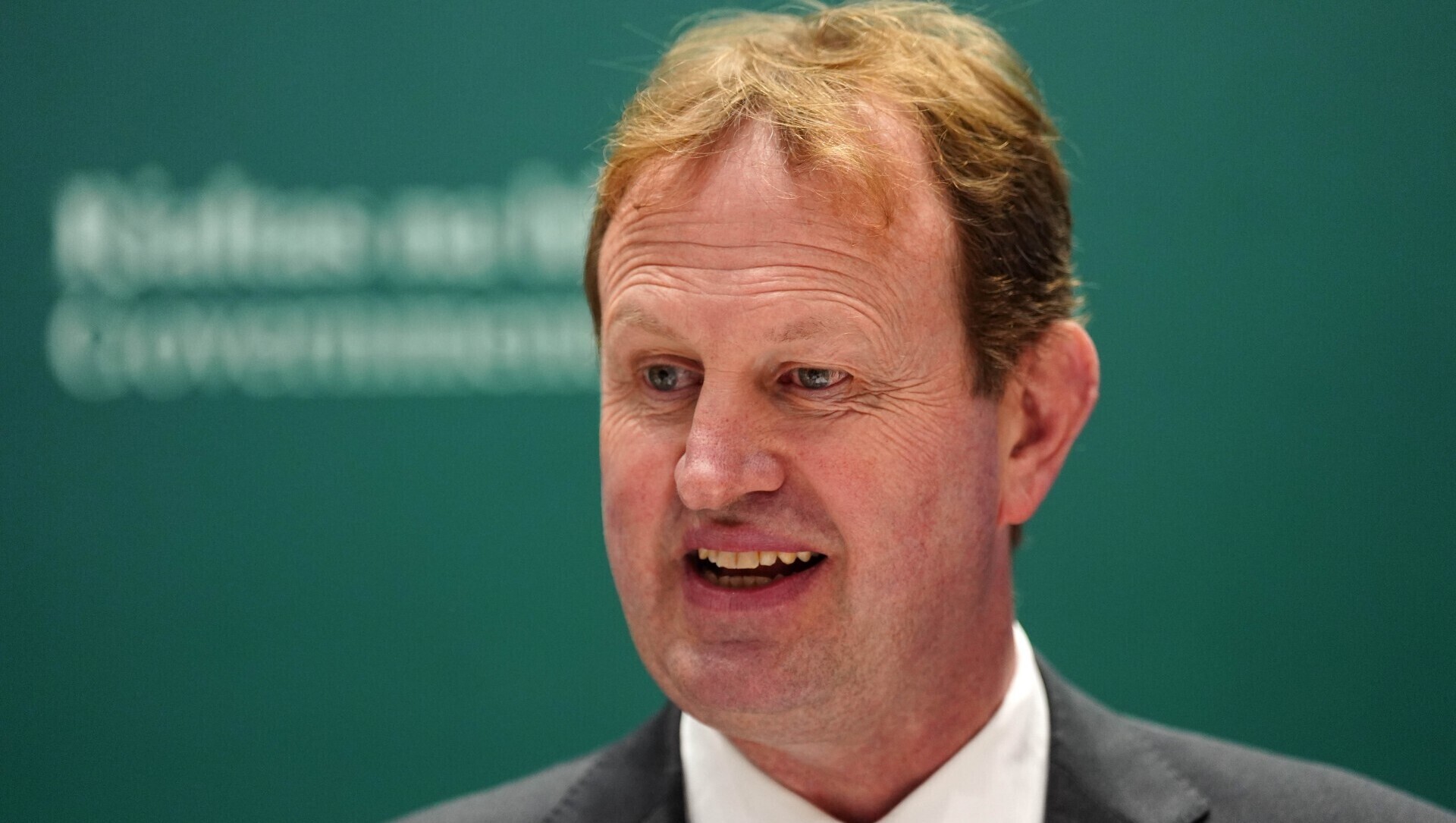
Jim O'Callaghan continues to effect a 'nothing to see here' air. Photo: Brian Lawless/PA
The smell is thickening. It is spreading out from An Garda Síochána, into the Department of Justice, and now, right across the criminal justice system.
Yet through the foul odour, minister for justice Jim O’Callaghan continues to walk as if he’s inhaling the rustic smells of autumn.
This week, there were further red flags about malpractice in the police and beyond. It reflects how bad things are that the least noteworthy of the occurrences was the possibility that a government minister may have misled the Dáil.
Helen McEntee’s failure, when minister for justice, to protect garda whistleblowers has been a constant theme since Labour’s Alan Kelly first raised the issue over a year ago.
McEntee told the house on Thursday that she didn’t disclose the identity of a whistleblower when she sent his protected disclosure back to An Garda Síochána in 2023.
Read More
The whistleblower, Detective Superintendent Brian O’Reilly, as reported in the Irish Examiner, disputes this. He says the garda commissioner was unaware he had gone to the minister.
Aontu’s Peadar Toibin has accused the minister of breaking the law in sending on the protected disclosure to An Garda Síochána. It is certainly the case that she has refused to say what law she was acting under.
Again on Thursday, she waffled around all she had done, but still won’t cite the law she acted under.
A few hours after that debate, the family of Colm Horkan released a statement calling for a public inquiry into the treatment of garda whistleblowers. The family had, until that point, maintained a dignified silence.
Garda Colm Horkan was murdered when Stephen Silver managed to get hold of his pistol on June 17, 2020.

The garda was wearing a holster that is believed to have been flawed and may have contributed to Silver’s ability to disarm him.
Multiple media reports, including in the , have detailed how there appears to have been a cover-up about the flawed holster, both before and after Garda Horkan’s murder.
“For years now, we have listened to various people telling us that there are issues concerning the holster that Colm was using on the night in question,” the family statement read.
The family’s pain is obvious from the tone of the statement. They are entitled to some closure on this issue. Beyond that, Colm Horkan died in the line of duty, defending the state.
His colleagues are entitled to know whether he was properly equipped, whether senior management prioritised suppressing a scandal over the safety of a dedicated officer.
Thursday was also the day that Michael McDowell made some startling revelations in the Seanad. He told the house that one of the whistleblowers who has featured in recent coverage is a man by the name of Luke Rochford. He is before the criminal courts.
“I am quite satisfied that he has been the victim of a major vicious campaign to incriminate him and put him in the position of being a defendant in a trial on indictment,” McDowell said.
The former minister for justice and attorney-general is suggesting here that the criminal justice system is being used to silence a garda whistleblower.
It is difficult to imagine a greater misuse of power than for elements of a police force to allegedly manufacture a criminal case against an individual for which he could be imprisoned.
That such an occurrence was part of an attempt to silence a colleague from exposing the truth is quite unprecedented.
McDowell went on to point out that Mr Rochford “has been falsely accused in a secret report of being in possession of semtex, which is utterly untrue.”
The senator stated that he understands there is a proposal to delay the trial of Mr Rochford by a year because of the publicity generated following the RTÉ primetime programme on the whistleblowers. The charges were first filed against Rochford over six years ago.
Then McDowell had advice for the director of public prosecutions. “I believe it’s the duty of the director to acquaint herself with all the facts.”
This, in effect, suggests that the DPP is taking instructions from prosecuting gardaí about this case without independently examining the background and how a prosecution file was created and pursued.
All of this is deadly serious.
It is far more so coming from somebody like McDowell who has first-hand experience of the law, government, and the manner in which the system works. The idea that he would be making wild or unsubstantiated allegations about arms of the State is simply not credible.
Yet Jim O’Callaghan continues to effect a “nothing to see here” air.
On Friday at the Garda training college, he was asked by the about McDowell’s statement. The minister said he was unaware of whom McDowell was talking about, which itself is worrying.
He went on to say whistleblowers have an important role to play, but that “it has to be recognised that just because somebody makes a protected disclosure it doesn’t mean that they are correct.”
It was an extraordinary response that didn’t address the issue. Apart from that, the is aware that the vast bulk of Rochford’s disclosure was substantiated.
O’Callaghan similarly deflected when asked about Detective Superintendent Brian O’Reilly’s case, and the manner in which McEntee dealt with it was put to him.
There is a pattern here, reaching back to O’Callaghan’s predecessor and including himself. The politicians in charge don’t want to know about this stuff. No good can come from it, in terms of their careers or the potential for scandal to leak into government.
Ministers became entangled in garda scandals in the past, and that didn’t end well. The imperative today is to remain insulated from the foul-smelling stuff emerging from the force.
That can only suffice until the smell gets too strong for even the incumbent minister to ignore.

CONNECT WITH US TODAY



Be the first to know the latest news and updates