All Those Years of Mayo Football. And Then 2026
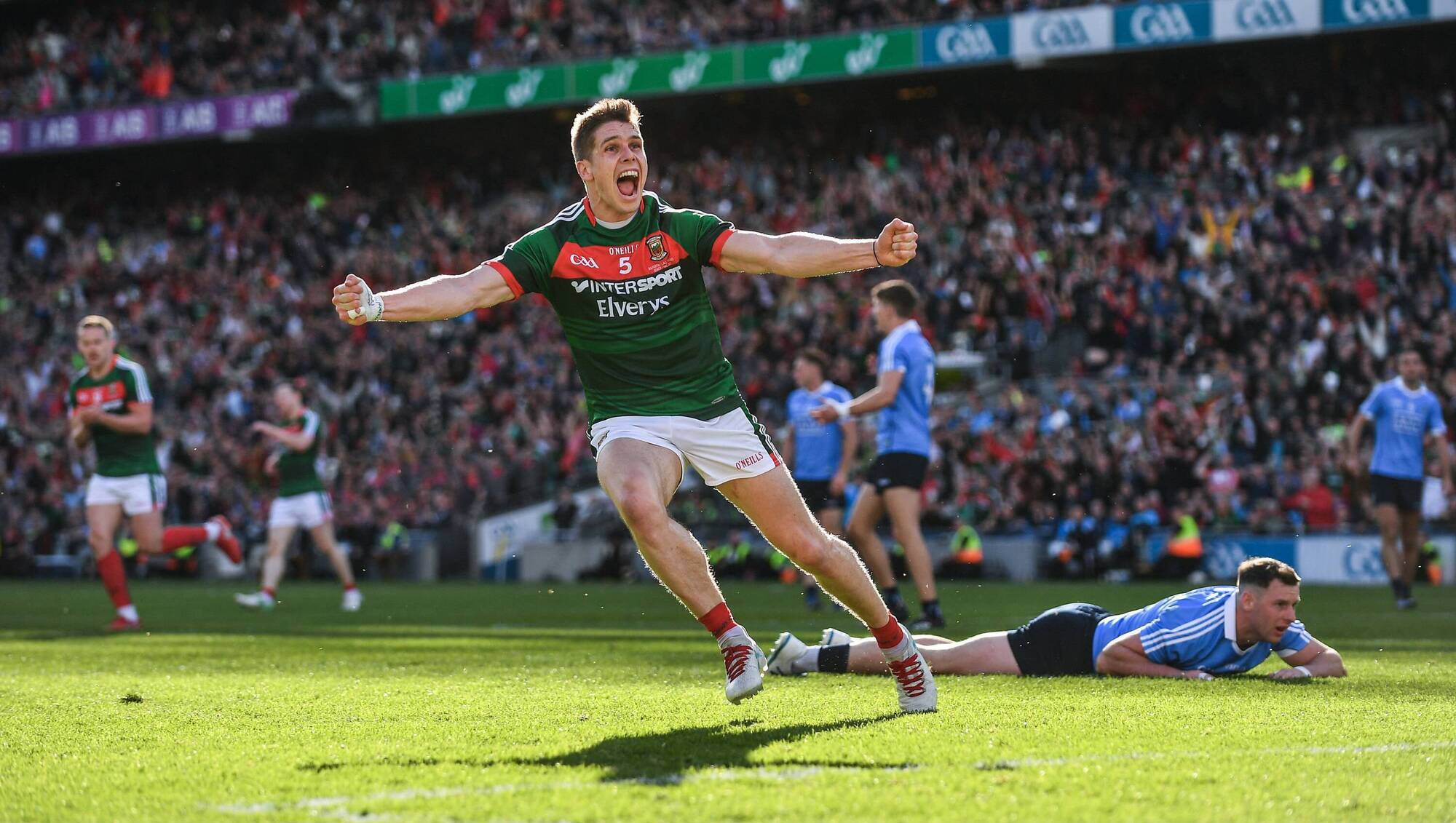
GLORY DAYS...ALMOST: Mayo's Lee Keegan after surging through to score a memorable All-Ireland SFC final goal in 2017 against Dublin. Pic: Sam Barnes/Sportsfile
Frequently, I am too embarrassed to tell people the unearthly hours at which I get up. All my adult life, it’s been a blessing and a curse. I inherited it from my father. That Wednesday morning, 28 September 2016, three days before Saturday’s All-Ireland final replay, my early rising reached a whole other level.
At the end of 2015, when he got the Mayo job following the breakdown of relations between the players and joint managers Pat Holmes and Noel Connelly, the new manager Stephen Rochford asked me to be his communications manager.
Since the drawn final the previous Sunday week, a host of former Dublin players with a route to media had developed a deep – you’d be pushed to call it healthy – fascination with Lee Keegan, a fascination they eagerly shared with their readers, viewers and listeners. It was Lee this, Lee that, Lee the other. And all of it was how bold a boy Lee was. His behaviour on the field appeared to offend them greatly.
And now many eyes were on me. And that’s why I was up before Mickey’s hand had reached five on my Mickey Mouse watch.
Read More
Somewhere in the early hours, I concluded there was nothing for it but for Mayo to issue a statement telling Dublin that everyone had copped what was happening. They should just call off the nonsense. The targeting of such a great sportsman as Keegan was inappropriate. Nowhere would we argue that Keegan was a saint because he wasn’t. There are very few saints in Croke Park on All-Ireland final day. Nor did that Mayo team ever want to be seen as in need of special protection from anyone. They were eminently capable of looking after themselves.
Lee Keegan, is it?
The same Lee who, even ten years later, has no record of inflicting serious or sly injury on opponents? The same Lee who would wrestle and grapple with you, and who would block your run, but who wouldn’t set about availing of a sneaky opportunity while you were on the ground or hit you a dirty smack when the ball was at the other end of the field. That Lee? And yes, he played on the line, occasionally the far side of it, but never to the point where he threatened to inflict physical damage. That is a crucial point about Lee Keegan that got overlooked when efforts were made to demonise him. You must have the wrong Lee. In fairness, it’s a fairly distinctive name. It’s not a John Murphy or a Tom Walsh. In 2016, I was about 43 years going to Mayo matches, and my father had a recall stretching back to about 1940, and neither of us could ever recall another Lee Keegan playing for Mayo. It must be that Lee so.
Like me, Stephen Rochford lives in Ballinrobe, and at a civil hour – oh, around 7am – I texted him to ask if he was up. He was. Could I call up? I could. I was there inside ten minutes, armed with a statement I proposed we issue shortly before 8.30am. It would be in time for Morning Ireland’s sports bulletin. I had told Mayo GAA PRO Paul Cunnane, who shared our concern at Lee’s treatment, that something might be brewing. While I was the ‘media man’ for the team, the protocol was that statements, team announcements and the like go through the PRO, and rightly so. I was mindful of where my remit started and ended. As the week went on, reporters were starting to see what was happening. If we gave it a push, I was confident the noise would stop. At least other ex-Dublin players lining up to be heroes for their county might have reason to think again.
When I got to Stephen’s house, and outlined where I thought things were at, he said he would go with my decision. ‘If you think that’s the right thing to do,’ he said, ‘we’ll do it. But let’s just hold for five minutes first to see if there’s anything we’re missing.’ Issuing a statement like that in the week of the All-Ireland was a huge call. Stephen wondered about the impact on Lee and the rest of the team. I had been tick-tacking with Lee over the previous few days to explain the quandary we were in. Basically, it was a Dublin shelling and we didn’t have the ammunition to fight it by conventional means. Lee, as ever, was clear about it. It wouldn’t do him any good to worry about it. And so, he wouldn’t. And he’d support whatever we came up with. Lee’s a true blue that way. Well, there were few true blues in Mayo that week, but you know what I mean.
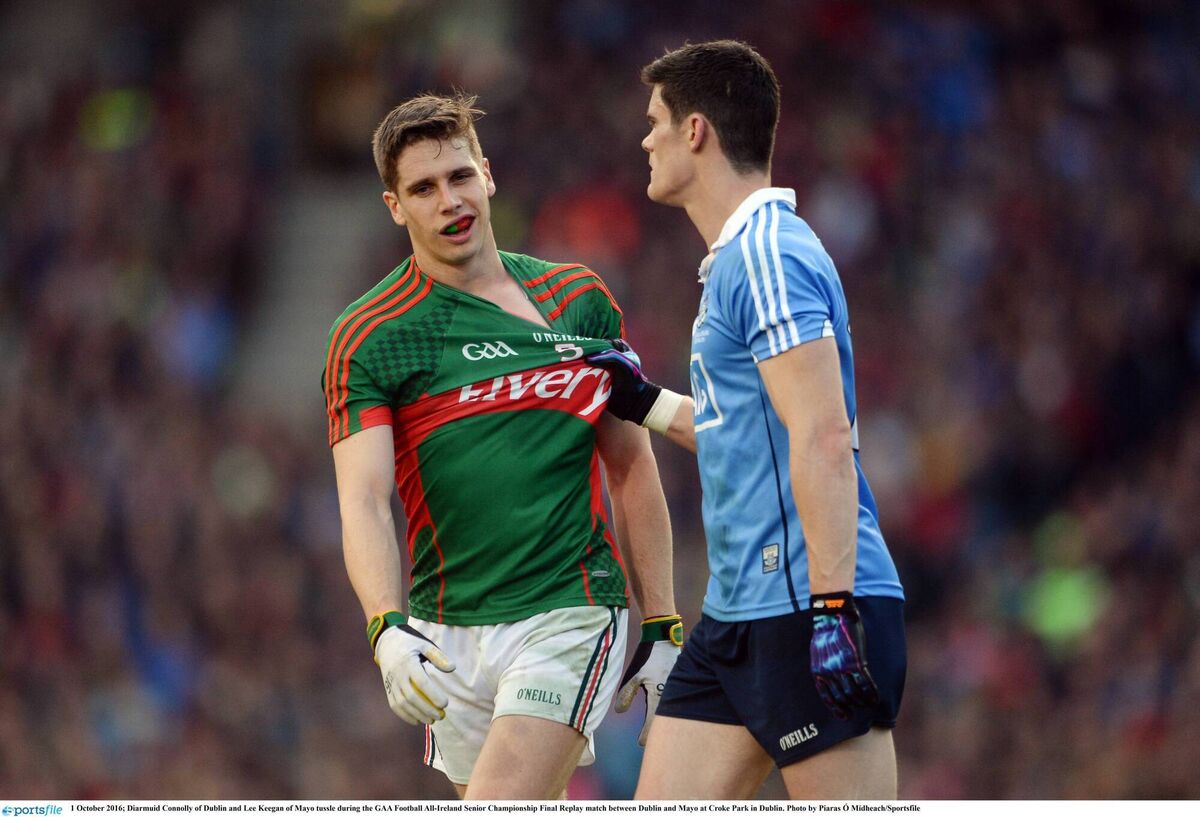
The middle Sunday between draw and replay, the lightning bolt zapping around Dublin moved Alan Brogan. And he shared his concerns with his readers in the . ‘Both sets of players worked incredibly hard all over the pitch, but it was Mayo’s aggression that led to so many sub-standard performances from the Dubs. As Lee Keegan himself admits, some of this is right on the edge of legal, and at times he crosses that mark,’ he wrote.
‘Twice I saw him drag Diarmuid Connolly to the ground. At this stage of the championship, you do whatever it takes to win. It’s the job of the officials to make sure the game is played inside the rules but at times Conor Lane let things go. The smart players, and Keegan is one of those, read this situation and play right up to where the referee allows.’ Another hit landed on Keegan, this time from former player and future Louth and Dublin manager Ger Brennan, who was quoted in multiple media outlets: ‘If [Connolly] played a bit closer to the Mayo goalmouth for a couple of minutes, maybe Keegan mightn’t get away with as much of the pulling and dragging – which I’m fine with too as a back, if you can get away with it, go for it!’ Part punditry, part team talk. Keegan is fouling off the ball, which is, of course, grand, but don’t forget Keegan is fouling off the ball, but that’s fine, but Keegan is fouling off the ball. Don’t forget, sure you won’t? You get the picture now?
Ger was fine with it.
Ger wasn’t fine with it.
There was plenty more of that kind of stuff too. The whole thing should have been too ham-fisted to catch on, but it did. There Stephen and I needed to get out of his house. The day was clicking into action. I rang Hilda Hughes, owner of Café Loire in the centre of town, to ask if she was open. She wasn’t, really, but she was on site and she’d let us go upstairs to talk. Hilda, like the rest of Mayo, was up to high doh that week with the replay on the horizon. It was now past nine and The News at One on RTÉ Radio One was the next obvious slot if we were going to release something. We were both well aware of the perils of going public. We had long since agreed that the players are the primary audience to consider before any public utterance. The counter-argument ran over and back between us as Hilda topped up our coffee, twice I’d imagine. This saga was already a distraction. It was about minimising it now to avoid it afflicting Lee and the team.
And then the break came. I didn’t know Trevor Naughton at the time, but the mutual Mayoness meant we followed each other on Twitter. He was, and still is, a Mayo fanatic. We became friends after 2016. He had a clever take on things – a clever Trevor – and gave me many a chuckle with his observations on Gaelic football. At 8.30am, he tweeted that a former Dublin player had ‘alleged that Lee Keegan was responsible for breaking John Finn’s jaw in ’85. #ThingsLeeDid @MayoGAABlog.’ Shortly after nine, it all took off.
The Mayo people, as frustrated as we were, had found their outlet. Niall McGarry tweeted ‘I wanted to call Joe.ie Lee.ie, but Lee Keegan stole the name. #ThingsLeeDid’. The parody account James Horan’s Cap revealed ‘lookit, Lee stole my cap. #ThingsLeeDid.’ Richie Heneghan was adamant that the ‘Titanic sunk after colliding with Lee Keegan #ThingsLeeDid.’ Ger Flanagan was able to relate that ‘Lee Keegan once shouldered the Tower of Pisa, it’s since been renamed. #ThingsLeeDid.’ It was Lee Keegan who introduced water charges, according to Enda Conway.
#ThingsLeeDid trended.
And that was the break we needed.
Laughing at it all was as good as could be managed.
We put the statement away.
Later that day, I sent Trevor my first direct message to let him know how much we appreciated his intervention and how, like Lee by times, we had been grappling. ‘They don’t deserve an official response from anyone directly involved with the team. Twitter will make a mockery of their antics. That’s why I started #ThingsLeeDid. To laugh at them. The team and Leroy will do their talking on the pitch. Up Mayo,’ replied Trevor.
In Saturday’s Examiner, columnist Larry Ryan’s headline said ‘Dubs’ old boys make a hash of it as Keegan trends’. He wrote: ‘The Dublin Old Boys Network stuck to traditional [media] methods and got their message out there in print and radio and TV. Unanimously, their concerns were for law and order, and the policing of Keegan. But as Andy Townsend would probably put it; they almost got it out too well.’ Mayo, he continued, ‘mobilised and tabletised. And rather than dispatch Brady or Padden or McHale to fight their man’s corner, a whole county socialised their scorn and laughed Dublin out of the box seat. On Wednesday the Mayo GAA Blog assured the faithful that an official defence had been prepared but was no longer needed, so effective had the mob been in realigning the agenda.’
By Thursday lunchtime, Jim Gavin was seeking distance, assuring us Diarmuid Connolly was ‘well able to look after himself’ and that there had been no discussion in the Dublin camp about the rivalry between the two players.
And then Lee got a black card anyway for a foul on Connolly and Dublin won the final anyway and what had been building up to a glorious climax just became one more sad chapter in decades of sad chapters. Had the pressure got to the referee? It could be interpreted as a harsh black card, but there was definitely contact. Pat Spillane said on the coverage that Keegan pulled down Connolly, which could be construed as a black card. Connolly got to his feet quickly and appealed to the referee to issue a card. When Keegan was asked to leave the playing arena, a thunderous roar went up from the Dublin fans. Stephen Coen came on for Lee and did very well on Connolly.
Mayo fought all the way to the end only to fall short by one point – the same margin that would decide the following year’s final, and not in our favour, in case you’ve forgotten. The loss of Keegan’s attacking influence was incalculable. That was a great Dublin team. We had gone close. Just not close enough.
Connolly and Keegan elevated the game when they met. They were the embodiment of Dublin and Mayo in that decade – the story that told all the stories. I recall meeting the great Mayo supporter, Ann-Marie Kenny, in the CityWest after that game and we both wondered what we had to do to win one. We would be wondering for another nine years.
Andy said after the 2026 final that ‘we had some great fun celebrating losing finals, we’ll definitely celebrate this one’, and he was right. A gallows humour of sorts erupted on several occasions on the purgatorial train journey from Heuston Station to Castlebar the day after we lost the replay. Some of the wide boys in the team had great fun reminding the communications manager of how successful #ThingsLeeDid had been in insulating poor Lee from a jumpy refereeing decision.
One suggested that they try to get #ThingsLiamDidntDo trending. What could a man do but take it on the chin? It was all a deflection at that stage anyway. We had another final defeat to process.
Coming off the field that day, a Croke Park official said we ‘would get great credit for how far ye pushed that Dublin team’. At the time, I disagreed with him. I told him that defeat is defeat and would be portrayed as same. Who was right? Perhaps both of us. Initially, there were plaudits for Mayo. And then severe criticism. Same as it often was. And then, post 26 July 2026, I sensed a more balanced evaluation of those years.
That was no good to us that Sunday though as we trooped off home. Losers never get to write history.
*Liam Horan was communications manager with the Mayo senior footballers 2016-18. 'I Can See It Still', draws on that experience and more than five decades of following and reporting on Mayo football. Published by Townland Press on October 16, it is available from bookshops and at www.liamhoran.info/seeitstill.

CONNECT WITH US TODAY



Be the first to know the latest news and updates