Mick Clifford: A rich tradition of industrial action helped shaped this State
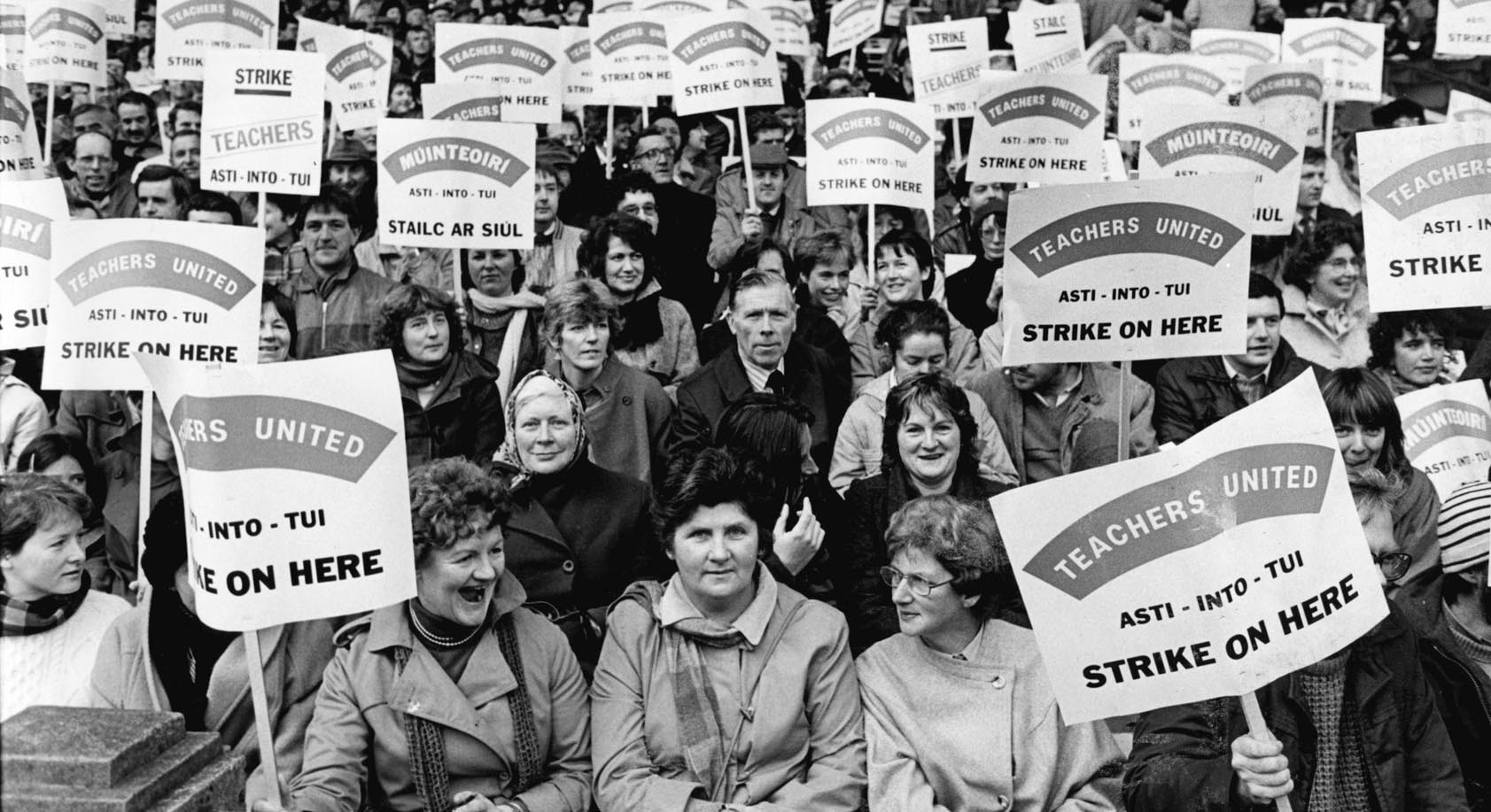
About 20,000 teachers gathered in Croke Park in December 1985 to demand improved pay and working conditions.

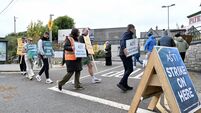
The streets were eerily quiet for a Wednesday as much of the country came to a standstill. The only real action was outside rather than inside all public institutions.
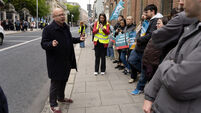
At schools, colleges, public offices, depots, hospitals, the pickets were thick with volunteers, the sparse passing traffic intermittently blowing horns in support. Everywhere could be seen a blast from the past, from a time where public sector strikes were part of life.
It has been 17 years since the last one, undertaken in the depths of the post-crash depression. Before that there was an occasional outbreak in various arms of the State, but nothing major in at least a generation.
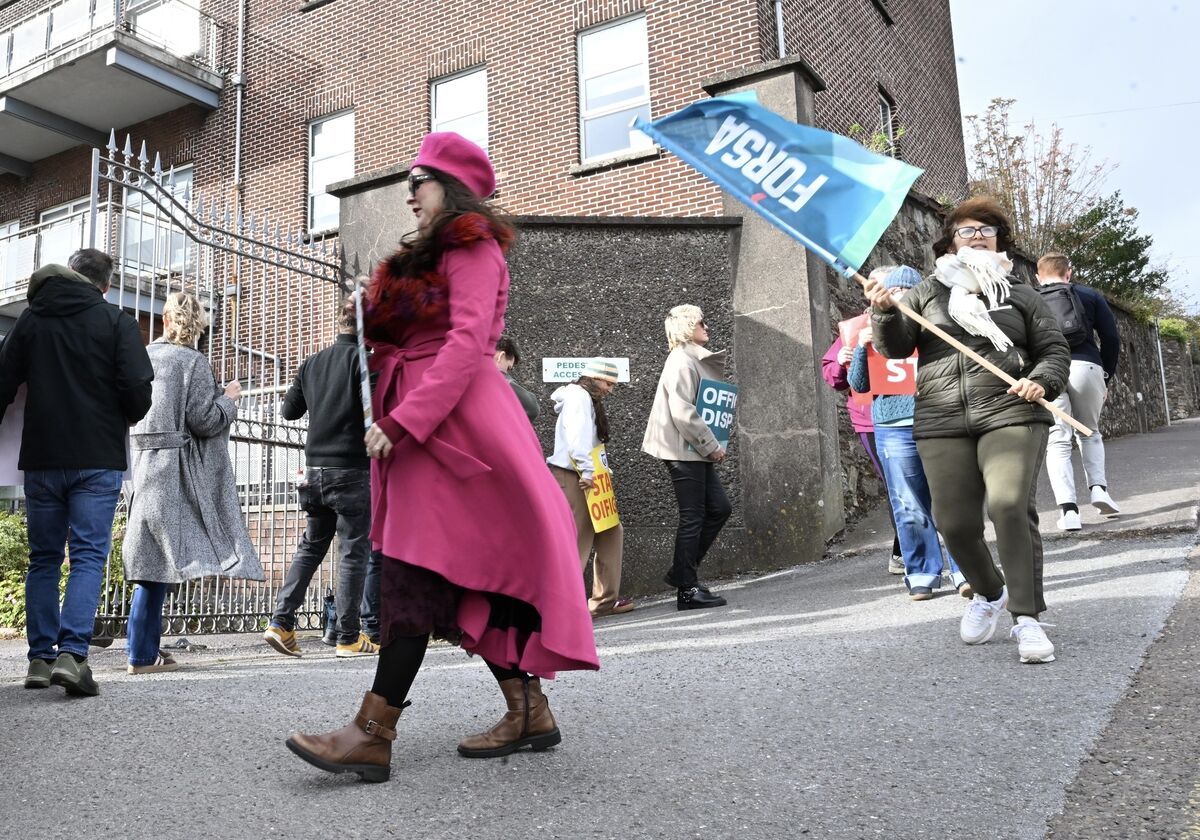
For those under 40, Wednesday was something new. Anybody who has been around a while was heading back to the future, to a time when strikes were a way of life.
The 1970s and 1980s were punctuated by shortages, outages, inconveniences. This was considered the price of living in a democracy.
The tradition stretches back to the foundation of the State. The first public sector strike occurred when the new State was busy being born. In September 1922 a postal strike hit at the heart of social and commercial life.
The nascent government was fighting a civil war against anti-treatyites. As far as the postal workers were concerned, ridding 26 counties of the Brits was supposed to being a new dawn, but there was no sign of it.
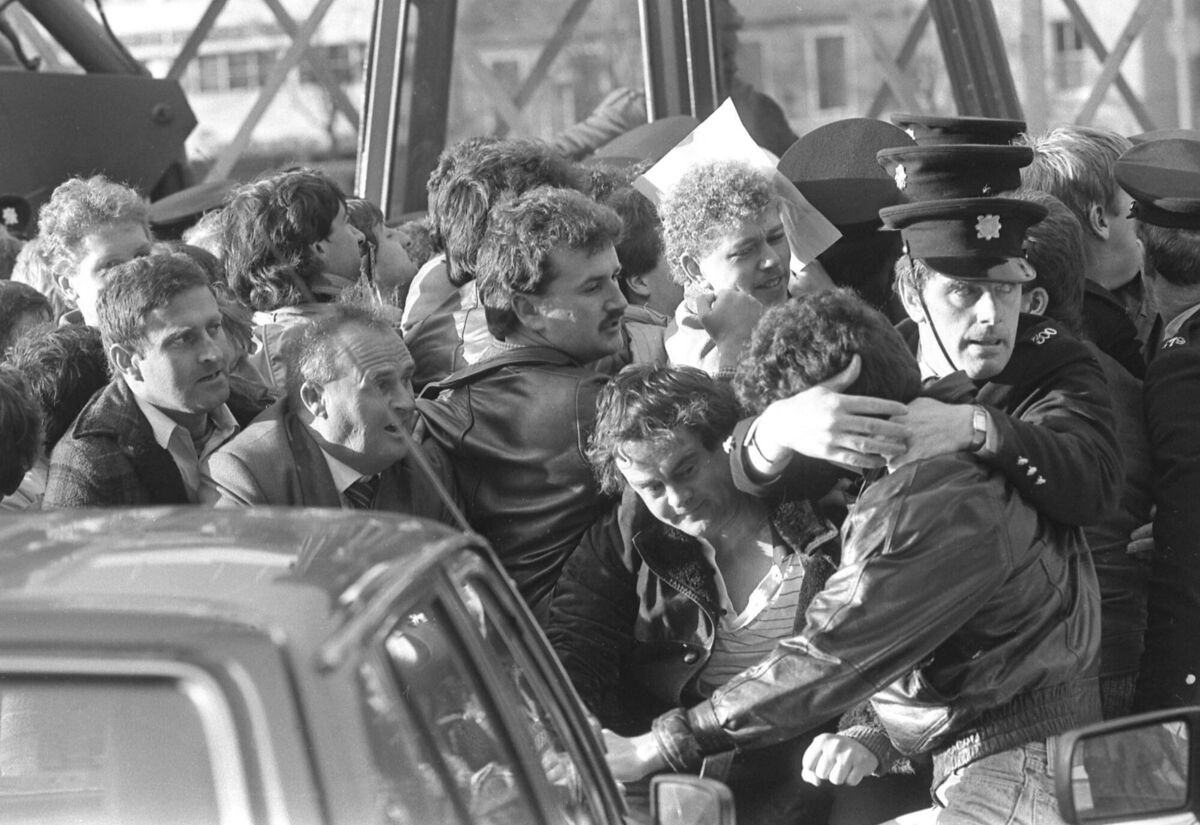
Instead, the government wanted pay cuts which the workers argued would actually leave some of them living on the edge of want. The strike was considered in government to be an act bordering on treason at a time when violence was widespread and the future uncertain. Soldiers were deployed to break picket lines. Shots were fired.
The Kieran Mulvey of the day was one senator James Douglas who negotiated a settlement just as the strike was entering its third week. The size of the proposed pay cuts were reduced and there was a pledge there would be no victimisation, but bitterness lingered for a few years to come.
That set a pattern. Every so often, trade unions would conclude that the government — or a big employer — was just being too unreasonable and a strike was necessary.
It was, to some extent, a flexing of muscles. By the same token it was showing the powers that be that they could not have things all their own way. Like all such things, agreements were reached but only after much pain was shipped on both sides.
So it went down through the decades. The private sector engaged in a similar dance of misery every now and then. Today, less than a quarter of private sector workers are unionised, but go back 30 and more years and it was up to three times that level.
In 1966, the first of three bank strikes over the following decade was commenced. The strike was over pay but a peripheral outcome was that Ireland’s cultural life was greatly enhanced.
One Christopher Moore, who had secured a good pensionable job in the Clonmel branch of the Bank of Ireland, was given an opportunity to follow his true calling by the strike. He ramped up his performances and by the time the banks opened their doors again he was touring England as Christy Moore, never to look back.
Another who took a career plunge under cover of the bank strike was Maeve Binchy. She was working as a teacher but when she couldn’t cash her cheques she used the opportunity to transfer into journalism. A scribe, who eventually became a best-selling novelist, was born.
The big change came in the late ’80s. It was as if things had to get as bad as humanly possible before drastic action would be taken. In March 1987, following Charlie Haughey’s return to power, a new way forward was mapped out. The government facilitated negotiations between employers and unions for wage restraint. Farmers were brought in to contribute their tuppence worth. This was to be accompanied by tax reform and a programme of public spending. Between it all, social partnership was born.
Historians have posited that social partnership contributed to smoothing the path for the Celtic Tiger to run amok. For the foreign companies who wanted to directly invest, there was the lure of industrial peace. There was also certainty and a general agreement of the direction of travel. In the mid ’90s a community and voluntary pillar was added to the partnership, expanding its role as a strand of actual government.
Between the years 1987 and 2009 eight different multi-annual agreements were drawn up and agreed. The social partners evolved quickly into a parallel government in the area of industrial policy.
Every time a new deal was being concluded there was the choreography of late night talks travelling into the dawn, negotiators emerging to issue dark mutterings to the frozen reporters and, for a few days, the prospect that the good days would roll to an end. And on each occasion at the 11th hour both sides emerged from the Labour Court, usually at the darkest hour before the dawn, clutching paper that signalled further peace in our time.
The 2008 economic crash brought an end to all that.
By the time the Tiger suffered cardiac arrest, the fizz had gone out of social partnership. There were some suggestions that it had contributed to the runaway spending, although that was largely down to the elected government. In any event, with austerity being ushered in, the government was no longer in a mood to negotiate.
In 2009, all the indications were that the forthcoming budget was going to deliver severe cutbacks in an economy that was tanking.
Shorn of the old certainties of social partnership, the unions decided that it was time to dust down the pickets.
A public sector strike, estimated to include 250,000 workers, was commenced. This one even included members of An Garda Síochána who were constitutionally banned from striking. But strange times demanded unprecedented action.
It didn’t do much good because unlike today the cupboard was bare. There simply was no more money available.
Through the years of recovery, the partnership was never resurrected, but instead deals struck here and there. These usually involved doing a little more in order to justify modest pay rises. These deals were named after the places they were hatched, such as Haddington Road and Croke Park. The spectre in education of “Croke Park hours” persists to this day, as if teachers are expected to turn up at the stadium to do a little extracurricular activity in order to justify their existence.
This week, with a severe cost of living crisis impacting, the unions felt it was time once more to flex muscles. There is no doubt that among some public sector workers the crisis is acute. The fuel protests last April sent out messages that if you shout loud enough, flex a few muscles, the Government will respond. In fact, there is a growing consensus that shorn of any real political compass, the current Government will simply do anything to keep the show on the road.
Wednesday’s battle is over. Now it is to be determined whether this skirmish develops into a serious conflict that neither side really want. In one way, the strike was a part of the new choreography, replacing the late night takes of pending Armageddon as partnership deals were struck.
It was announced last night that next Wednesday’s public service strike has been called off, with efforts starting on Saturday morning to establish the basis for entering talks on a new pay deal.

CONNECT WITH US TODAY



Be the first to know the latest news and updates