The cables beneath the sea carry our digital lives. What happens when something goes wrong?
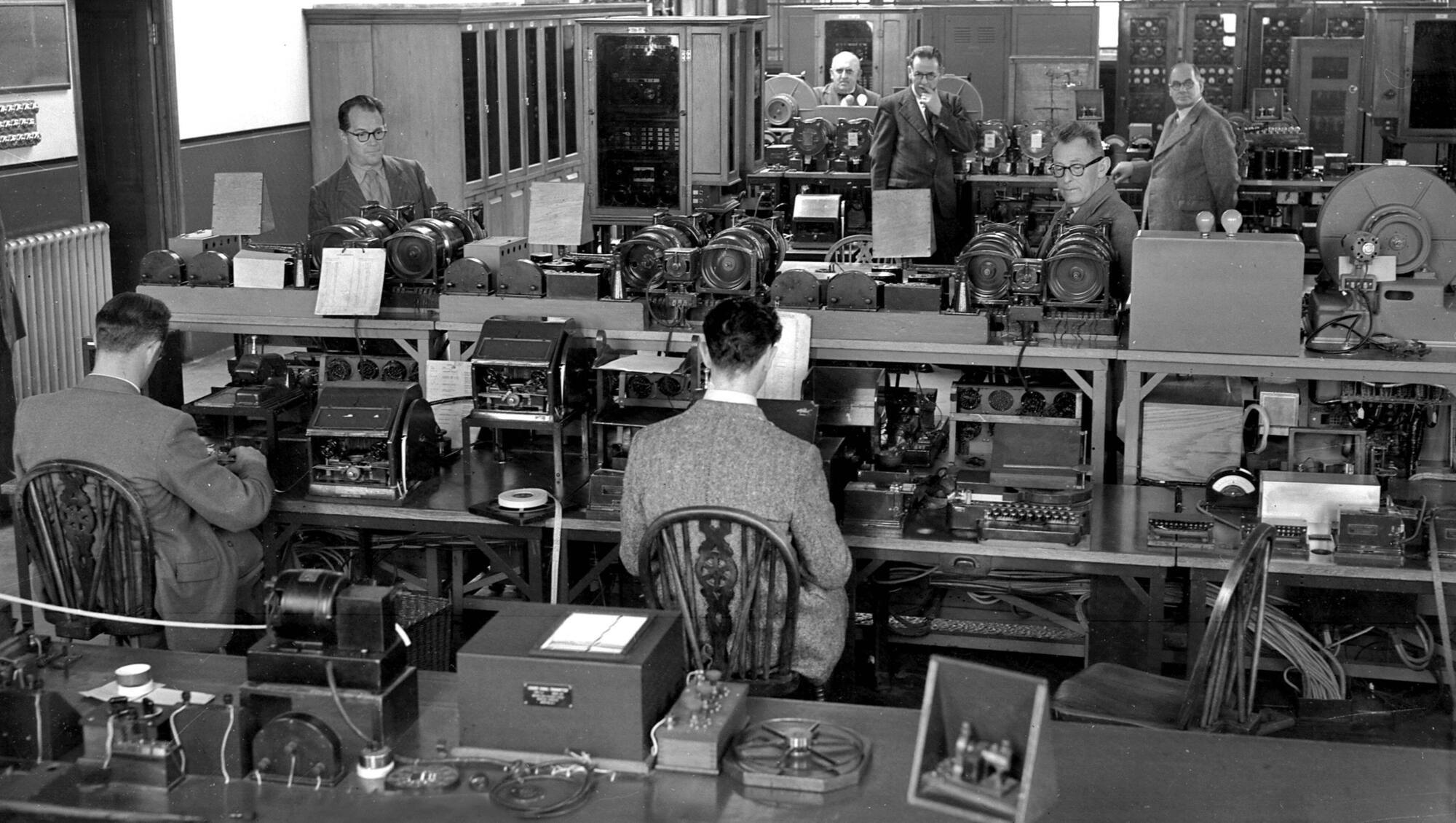
Workers at the Valentia Island cable station, Co. Kerry, in 1953. The early cable stations made the relationship between connection and responsibility visible.
On September 25, 1956, a telephone conversation connected London, New York, and Ottawa through a cable beneath the Atlantic. Seventy years later, it is difficult to recover the wonder of that moment.
A voice had travelled across an ocean without depending on the uncertainties of a radio connection. The people listening understood that something consequential had happened. TAT-1, the first transatlantic telephone cable system, could accommodate only a few dozen simultaneous calls.
Today, a video conversation with somebody in Canada doesn't even qualify as an event. We complain if the picture freezes. What once required an inauguration now happens while we make dinner.
That familiarity has encouraged a peculiar misunderstanding. We speak of the cloud as though the information sustaining our lives has escaped the physical world. But much of it is travelling through cables beneath the sea.
The digital economy has an address, a route, and a maintenance bill. Ireland understood the importance of that route long before there was a digital economy to discuss.
Read More
In 1858, a telegraph cable briefly connected Valentia Island in Kerry with Newfoundland. Britain's queen Victoria and US president James Buchanan exchanged messages, but the connection soon failed.
Eight years later, a successful cable linked Valentia with Heart's Content in Canada. This summer marked 160 years since we changed the meaning of distance. Information that had travelled aboard ships could cross the Atlantic electrically.
For commerce and diplomacy, a delay measured in days could become one measured in minutes. Ireland's western edge had become part of the machinery through which the world conducted its business.
The surviving cable stations tell a less abstract story of technological progress. Valentia's main station, opened in 1868, was accompanied by housing for staff and their families. There were people at either end of the connection, with specialist skills and lives organised around keeping it working. The Irish and Canadian sites feature on UNESCO's tentative World Heritage lists.
The telephone cable of 1956 followed a different route, between the Oban area of Scotland and Clarenville in Newfoundland, with onward connections to North America. It required advances in insulation and submerged equipment capable of strengthening signals along the journey. The cable ship Monarch laid the main Atlantic sections.
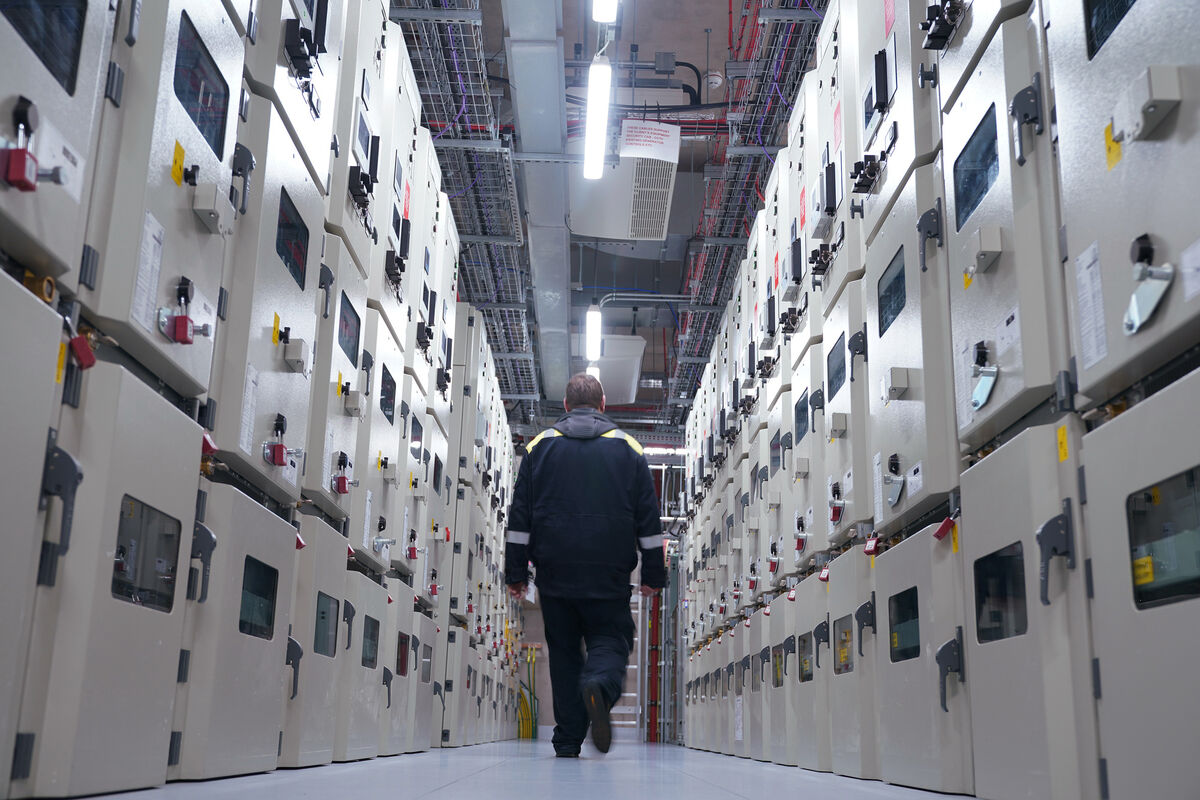
According to BT's heritage account, the project cost £12.5m and took three years. In its first year, it carried approximately 220,000 calls between Britain and the United States and 75,000 between Britain and Canada. Those were substantial numbers in a world where an overseas telephone conversation remained expensive and exceptional.
The subsequent transformation is partly a story of replacing electrical transmission with light travelling through optical fibres. Modern cables carry the data behind banking, business communications, and the innumerable exchanges that make an internationally connected economy possible.
Satellites matter, but the International Telecommunication Union says submarine cables carry more than 99% of international data exchanges. For Ireland, that dependence is particularly tangible.
Our economic model invites international companies to conduct business here and depends on reliable connections to customers and colleagues elsewhere. A data centre is useful because it can communicate with something beyond its own walls. The sea provides many of those connections.
It also complicates their protection. A cable can cross several jurisdictions, land in different countries, and belong to commercial operators whose maintenance arrangements extend across borders. Responsibility does not fall neatly within the outline of a national map.
Recent concern about sabotage has made this hidden infrastructure more visible. A cable failure now arrives in a political atmosphere shaped by Russia's invasion of Ukraine and suspicion of hostile activity around Europe's seabed. The threat deserves investigation. So does the evidence supporting each accusation.
There is a necessary distinction between a damaged cable, a deliberate act, and an operation ordered by a state. Establishing the first does not automatically establish the others.
A ship's connections may warrant scrutiny without resolving what happened on a particular voyage. Credible security policy depends on maintaining those distinctions when the headlines become urgent.
The industry offers an important corrective to the impression that every break is an attack. The International Cable Protection Committee reports roughly 150 to 200 telecommunications cable faults worldwide each year.
Around 70% to 80% result from accidental human activity, particularly fishing and ships' anchors. Natural hazards and technical failures also cause damage.
Networks are built with alternative routes, allowing traffic to be diverted when a cable fails. One break does not ordinarily mean a country loses its internet. The effects depend on available capacity, the location of the fault, and whether several connections are disrupted together.
Repair arrangements are therefore part of security itself. This is work for specialist vessels and engineers, supported by permission to operate when repairs are required. Patrols can help detect suspicious activity. They cannot substitute for functioning maintenance arrangements or sufficient diversity in the network.
Preparedness involves deciding how services continue while somebody fixes the physical problem. Ireland has begun to put a more formal framework around these responsibilities.
In February, the Government published its first National Maritime Security Strategy, covering 2026 to 2030. Protecting critical infrastructure beneath the sea and improving awareness of maritime activity are among its stated objectives.
The business relationship needs attention, too. Companies benefit from a public expectation that international communications will remain available. Governments depend on privately operated systems to deliver that continuity.
Both have an interest in agreeing what happens during an emergency, well before it arrives. Exercises should reveal where their assumptions differ: an operator may be preparing to restore capacity while a public authority is trying to preserve evidence.
These tasks can overlap, but neither should discover the other's priorities during the incident itself. Clear responsibilities make co-operation useful and give the public something more substantial than reassurance when questions arise later.
In March, Ireland and Britain agreed a framework for sharing information and co-ordinating responses to major subsea communications cable incidents. Their joint statement scheduled the first live readiness exercise for September.
It also recorded Ireland's application to join the North Sea Joint Declaration, a mechanism for co-operation on infrastructure protection. Those announcements provide a basis for judging delivery.
What information can the State obtain about an incident? Who takes charge of the response? Can operators secure the access needed for repairs? How will the Government explain disruption to the public?
An agreement is valuable when the organisations named in it know what to do. Co-operation is unavoidable for infrastructure that crosses an ocean.
Ireland should participate with a clear account of its own interests, capabilities, and obligations. Military neutrality leaves ample room for protecting communications and investigating damage. It also leaves room for scrutiny of the claims made by more powerful partners.
The early cable stations made the relationship between connection and responsibility visible. Operators worked beside the equipment. Families lived near the buildings. Somebody had to maintain the link that had made the distant world accessible.
Today, our ability to forget the cables is evidence of how well they usually work. Their anniversary offers a reason to remember them before something fails.
Ireland has benefited for generations from its place on the Atlantic route. Keeping that route dependable requires the same attention to practical work that made the first successful crossing possible.


CONNECT WITH US TODAY



Be the first to know the latest news and updates