Shona Murray: The world is at war with itself, but AI is real enemy in the background
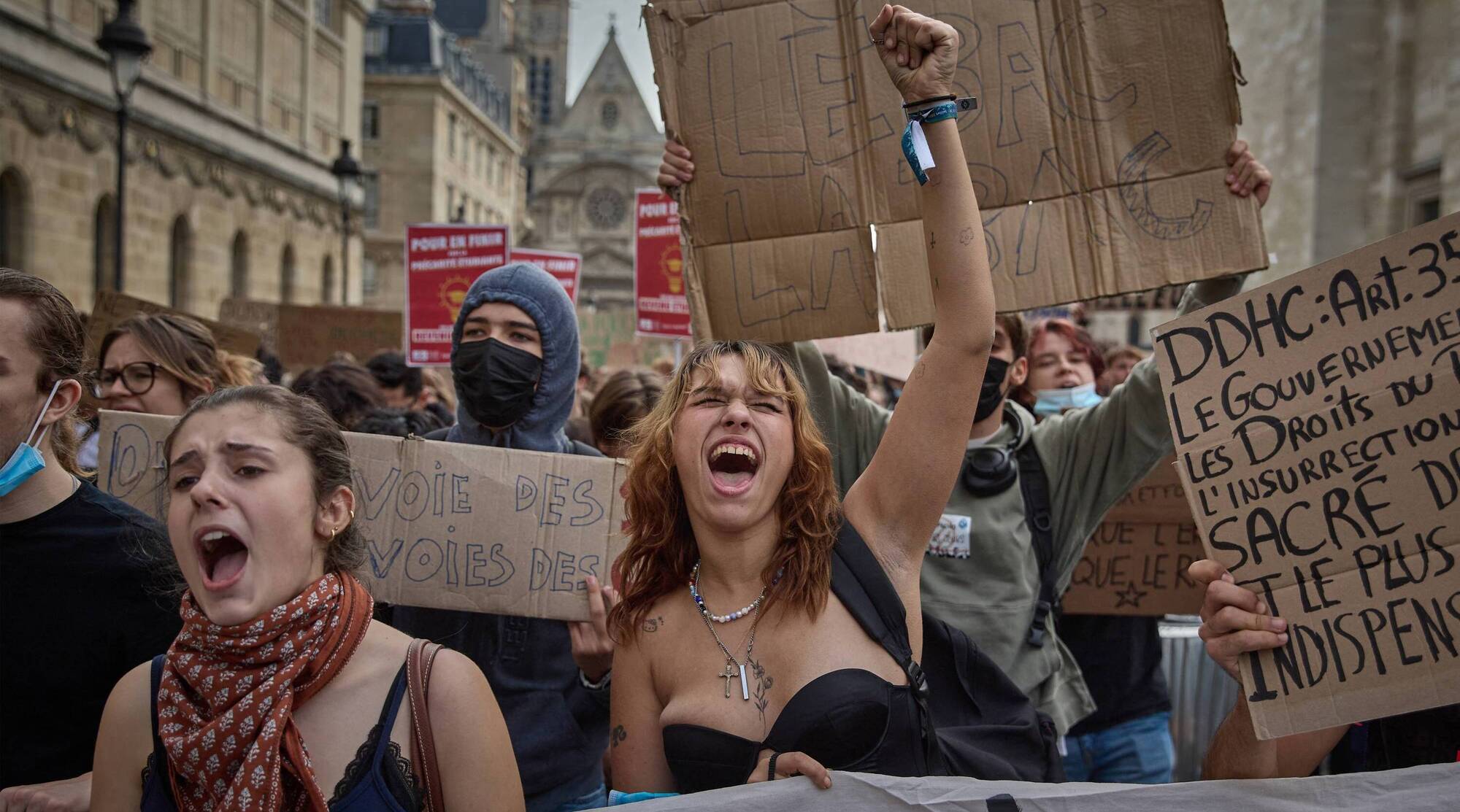
Protesters rally during a demonstration of students in Paris as part of a nationwide protest movement over learning conditions in France. Photo: Kiran Ridley/AFP via Getty Images

Anxiety over future economic prospects and the provision of basic needs like education, housing, future employment compounded by Europe’s headlong embrace of AI is spilling across the streets of the continent.
Protests in Spain, France and Belgium have erupted over housing and adequate schooling — the basic requirements of a functioning democracy, and for the first time in generations not guaranteed. Despite such states being in the epicentre of the world’s wealthiest, and most privileged continents.
In France, a country that lists education as a core part of the Republic and its famed social contract, and in the university city of Liège in Belgium's French-speaking system, students cite common complaints. Most speak of rising, unaffordable education costs including fees and rents, as well as deteriorating standards and conditions.
In France, where street protesting and civil disobedience is a common, entrenched form of political action and negotiation, the rage from students, and the angst they feel over their future is something we can all echo.
Read More
Not since the second world war have young people had to confront such existential threats.
The untrammelled adoption of AI — seemingly without any proper national dialogues about how it’ll impact the future, and whether Europe is able to shape or regulate it — is a worry for us all. Add to that the visible impact of global warming — record heat, frequent forest fires and life-altering floods.
At the same time the US under president Donald Trump is actively unwinding policies aimed at counteracting the worst effects of the climate emergency. And with Europe’s obsequiousness to Washington, we appear hopeless in stopping it.
Then there’s Trump’s free-for-all approach to AI despite roaring red flags from industry experts. Microsoft co-founder Bill Gates said, “we are not awake with where we are with AI”, telling the recently that it's the “most dangerous thing that humans have ever gone near.”
It’s already crossed the threshold with an ability to “kill hundreds of millions of people,” if a bioterrorist so wished, Gates said. Similarly, its ability to scramble all the bank accounts and shut down the electric grid already exists today, he said.
This is even before we deal with the potential replacement of high-skilled jobs and careers. In addition, Ireland, the Netherlands, Spain, Belgium, Portugal, Italy and urban centres like Berlin in Germany are experiencing housing scarcity and prices way above fair and affordable rates. Which will only worsen if the AI reckoning materialises.
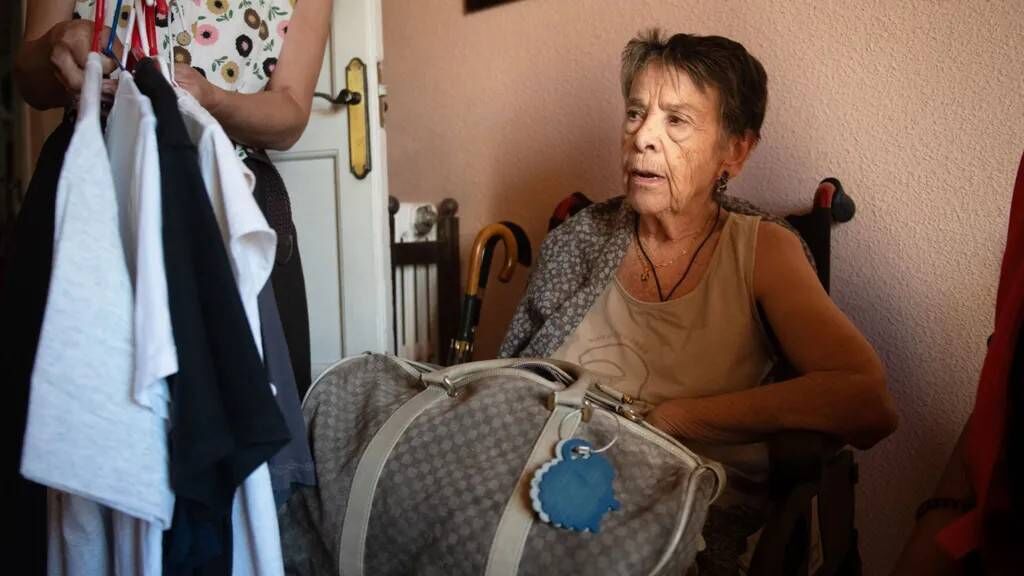
In Spain, the touchstone story illustrating the housing crisis is the harrowing, physical eviction of 87-year-old María del Carmen Abascal (Maricarmen) from her Madrid apartment of 70 years.
Maricarmen, a frail wheelchair user, is seen being dragged out of her home on a stretcher by police executing an order for her removal for not paying a rent hike of over 200%. The exorbitant rise was at the hands of an international investment fund which bought her building.
The aim, it’s claimed, is to kick out long-term denizens and supply lucrative accommodation to short-term stays. Her story is strikingly resonant of Ireland’s housing catastrophe and is similarly stoking the flames of far-right extremism and division in society. With immigrants often bearing the brunt of the blame rather than government's disastrous choices.
Prime minister Pedro Sanchez's leadership is beset by corruption allegations involving his wife — which he says has been stirred up by the far-right. At the same time his government is struggling to respond to last August’s hybrid attack on the Spanish enclave of Ceuta when 80,000 people broke the barriers on the Moroccan side.
The origins of the incident remain unclear and have not been fully investigated but it’s not the first time human beings have been used as part of instrumentalising migration to divide society and create havoc for a government.
In recent years, Poland, Latvia and Finland were the targets of Russian hybrid aggression when migrants were sent to their borders to destabilise their states.
It’s unclear who exactly was behind the attack on Ceuta, but the issue has been pounced on by the far right in Spain and across Europe as an apparent result of Sanchez’s humane approach to migrants when he naturalised 500,000 workers by giving them temporary residence and permits.
Sanchez announced the plan alongside a list of measures to ensure integration, regularisation, rights, obligations and rules of coexistence.
In addition, the regularisation focuses on sectors with high demand for staff. Nonetheless, the far-right, anti-immigrant, euro-sceptic Vox Party which has blocked measures aimed at protecting women from gender-based violence, and right-wing Party Popular are waiting in the wings as the election on November 29 beckons.
Far-right leader Marine Le Pen said she will frontload cuts of €180bn from the bloated French economy if elected next year. It won’t leave much room for investment.
Head of the European Central Bank, Christine Lagard said Europe faces “an awkward choice” when it comes to AI.
“Either it holds back on adopting, because it cannot protect its data, and forgoes the growth,” she told an audience in Vienna in September. “Or it adopts AI quickly, becomes highly dependent, and risks losing the freedom to organise its economy according to its own values.”
At his recent trip to famously secular France, Pope Leo was lauded and drew a crowd of 800,000 to his open air mass at the Place de la Concorde. His first encyclical entitled has mass appeal.
Speaking at the Élysée Palace alongside French president Emmanuel Macron, Pope Leo said unregulated technology threatens humanity by creating “a paradise of machines”. As part of its presidency of the EU, Ireland is hosting the international AI summit, and the government has an obligation to continue the conversation started by Pope Leo.
CONNECT WITH US TODAY



Be the first to know the latest news and updates