'It's been my biggest fear: What happens to him when something happens to me?'
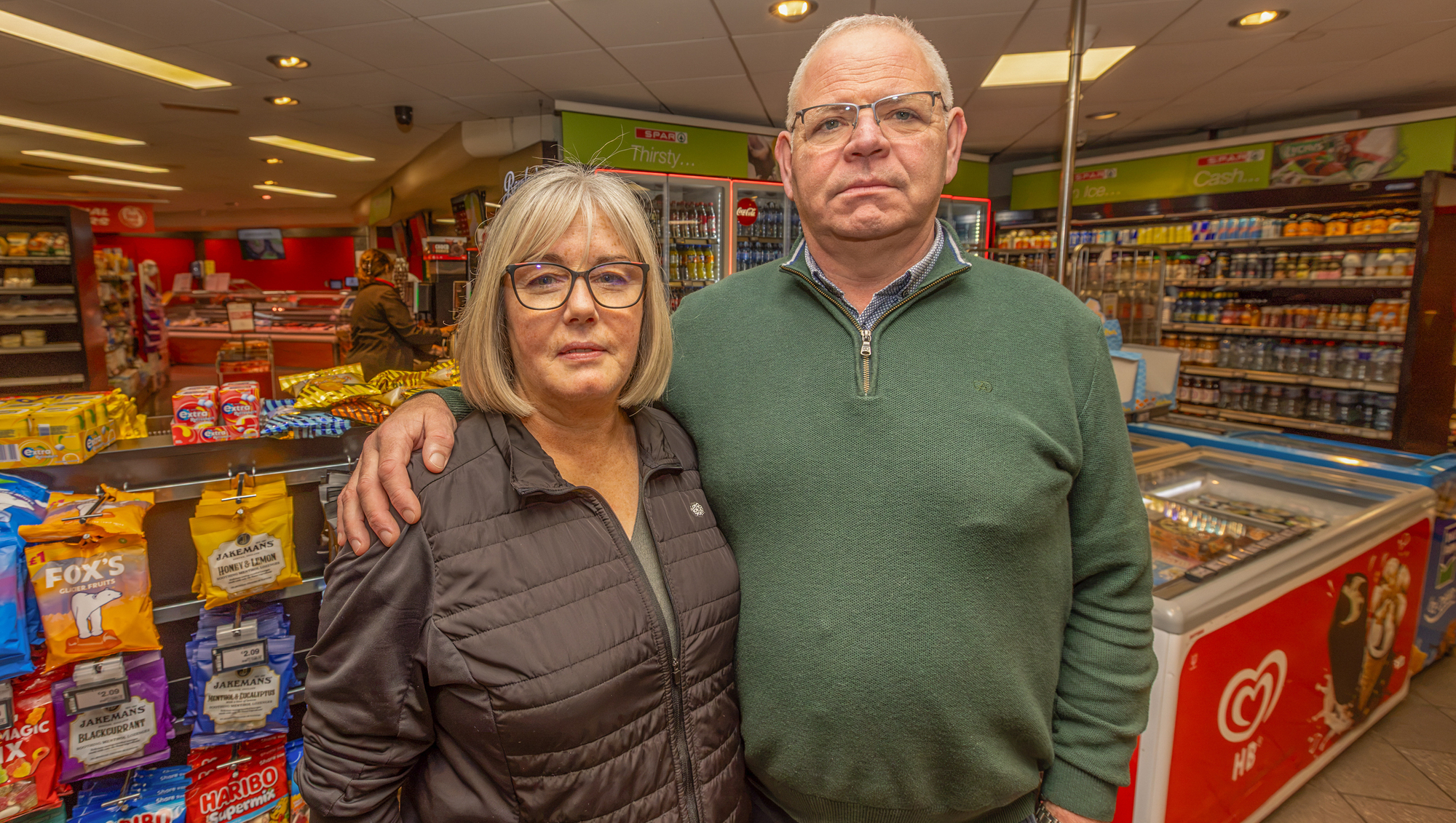
Before We Die campaign members Micheál and Carol Lynch at their Spar shop in Castlegregory, Co Kerry, where their son Tomás, who has the rare genetic disorder Rubinstein-Taybi Syndrome and requires round-the-clock care, helps stack shelves a few days a week. Picture: Neil Michael
When Micheál Lynch asked three years ago what would happen if neither he or his wife could look after their disabled son Tomás, it was a wake-up call.
He was told the 20-year-old non-verbal wheelchair user would be placed in emergency accommodation in . . . Waterford. Given that he lives with his parents in Castlegregory, Co Kerry, some 230km away, both Micheál and his wife Carol were shocked.
Their son has Rubinstein-Taybi Syndrome (RTS), which is a rare genetic disorder that can occur randomly without any family history. It is characterised by physical, cognitive, and developmental abnormalities.
He needs round-the-clock care, and has to have someone to keep an eye on him at all times. Micheál shudders when he thinks back to the last time he left his son out of his sight.
“It was about a year ago, and I turned away for a few minutes, and then I looked back and he was gone,” he recalled. “I was completely floored. I didn’t know what had happened to him. I raced round every room, calling his name.
Read More
“It turns out he had stepped out of his wheelchair, dragged himself to a window that was open as it was the summer at the time, and then he dragged himself over to our neighbour's house, 50 metres away.
“When we found him, he was just laughing and giggling. He only did it for a laugh but it gave us quite a shock.”
He added: “The sad thing is, he could happily wheel his wheelchair out onto the road, and have no idea that he could get killed. He has no sense of danger at all.”
He describes Tomás as a sociable character who loves interaction, but he said his care needs are high and the couple seldom get to do “the normal family stuff” because whatever they are doing has to suit him.
He got respite care for a night every three months from age 15 to 18 but he has had none since and there's nothing planned for him.
Micheál said: “Our biggest fear is his future if we're not there or physically can't look after him." The family has gone through a range of health scares involving Tomás since he was born in 2006.
He almost died as a newborn baby due to milk aspiration, which was happening when breast milk or formula accidentally entered his airways and lungs instead of into his food pipe.
Micheál recalled: “Some of the milk was going into his lungs, and some was going into his tummy over a couple of days. Then his lungs began to fill up with fluid or milk and we nearly lost him.
Tomás also spent more than a year and a half in a hospital from when he was aged five due to health complications, including constantly having severe chest infections. These led to him having to be constantly on an oxygen pump to keep him alive.
Although many of these issues have now been resolved, others still remain. “When he was younger, we had Jack and Jill nurses coming to the house at night because he was in danger of oxygen,” he recalled.
“He needed somebody to be with him all night and after that, he was getting stronger, and we didn't need the nurses anymore.”
While the family can’t fault the “excellent” day care their son receives, both his schooling and care subsequently have not been without their own struggles.
When he started at a special school in Listowel, they were initially unable to get public transport because — they believe — their house was just “too far off the beaten track”.
But after a two-month battle, they finally got him a place on the school bus and he used that service for the 14 years he was there.
They still have an issue with transport services for Tomás but they have managed to get round it by, in effect, loaning the HSE a van that carries Tomás and has a hoist for his wheelchair.
Driven by his Enable Ireland carer Cliona, the van is used to ferry him to and from the Enable Ireland day care centre he attends in Tralee from about 9am until 4pm.
When Carol was diagnosed as having breast cancer in 2013, it scared Micheál for a number of reasons. As well as being upset for his wife and partner of 23 years, he found himself asking himself how he was going to cope with Tomás without her.
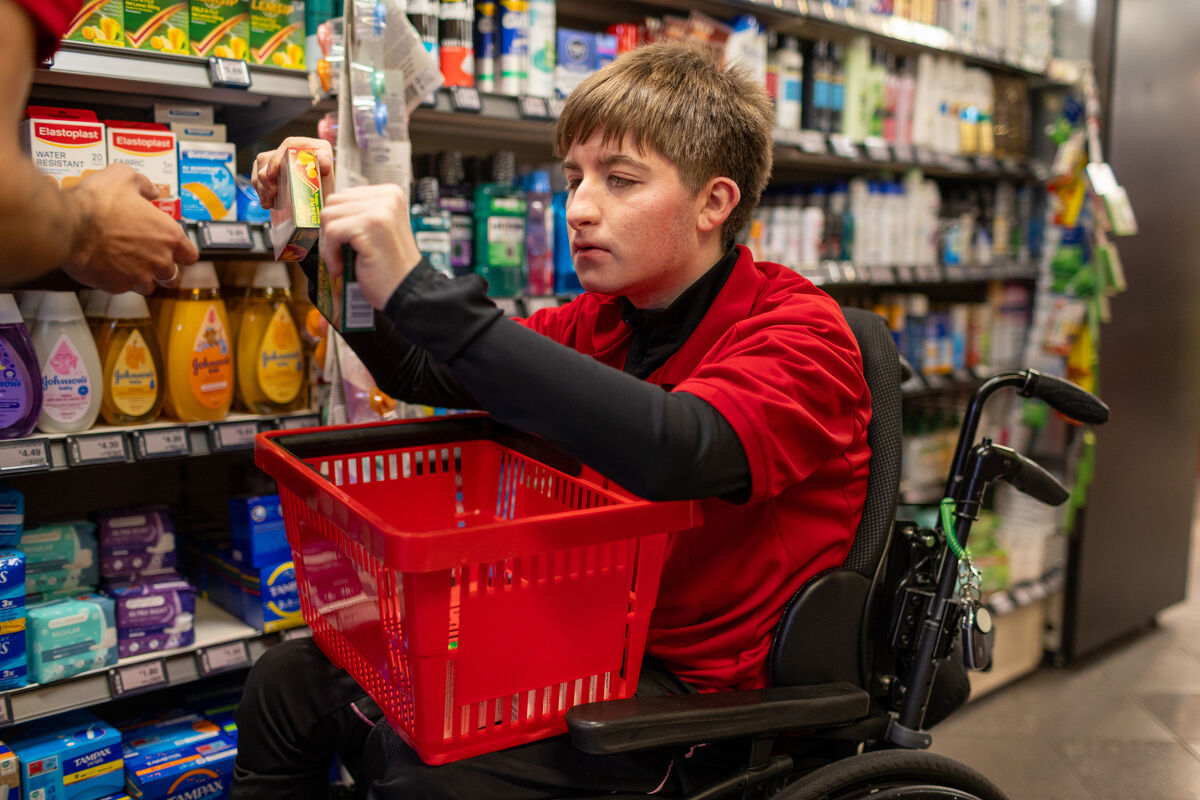
“Since Thomas was a baby, it's been my biggest fear: What happens to him when something happens to me,” he said. “Carol had cancer 13 years ago and that was scary, you know.
“I remember thinking to myself, like, how am I going to manage with the day jobs, the bills, the mortgage and caring for our daughter Emma and Tomás? How on earth am I going to manage all this if Carol isn’t with me?”
Given the issues around residential care places, he and three other families with dependent adult children have discussed buying a house for them, because they're friends.
They have looked at buying one in Tralee, and thought about the idea of giving it to the HSE to run. However, they have since found out that other people have tried to do this in the past but discovered it is almost impossible to do.
Speaking again about his fears, Micheál recalls being at a funeral about 10 years ago of a man who had an intellectual disability.
“I remember sympathising with his mother but actually, as I was walking out the door of the funeral home, I was jealous of her,” he recalled. “I was jealous because her son had died before her.
“I remember walking away thinking, ‘I am a cold bastard for thinking like that’, you know? I was mad at myself for thinking like that but since I joined up with the BWD group, we're all saying the same type of thing.
“That's a very strange way for parents to think.”
Talking about his daughter Emma, he said she is 22, studying occupational therapy and loves it. She's also studying dance, yoga and Pilates and wants to incorporate all three into helping special needs kids that have mobility problems.
He said: “It’s great but the reality is, she's going to qualify, she's going to get a job. She'll hopefully meet somebody, maybe get married, maybe have kids and she’ll move on, you know?
“But that will never happen to us. To us, we'll be in this situation forever.”
CONNECT WITH US TODAY



Be the first to know the latest news and updates