'I knew one day he would come back': Family's long battle to get child back after he was abducted
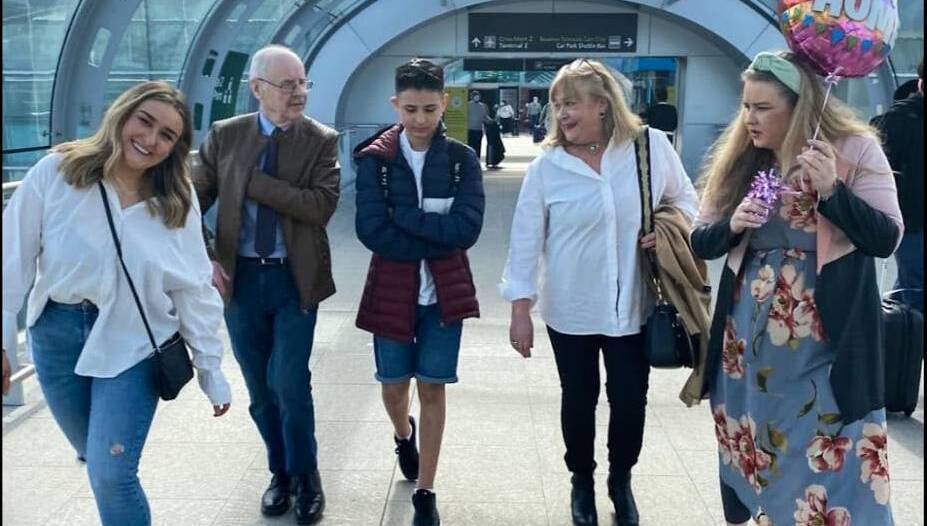
Fair Daniel Heeney after returning to Ireland alongside his aunt Kate, grandad Noel, grandmother Marian, and mother Noreen.
For 14 years, the Heeney family fought to bring Faris Daniel Heeney home to Ireland.
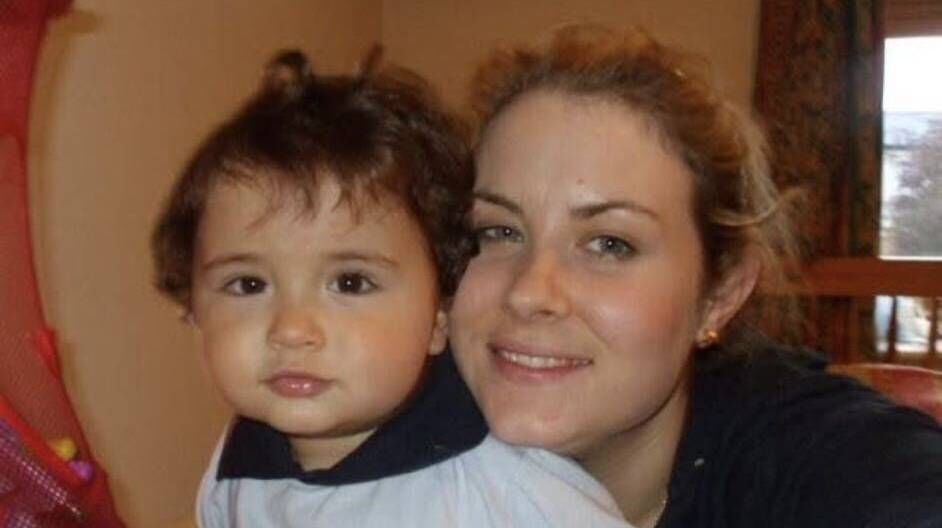
Faris was two when he was taken from his mother Norma and dressed as a little girl before being smuggled by his uncle through Dublin Airport on his half-sister’s passport and taken to his father’s home in Egypt.
His family back in Ireland campaigned and lobbied ministers and rallied at the Dáil, they wrote letters, set up social media pages, and begged for help.
They were regularly seen at the Egyptian embassy, and they travelled over and back to Egypt, to bring gifts and even break bread with his abductors.
Read More
This was all to maintain their relationship with a little boy who was growing up thousands of miles away from them as they feared his life in Ireland was at risk of fading from his memory.
“Back then, it was just round-the-clock fear and terror,” says Faris's grandmother Marian, who has spearheaded an international campaign to get her grandson back to Ireland.
Marian recalls her daughter Norma being devastated by the abduction.
At the time he was taken, the child was put on the phone to his mother from Egypt. Her ex-partner Amir Ismaeil told Norma she would never see him again.
The couple, who had worked together in a hospital in Dublin, had split up and challenges emerged in the relationship.
“I had to keep my family together,” says Marian. “There was nothing we wouldn’t do for Faris, but back then, it was the fright and fight of our lives. There is no door we didn’t knock, no office we didn’t go to, no amount of money we didn’t spend; we did everything, but nothing was bringing him back then and we had to learn to fly with a broken wing.”
The family was promised help, but very little worked.
Because Egypt is not a signatory to the Hague Convention on international child abduction, efforts to secure Faris's return proved exceptionally difficult.
In the end, there was no diplomatic breakthrough, no bilaterial agreement, no extradition treaty, and no government intervention that brought Faris back to Ireland.
After almost giving up on hopes of reunification, Amir Ismaeil let him go home with his uncle Noel and granny Marian during a trip to the city of Tanta in Egypt.
“His father was saying, ‘Oh he wants to go, he wants to go’, but we really didn’t know, until we were on the plane with him, whether this was going to happen. There were so many false promises," says Marian.
In 2022, 14 years after he was taken, Faris finally came home.
“I think, though, in the end what worked was, just the fact we had to sit down with his family and include them and Facetime, call, send photos, and visit. It was extremely difficult but that is what worked. We were sitting with the people who took Faris, but to Faris that’s his family and we had to respect that, and we always did.
“That’s what brought him home — we did it ourselves."
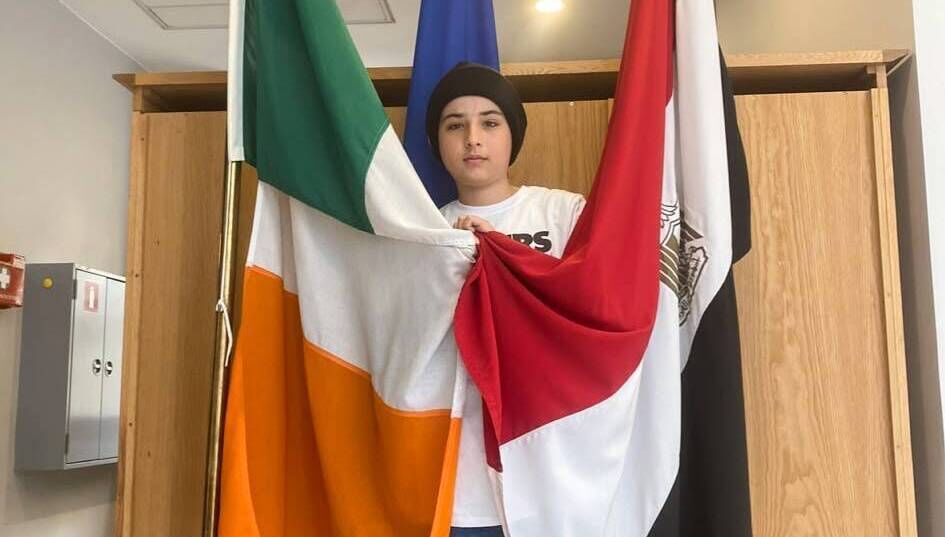
Four years after Faris was returned to Ireland, his grandmother Marian Heeney has decided to speak about the extraordinary ordeal that saw him taken abroad and the long campaign to bring him home.
She believes the systems intended to protect children from international parental abduction remain "broken".
Despite years of campaigning and the involvement of successive government ministers, Marian remains frustrated her family ultimately had to find its own way through the nightmare.
“We were in blind shock,” says Marian. “Every single person we rang promised us the sun, moon, and stars, but nothing came to fruition.
“It was really a horrific time; it broke us to pieces. But my job was to keep the family together and not to let us fade from Faris’s life. I also believed in my heart and soul that we would get him back. I knew one day he would come back.”
She describes Faris as a “beautiful, kind young man, who adores his mother and his family.
“He is serving an apprenticeship with his uncles Noel and Ross and he went to school and he has done well,” says proud aunt Amy.
“But so much time went by and we were so angry and hurt. The State could have done so much more."
She adds: “The Irish government said they didn’t want to have an ‘international incident’ with Faris, but it was an international incident. They could have threatened to stop trading with Egypt, but they didn’t even do that.”
The Heeney family's ordeal began with what should have been a routine access visit, at a time when his father was facing criminal charges.
Faris's parents, Norma and Amir Ismaeil, were no longer together when the young boy stayed overnight with his father in July 2009.
When Norma arrived to collect him the next day, Faris was gone.
Amir was there and told her: "Your son is in Egypt. Speak to him on the phone."
There was an international dial tone. Norma was distressed and called her mother for help, who in turn rang the gardaí.
His uncle, Moustafa Ismaeil, had taken Faris through Dublin Airport, while his father and another uncle, Tamer, who were wanted by gardaí at the time, left Ireland via Belfast using false passports before returning to Egypt.
“We were in an impossible situation,” Norma said at the time. “The nights we cried and raged — it was very, very difficult”.
Gardaí got in contact with Moustafa in Egypt and encouraged him to return to Ireland, which he did, but without Faris. He was later jailed for six years for child abduction.
Egypt is not a signatory to the Hague Convention on international child abduction.
Unlike cases involving countries covered by the convention, there was no straightforward international mechanism through which Ireland could seek the child’s return.
There was also no extradition treaty between Ireland and Egypt.
But the family refused to give up. A public campaign launched in 2013 saw Faris's disappearance repeatedly raised in the Dáil, with ministers and TDs pressed to intervene.
Alan Shatter, the former justice minister, wrote to the Egyptian authorities about abducted children; former foreign affairs minister Eamon Gilmore discussed the case with his counterpart in Cairo; former children's minister Frances Fitzgerald became involved; and the family also met Leo Varadkar, then their local TD.
However, Marian says now the State “did nothing to help us”.
“They dropped the ball so many times, when they could have done more,” she says.
The proposed bilateral agreement gave them hope, but it never came to fruition.
There was also no effective mechanism, Marian believes, to ensure an Egyptian court would enforce a custody decision made in Ireland. They were repeatedly advised by the State to take a case in Egypt.
“We knew that would do nothing for us,” says Marian.
Left with few other options, the family took matters into their own hands and travelled to Egypt themselves.
“I had to go,” says Marian. “I knew that while we were all trying to get two countries to agree on the return of Faris, time was ticking. We needed to see Faris and keep ourselves in his life; he loves his family there, so this was the only way.”
They began visiting Faris and keeping the lines of communication open even when they were furious with the people who had taken him. His family there never refused communication.
They also tried to make peace with his father for the sake of the child.
At one point she travelled to Egypt during war despite being warned by government and gardaí not to go.
“Nothing was going to stop me,” says Marian. “I couldn’t let time go by, so we kept it up, coming and going just to be with him, even though it was very hard.”
Marian even visited Moustafa in prison.
“I was able to tell his mother how he was,” she said. “I would have done anything to keep the connection with Faris. If his mother asked me to bring something to Moustafa. I would do it.”
Moustafa was eventually released from jail and deported.
The financial cost of their efforts was enormous. Norma was pushed into an overdraft, and the family spent their life savings on the trips over and back to Egypt.
Marian says the family had hardly any money left at one stage while trying to maintain their campaign and contact with Faris.
They were in regular touch with the Department of Foreign Affairs, which offered consular assistance.
Both Marian and Amy Heeney agree the phrase “consular assistance” meant little to a family desperate for practical help.
“What does that even mean, 'consular assistance'?” says Marian. “Because I still don’t know what it did for us.
“We hadn’t a penny over there at one stage and rang the embassy and asked them to help us, but it was always, ‘Yes, we will help but you’ve to pay it back'.”
For the Heeney family, there was a stark difference between expressions of support and actually getting Faris home.
“Everyone knew about the case — the Taoiseach, Foreign Affairs, Justice, the gardaí, the embassy. But Faris was still in Tanta.
“We just had to concentrate on the one thing that could help us — the connection with Faris himself, by being in touch all the time and reminding him who we are, we will always be here we and we kept showing up for the child’s sake.”
Eventually, something changed. In 2022, after 14 years away from Ireland, Faris decided he wanted to come home.
For his family, it was the moment they had been hoping and campaigning for since he was taken in 2009.
Faris was a toddler when he left Ireland and was returning as a teenager.
The adjustment would take time. There was school to navigate, friendships to build, and a new life to establish, all while reconnecting with his heartbroken but hopeful mother.
"We were over the moon walking through the airport and into his mother's arms," says Marian, explaining the family had to give Faris space and time to settle, which is why they waited until now to tell his story.
“The publicity would have overwhelmed him,” says Marian. “That was not in his best interests, so we waited to let him fully settle. He is very happy now and has a job and he is a beautiful young boy. Faris is looking forward and so are we.
“It was a long battle that took us across borders, into prisons and, at times, into dangerous situations. But we would have done anything to get him back.
“Norma lost her son; it was so devastating. We were all affected.”
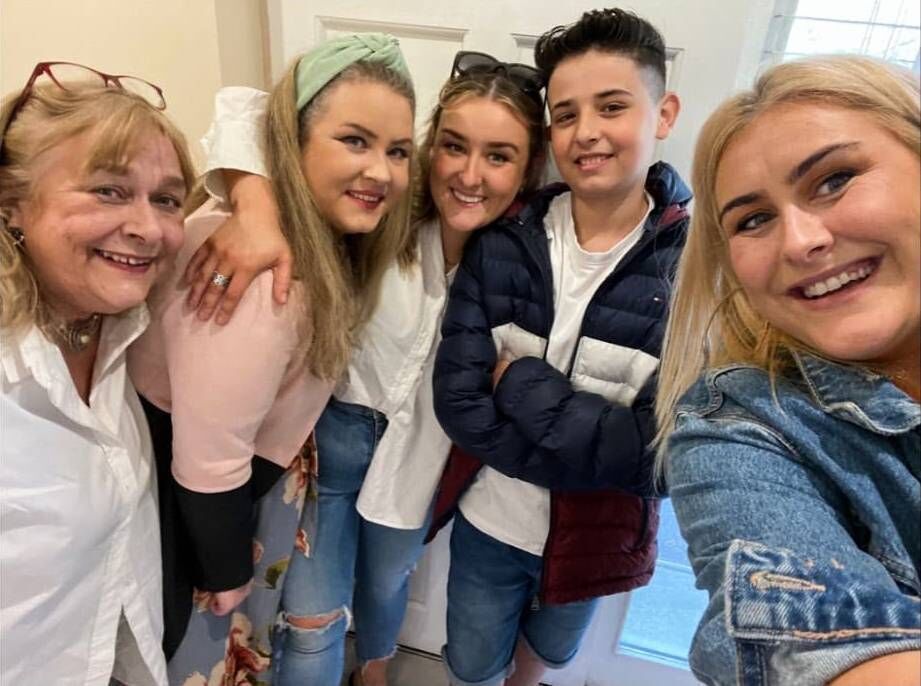
While Faris is now home, Marian says she still wants Ireland and Egypt to put a bilateral agreement in place to help other families facing similar ordeals.
“For us now, it is just that we never want this to happen to anyone else,” she says.
Department of Foreign Affairs figures show there were 13 international parental child abduction cases in 2025, compared with six the previous year.
One of the most high-profile current cases involves Mandy Kelly, whose two sons, Zayn, 8, and Karen, 5, remain the subject of court proceedings in Egypt.
Ms Kelly, from Dundalk, Co Louth, has been fighting to secure the return of her children since they were taken to Egypt by their father during a family holiday in Cairo in 2022.
She successfully pursued custody proceedings in both Ireland and Egypt. However, the boys have not been returned to her care as the Egyptian ruling has been appealed and police have said they do not know the father's whereabouts.
“We were advised to do all of that too,” says Marian. “We knew we wouldn’t win if we went there. The Egyptians didn’t care about Faris and they were not going to return him, so we had to do our own thing. We had to make our own personal decisions, but we wouldn’t wish it on our worst enemy.”
A spokesperson for the Department of Justice said: “Officials from the department have engaged with the Egyptian authorities in relation to establishing a bilateral parental abduction arrangement.
"It is important to note that any bilateral arrangement that could be agreed would not have the status of a binding international agreement — because there is EU law in this area, the European Commission has competence to represent the EU and its member states in this policy area internationally.
"However, a bilateral arrangement, willingly entered into by both sides, could be a valuable tool in helping address parental abduction cases between Ireland and Egypt and progress will continue to be sought with the Egyptian authorities.
"Experience suggests, however, that making progress on such a bilateral arrangement is likely to be a lengthy process.”
CONNECT WITH US TODAY



Be the first to know the latest news and updates