Megan Lyons: Dublin freediver aims to become Ireland’s deepest diver after 80m record
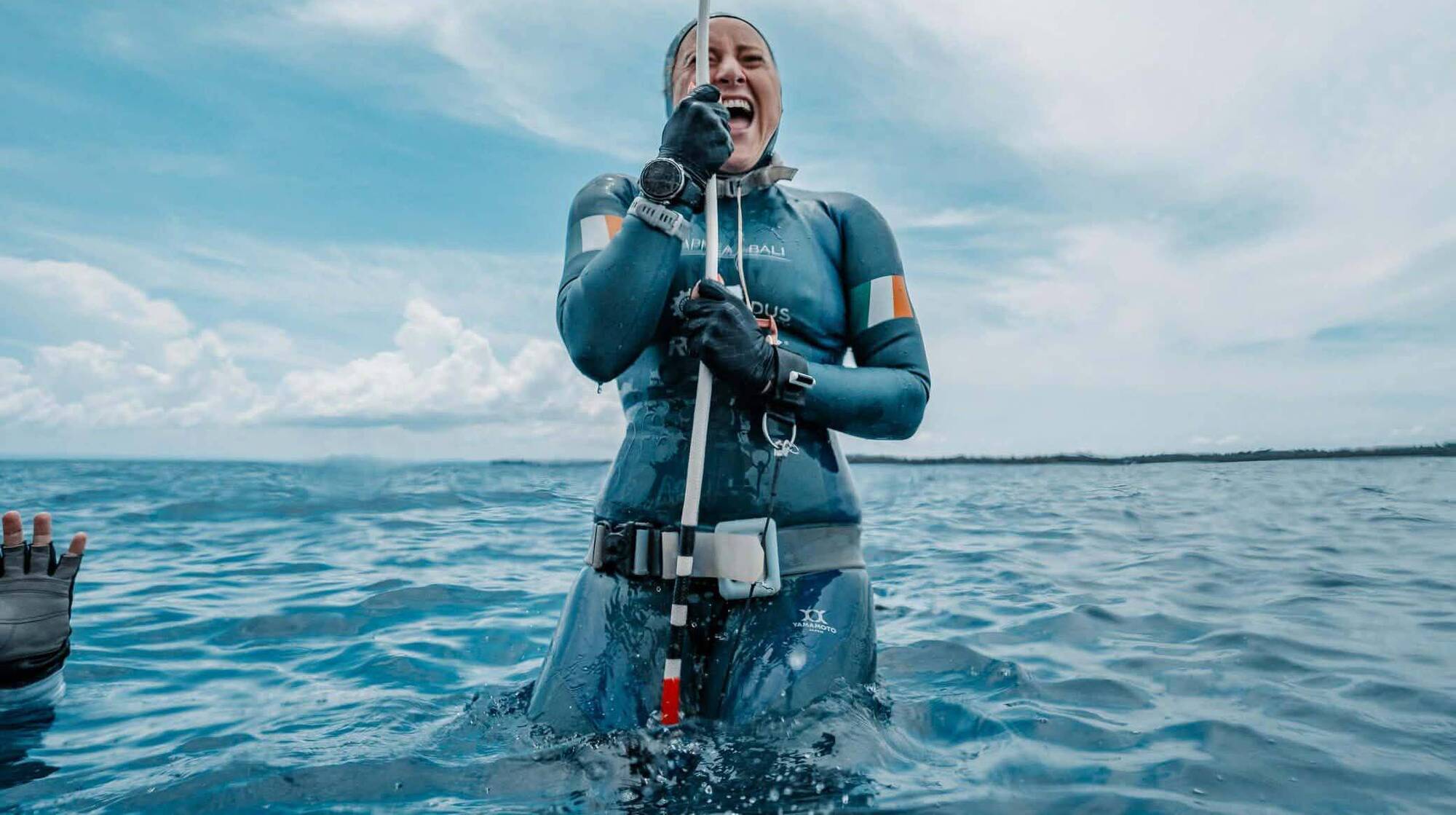
Megan Lyons who managed to break her own national record with an 80m plunge at the AIDA Asian Freediving Cup in the Philippines recently. Photo: @andac.kazar
As a freediver, Megan Lyons has reached unimaginable depths, shattering records that once might have seemed impossible.
The 33-year-old from Dublin managed to break her own national record with an 80 metre plunge at the AIDA Asian Freediving Cup in Panglao, Philippines in recent weeks. She had previously set a precedent with a 61m dive at the AIDA Freediving World Championships in September 2025, followed by a 71m dive in July 2026.
Now, Megan has her sights set on breaking the men’s record too as she trains for the World Apnea 2026 Depth Championships which take place this year from September 27 to October 10 in Limassol, Cyprus.
“I broke my own national record twice making me the deepest freediver in Ireland,” she told the .
“My plan for the year is to beat the men's record. I’m only 2m off at the moment. I attempted to do it in Cyprus and also tried it in the Philippines a few weeks ago, but it was on the last day of the competition and I was very tired.
"I didn't quite make it that time either, but I'm hoping now to beat the men's record in Cyprus at the World Championships in September. The men's record is 81 so this year I want to beat that and get to at least 82. It’s something I really would like to work towards. I want to be the deepest freediver in Ireland as opposed to the deepest female freediver.”
Megan has always been attracted to the water.
“I think I was always a water baby. My dad is from Mayo and we were lucky enough to have a house down there where we could spend our summers. I’d be throwing myself off cliffs and piers. Even today my dad tells me a story about how he would throw a coin into the swimming pool on holidays for me to dive in to find.
"I loved the water but I probably lost my connection to the ocean when I was 21 and moved to London to take the corporate ladder route. Ironically, it was marine insurance and then more broad pricing as well.
"It wasn't until I quit my corporate job and I got diagnosed with ADHD at the end of 2022 that I pressed the big red button on my life and let everything implode. I decided to go travelling and came across a freediving course in Thailand.”
The Dublin native got off to a shaky start.
“I hated the first course because there was so much science around breathing.
"I didn’t know that at the time so I’d dive only two or three metres before feeling like I needed to breathe. I’d come up in a panic and the instructor wasn’t very nice so it ended up being a terrible experience.
"I continued doing fun dives around shipwrecks and things like that but it wasn’t until I did the course in the diving school, Apnea, Bali that I really fell in love with freediving. I did a master's programme in Bali in the summer of 2024 and that's kind of where everything changed for me.
"I returned to Ireland after that for six months to dive. On January 3, 2025, I went on the move permanently. I’ve been diving ever since with some breaks in between.”
The freediver had not initially envisioned breaking records.
“At the start I just wanted to hold my breath a bit longer so that I could swim with the fish. You kind of get dragged into it and start to become obsessed with the feeling of going deeper.
"Being underwater is like no feeling I have ever experienced. I think what makes it unique is that in most sports you get further by pushing harder and being more aggressive, whereas freediving is all about surrendering and doing less.”
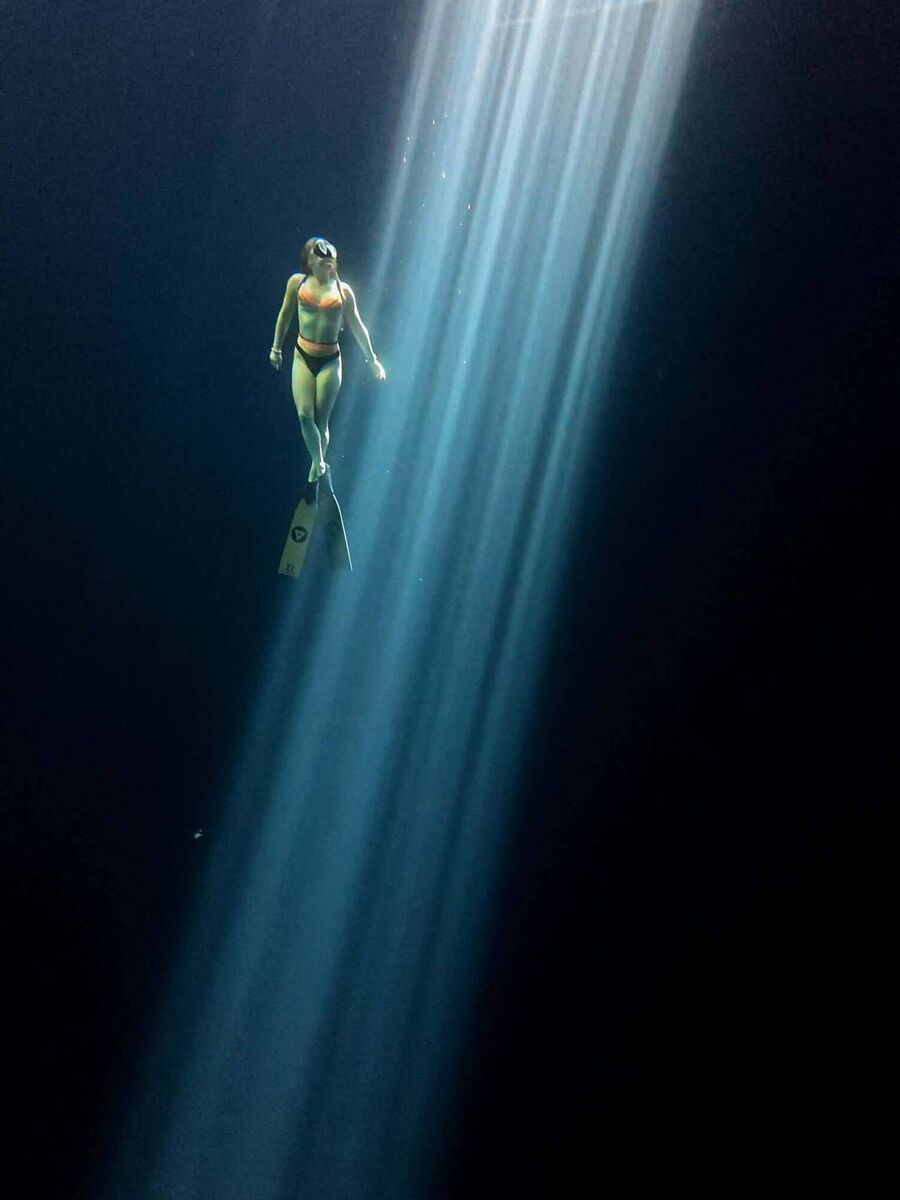
She described life under water.
“In the Philippines, you can freedive to a depth of 10m. You can see the little clownfish — like the ones in — up close. When you’re scuba diving the bubbles interrupt the fish but freediving is different because they think you are one of them. It’s just feels so peaceful when you're swimming.
"Being able to swim while being agile and moving in around the shipwrecks and fish is such a freeing experience. The loudness of the world above the surface is shut out and you are a lot more present with yourself and the ocean.”
Megan listed some of the strategies she used while diving.
“In terms of equalisation, we have a few advanced techniques used in freediving. There's a thing called mouthfill where, at about 15m or 20m, you shift air from your lungs into your mouth and then you lock your throat so that you are holding the air in your mouth.
"You then use that air as you descend so that your tongue acts like a little piston to push air into your middle ear so that you can equalise. It’s just like when you’re on a plane and you need to pop your ears.
"You have to do that the whole way down as you’re freediving.
"If at any point you lose your relaxation and you swallow that air, you'll no longer be able to equalise and you'll have to turn around early on the dive. It’s when you keep diving without being able to equalise that you can burst your eardrums.”
Her parents enjoy following her journey.
“At the start I was diving to 20 metres and my dad was like 'that’s enough now'. Now, he’s the opposite. He still can’t watch though so the videos freak him out.
"He’ll only watch me afterwards when he knows I’m fine, whereas my mum would get up at 4am to watch the dive live. Even though my dad gets the heebie-jeebies they are both very supportive.
"The sport in general is very safe. You’re swimming to the bottom of the ocean so there are always elements of risk. However, the set-ups and competitions have a strong focus on safety. There are always huge safety teams and I’ve never suffered any sort of injury myself.
"If it's done conservatively and with the right people around you then it can be done quite safely. Knowing this has definitely relaxed my parents more.”


CONNECT WITH US TODAY



Be the first to know the latest news and updates