'There is never a wrong time to do the right thing': Osgur Breatnach's long fight for justice
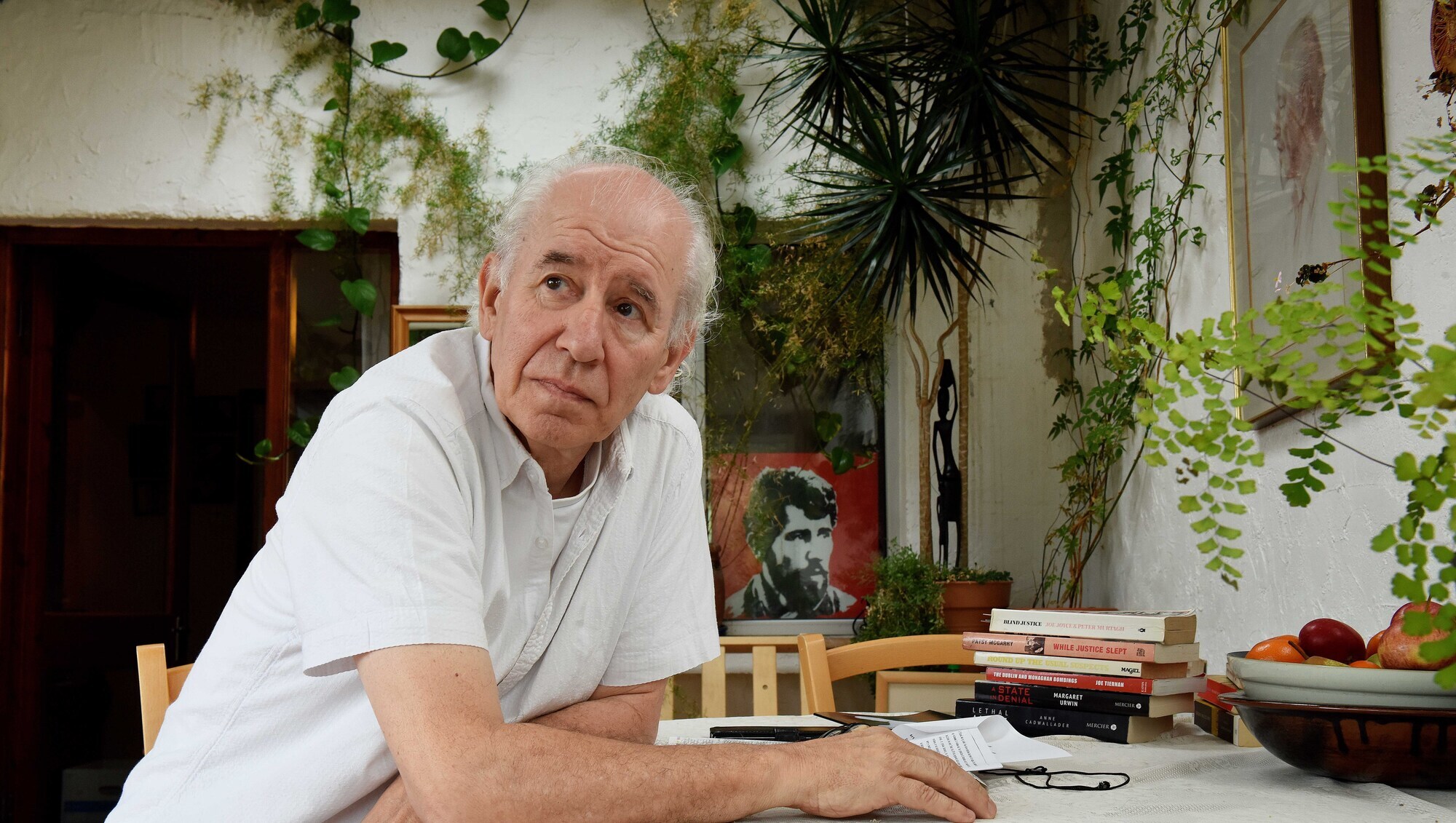
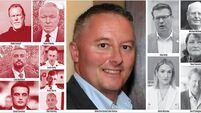
Osgur Breatnach is seeking to have his conviction for the Sallins train robbery five decades ago declared a miscarriage of justice. The State has signalled that it will not oppose his bid. Picture: Moya Nolan
At 5.20am, Osgur Breatnach was woken in his cell.
He had, by that point, been detained for 40 hours. He was not in good shape, psychologically or physically.
The gardaí suspected that he had been involved in a train robbery. He knew nothing about it.
Once awoken he was taken down to a tunnel, which ran from the Bridewell Garda Station, where he was being held, across the road to the Four Courts.
He was under the impression that he was being brought across to the court to be charged with failing to give an account of his movements.
HISTORY HUB
If you are interested in this article then no doubt you will enjoy exploring the various history collections and content in our history hub. Check it out HERE and happy reading
He was questioned by gardaí in the tunnel for about 20 minutes.
What happened during that time would be vehemently disputed.
Here’s Breatnach’s account, as recorded in the book, .
“Breatnach claims that he was slapped, punched, kneed and banged against the wall. He says his arms were held and the gardaí slapped him and shouted that the guns and the mailbags had been found and they told him the part he played in the robbery and wanted him to agree.”
The gardaí denied any of this happened.
They say that the reason Breatnach was questioned in the tunnel was because there was no room available in the station.
After that he was brought to a locker room for further questioning.
“He says he was beaten with a chair pulled from under him, was pushed from one detective to another, that he was sore, dizzy, confused and had difficulty breathing.”
The gardaí denied all of this.
Later, Breatnach signed a statement confessing to having been involved in the Sallins mail train robbery that had occurred a week earlier, on March 30, 1976.
On Tuesday, over 50 years later, Breatnach is back in court.
He has applied for a certificate of miscarriage of justice over what occurred in the Bridewell that night and all that flowed from it.
At the time, he was tried and convicted for the train robbery, along with Brian McNally and Nicky Kelly.
On Tuesday, they will not be with him.
McNally died last month at the age of 83.
Kelly is not in a position to attend due to ill health.
The State has indicated that it will not oppose the application.
That of itself is significant.
For half a century, through Breatnach’s relentless quest to have history corrected, the State, through its agents, has affected an air of indifference.
The three men received civil settlements in the early 1990s. There has never been any admittance that a wrong was done.
If, as it has signalled, the State does not oppose the application for a certificate of miscarriage, the most obvious inference is that the State accepts the confession he signed was not obtained properly or lawfully.
So why did he sign it? Why would he and his co-defendants in the trial that followed, sign statement confessing to robbing a train?
So far, irrespective of what the State accepts, there appears to be no interest in answering what is a hugely important question in how the State treats it citizens.
For Breatnach, Tuesday is not an end, but a step along the road to have those questions answered.
The ultimate aim is a public inquiry to determine what exactly happened and why, and who was involved.
This, he points out, is not a personal quest, but an obligation under national and international law.
“This isn’t about me,” he says.
“My position is that I’m supporting the Government in respect of the agreement they are party to in the UN that says it will carry out inquiries after torture occurs.
"I’m also supporting the European Convention of Human Rights which states that there should be a public inquiry where there are allegations of torture.
"Apart from all that, a public inquiry into what went on in my case has been called for by a whole range of human rights organisations.”
Breatnach says any inquiry needs to be about everything about the case that went on from the lead up to the men’s detention, their treatment in custody, and right up to the present day.

“There are lessons to be learned from a Sallins inquiry still today and it might lead to some changes that still need to be made.
"Without the Offences Against the State act, Sallins would not have happened.
"Without the Special Criminal Court, a miscarriage would not have occurred.
"What happened, as far as I’m concerned, was a criminal conspiracy and that can’t just be wished away.”
The robbery of the Cork-Dublin mail train on the night of March 30, 1976, was well executed.
It occurred at the height of the Troubles in the North, a time when various paramilitary organisations were raising funds through crime in the Republic.
A whole team was involved and it included hijacking vehicles and holding hostage a family in Sallins, Co Kildare, near where the robbery occurred.
A man dressed as a signalman was on the line, waving a torch to indicate to the driver there was a problem up ahead.
The train came to stop and the robbers jumped on board.
The proceeds were never recovered but most estimates suggest that around £220,000 was stolen.
Much later it would emerge that the most likely culprits for the robbery had been the Provisional IRA.
Almost immediately some gardaí believed they knew who the culprits were, pointing the finger at the Irish Republic Socialist Party (IRSP), a breakaway group from the Official Sinn Féin.
This group was loosely aligned to a paramilitary outfit that became the Irish National Liberation Army (INLA).
Breatnach, who was 25 at the time, had been involved in left-wing politics and was a member of the IRSP.
Up to 40 members of the IRSP or associates were arrested.
Pretty soon, the Garda focus narrowed in on five suspects.
All said that they had been beaten up in custody and three signed statements that had been concocted by the gardaí.
While all three were members of the IRSP (McNally was actually an ex-member at the time), there was no evidence they had ever been involved in paramilitary or subversive activity of any kind.
Beyond that, the only evidence against them about Sallins was the confessions that, it is now widely accepted, were beaten out of them.
There is solid circumstantial evidence that all three were assaulted, including medical reports on injuries they suffered.
Some of the gardaí involved had also featured in a number of other cases where allegations of brutality in custody were made.
This loose amalgam of gardaí came to be known as “the heavy gang”.
The activities of this amalgam were primarily focused on people detained in connection with the Troubles or related political activity in one form or another.
But beyond that, the sense of impunity afforded the gardaí in question, resulted in cases with no political connection being the focus of allegations of brutality.
These cases often came to public attention much later.
At one end of the period in question, was the case of the disappearance of Una Lynskey in 1971.
Three local men were arrested and alleged beaten in custody, resulting in some partial confessions.
One of them, Martin Conmey was subsequently convicted of manslaughter and spent three years in prison.
Decades later, his conviction was overturned, the State apologised, and he received a certificate of miscarriage of justice and financial compensation.
At the other end of this period was the notorious Kerry babies case in 1984.
Joanne Hayes and members of her family confessed to murder and disposing of a baby’s body.
They had done no such thing and the whole narrative around it was constructed while they were in custody, when they claimed to have been physically and psychologically abused.
The State belatedly apologised to Ms Hayes in 2020 and later compensated her.
Senior gardaí, such as the late chief superintendent John Courtney, always denied there was any heavy gang.
Read More
But whatever one calls them, however they classified themselves, there was a pattern over 15 years of the same gardaí being alleged to have carried out the same kind of brutality and used the same kind of tactics during and after assaults.
None of the individuals in question ever faced charges or even sanction for how they conducted themselves using the power of the State.
When the three men in the Sallins case were put on trial, more than 40 gardaí got into the witness box and swore they had absolutely no knowledge of the mistreatment of the men while they were in custody.
The gardaí had heard nothing, had seen nothing, had participated in nothing, that would suggest these men were assaulted or tortured.
During the first trial in the Special Criminal Court, one of the three judges kept falling asleep.
His colleagues, and subsequently judges of the high and supreme courts all ruled that he had not fallen asleep.
The judge, William O’Connor, died soon after from a condition he had been suffering which induced bouts of sleep.
The most senior ranking judges in the State at the time effectively ruled that what those in court were seeing before their eyes was a mirage.
No explanation was ever given for how they had all arrived at their judicial rulings.
Following a second trial the three men were convicted and each sentenced to 12 years in prison.
By then, Kelly had absconded on the belief that he and his friends were not getting a fair trial.
Breatnach and McNally were imprisoned in Portlaoise’s maximum security facility.
Seventeen months later, the Court of Criminal Appeal upheld their appeal against conviction and they were freed.
Kelly returned to the country, but he was unsuccessful in his appeal and remained in prison.
He was 37 days into a hunger strike in 1984 when he was released on compassionate grounds.
In 1992, he was granted a presidential pardon.
Around the same time, all three men received financial compensation in their civil claims against the State.
Since then, Breatnach has been fighting for a public inquiry.
Read More
His efforts have been endorsed by a whole plethora of advocates across society from the legal business to entertainment and media.
He also began the process that will come to a conclusion of sorts on Tuesday.
Usually, when a certificate of miscarriage of justice is awarded it is accompanied by an apology from the State.
Breatnach has definitive views about such a prospect.
“If the State offers an apology what would they be apologising for?
“Nicky got a pardon, we all got settlement in the civil case under restricted parameters, but at no point did the State admit any liability for anything that was done to us. If they have something to apologise for it should be put out in the open in a public inquiry.”
He does not accept any argument that the passage of a half century since the events of 1976 would be a major impediment to conducting a public inquiry.
“Initially, at the time these things happened there was a delay in doing anything to ensure that the cover-up was put in place and that it continued down through all the years.
“The Government has international obligations and even under article 40 of our own Constitution it doesn’t say anything about facilitating delay after delay as time passes and to then turn around say, ‘well, we can’t do anything now because too much time has passed.’
“There is never a wrong time to do the right thing.”

CONNECT WITH US TODAY



Be the first to know the latest news and updates